When people plan a short camping trip, they often start by listing the route, food, sleeping bags, and activities. The more detailed the plan is, the more prepared the trip can feel. But once they arrive at camp, the experience often depends less on how complete the checklist is and more on whether the campsite has enough room to adjust.
The weather may be colder than expected, someone in the group may want to rest early, gear from daytime activities may need to be reorganized, and dinner may be delayed by setup, searching for items, or last-minute cleanup. Camping does not place people inside a ready-made indoor space. Storage, rest, and temporary adjustments often have to be worked out after arrival. That makes the tent an important space for rest, organizing, and short-term adjustments during the trip.
If the tent is treated only as a place to sleep, many small problems get pushed into the moment. If it can also support resting, storage, changing clothes, and brief indoor activity, the whole camping plan becomes more flexible. A more relaxed trip does not mean anything changes. It means the campsite still has room to handle those changes when they happen.
Setup Affects the First Hour at Camp
The first hour after arriving at a campsite often affects the rhythm of the night ahead. The car has just been parked, the ground has not been fully checked, the gear is still in the trunk, and the light may already be changing. If the tent setup takes too much effort at this point, dinner, rest, and organizing can all be delayed.
For campers who want to reduce traditional pole-assembly steps, inflatable tents offer another setup method. They use air beams to reduce some of the pole assembly and help the tent body form its basic structure more quickly. Still, inflation does not mean the setup is finished. Choosing the site, staking the tent, securing the guy lines, and checking stability for the weather should not be skipped.
The value of a smoother setup is not that it makes camping casual or careless. It reduces the pressure of structural assembly after arrival. Once the tent is stable, jackets, lights, day bags, and sleep gear are easier to place, and the rest of the campsite can keep moving.
Adjustable Space Helps the Campsite Respond to Changes
The most underestimated parts of camping are often the temporary changes. The wind picks up, so seat cushions need to come in. The temperature drops, so someone needs to change clothes. After dinner, one person wants to rest while another is still organizing gear. Without adjustable space inside the tent, all of these actions get pushed toward the entrance or the sleeping area.
These changes can create clutter because they often happen at the same time. Items from outside need to move in, someone inside may still need to rest, and gear for the next day should not be buried at the bottom of a pile. If the tent has some buffer space, short-term adjustments are less likely to interrupt the whole campsite.
A practical inflatable outdoor tent should not only be judged by whether it works for sleeping in good weather. It also needs to leave room for temporary storage, short rests, and weather changes. When people and gear need to move inside for a short period, the campsite should not immediately lose its sense of order.
Adjustable space does not simply mean a bigger tent. What matters more is whether the space can be used clearly: where backpacks go, where someone can change clothes, where the quiet area stays, and where items can be sorted for a moment. When each area has a purpose, campers do not have to keep rearranging everything. This kind of flexible space can affect real use more than adding one isolated specification.
Short Camping Trips Need an Interior That Works Smoothly
Short camping trips leave limited time. Many people stay only one or two nights. That makes the tent useful beyond sleep. It is used repeatedly after arrival for organizing, during the day for changing clothes, storing bags, or taking a short rest, and again before departure for packing up. If the interior is not arranged clearly, limited outdoor time can easily be interrupted by searching for items, moving backpacks, and reorganizing.
This kind of trip does not need the tent to handle every function of a long-term camp, but it does need to make several frequent actions easier. Backpacks should have a place where they do not block the way. Changing clothes should not mean squeezing into a corner. Items needed the next day should be easy to reach. For a one- or two-night trip, whether a tent works well is often shown in these small details.
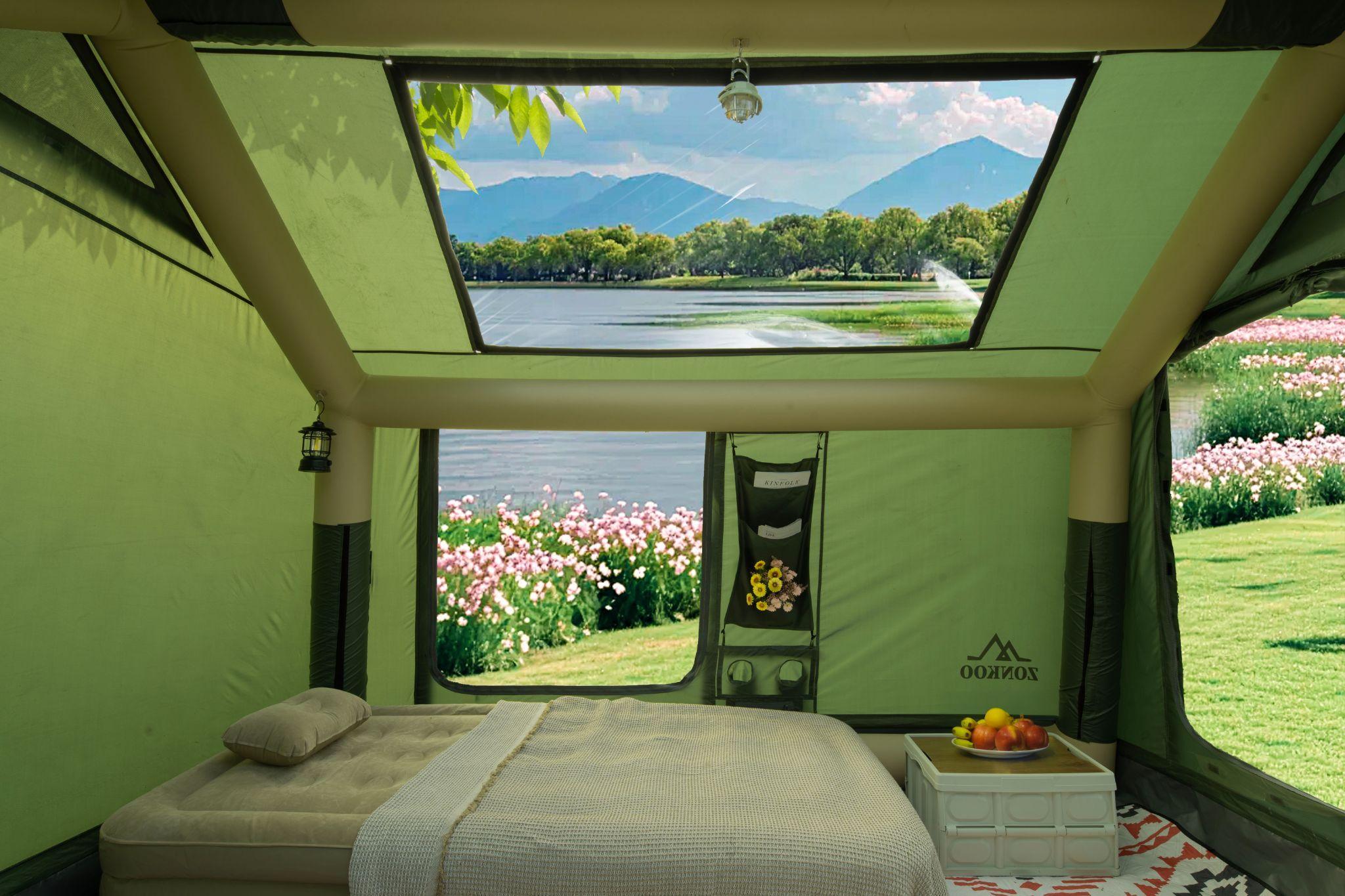
For a smaller group that still needs room for activity, ZONKOO Orion, one of the brand’s inflatable camping tents, fits the role of a temporary space for both living and sleeping. Its 86 sq ft of interior space and 6’11” standing height make it easier to stand, move, and organize backpacks, while also giving commonly used items a clearer place.
When a tent can support organizing, resting, and sleeping at night, a short camping trip does not have to revolve around gear the whole time. Daytime items have somewhere to go after use, and the entire space does not need to be cleared again before bed. The trip is easier to keep relaxed from start to finish.
A More Relaxed Camping Trip Comes From Fewer Last-Minute Fixes
Many people start choosing a tent by comparing sleeping capacity, floor area, weight, and setup time. These details are useful, but if they are the only focus, it is easy to miss how the tent will actually be used.
A better way is to picture the full camping process: Can the campsite become usable soon after arrival? Before dinner, is there a place for jackets and backpacks? At night, will looking for a light or clothing disturb someone else? In the morning, does packing require turning the whole tent inside out? If these moments can be handled smoothly, the tent is more likely to fit the trip.
A good camping trip does not always need more activities or more gear. What shapes the experience is whether the campsite helps people feel less rushed and less scattered. It cannot prevent weather, time, or the plan from changing, but it can make it easier to find a place to store gear, change clothes, or rest for a while.
When tent space is planned well, the camping plan is less likely to be thrown off by small changes. People can give more attention to dinner, conversation, the natural setting, and the next day’s activities instead of constantly dealing with gear and space conflicts. With fewer last-minute fixes around camp, outdoor time is easier to spend with the people on the trip and the nature around them.