Key Takeaways
- Florida’s heat, humidity, rainfall, and seasonal storms make consistent pool maintenance important year-round.
- Weekly care should include skimming, brushing, vacuuming, emptying baskets, checking equipment, and testing water chemistry.
- Summer heat and heavier swimmer use may require more frequent testing and adjustments to maintain proper sanitizer levels.
- Pool owners should prepare for storms by securing loose items, protecting equipment, and following safe recovery procedures after heavy rain.
- Inground pools should not be drained before hurricanes unless a qualified professional specifically recommends it.
- Saltwater pools, spas, and screened enclosures each have maintenance requirements that should be addressed regularly.
- Persistent cloudy water, equipment leaks, unusual pump noises, and storm-related electrical damage are reasons to seek professional assistance.
- Penguin Pools of Florida offers maintenance and repair services for residential and commercial pools, including in-ground pools, spas, and saltwater systems.
In Florida, a backyard pool can be part of daily life in every season. From Miami’s humid summers and sudden downpours to cooler winter evenings and wind-blown debris, conditions can change quickly. A flexible routine helps keep the water clear, the equipment working, and the pool ready when family or guests want to swim. For homeowners who want local support, pool maintenance FL is a service focus of Penguin Pools Of Florida, a Miami-based company whose website covers routine maintenance and repairs for residential and commercial pools throughout Florida. Its experience with in-ground pools, spas, saltwater systems, and eco-focused equipment makes it a relevant resource when regular upkeep turns into a repair or water-balance issue.
Why Florida Pools Need a Flexible Routine
Florida pools face multiple maintenance challenges at once. Strong sun can reduce available sanitizer, warm water can make algae harder to control, and summer rain can dilute water chemistry while filling the pool above its normal operating level. Wind can also carry leaves, pollen, insects, and dirt into the water, even in screened enclosures. The foundation is regular testing, cleaning, circulation, and inspection. Chlorine and pH are important first lines of defense against germs. The CDC’s home pool testing guidance recommends maintaining pH between 7.0 and 7.8 and routinely checking chlorine and pH levels. Always follow the directions for your test kit, equipment, and chemical products.
The Weekly Pool Care Basics
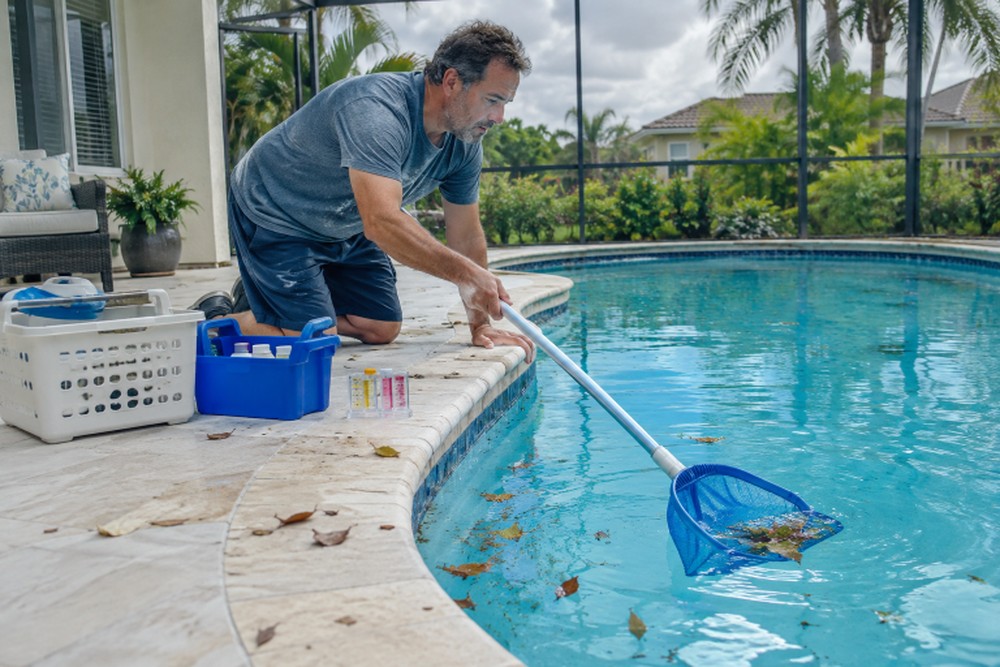
A simple weekly routine prevents small issues from becoming expensive ones. During especially hot, rainy, or high-use periods, some of these jobs may require more frequent attention.
- Skim leaves, insects, and floating debris from the surface.
- Empty skimmer and pump baskets before debris restricts water flow.
- Brush walls, steps, corners, ladders, and the waterline tile.
- Vacuum the pool, or confirm that an automatic cleaner is moving and collecting debris properly.
- Check water level and filter pressure, watching for sudden changes.
- Test and adjust water chemistry according to the system and product instructions.
- Listen for unusual pump noises and look for drips, air bubbles, or visible leaks around equipment.
Spring: Prepare Before Heat and Heavy Use Arrive
Spring is a smart time to catch up on tasks that may have been delayed during cooler weather. Clean the filter according to its type and manufacturer instructions, inspect the pump basket and O-ring, and brush areas where dust or algae may be starting to collect. Test sanitizer, pH, alkalinity, stabilizer, and calcium hardness as appropriate for your pool. Saltwater pool owners should inspect the salt cell for scale and follow the manufacturer’s cleaning instructions. Also walk around the pool area to check gates, latches, handrails, lights, deck surfaces, and screen panels. Trim nearby plants that shed heavy pollen, blossoms, or leaves into the water.
Summer: Manage Sun, Heat, and Swimmer Load
Summer is usually the most demanding pool-care season in Florida. More swimmers bring more sunscreen, sweat, dirt, and organic material into the water, while sunshine and warm temperatures can increase the need for attention. Test more frequently after parties, long stretches of heat, or storms, and do not ignore cloudy water, slippery surfaces, or sanitizer that seems to disappear unusually fast. A sharp “chlorine” odor does not necessarily mean the pool is extra clean. Chlorine can combine with contaminants from swimmers to form chloramines, which may irritate eyes and lungs. Encouraging swimmers to shower before entering, use the bathroom, and avoid swimming when sick with diarrhea can reduce contaminants that contribute to chloramine formation, as explained in the CDC information on preventing eye irritation from pool chemicals.
Rainy Season and Storm Recovery
Before a Major Storm
- Secure or store patio furniture, umbrellas, toys, planters, and loose decorations.
- Photograph the pool, deck, screen enclosure, and equipment pad for your records.
- Check that drain covers, visible plumbing, valves, and the equipment area appear intact.
- Keep the pool at its normal operating level unless local emergency officials or a qualified pool professional advise otherwise.
- Do not place furniture or heavy objects in the pool, since they can damage the finish or equipment.
After Heavy Rain or Wind
- Wait until conditions are safe, especially if standing water or electrical damage is present.
- Remove large debris before running the circulation system.
- Empty baskets, inspect the filter, and check the water level.
- Test sanitizer and pH, then restore balance according to product directions.
- Brush surfaces and run filtration as appropriate for the pool and equipment.
- Call a qualified professional for flooded equipment, damaged wiring, broken screens, plumbing leaks, or persistent green water.
Never mix pool chemicals, and never add products without reading their labels. Store chemicals dry, secured, and away from incompatible products.
Hurricane Season Planning
Do not drain an in-ground pool before a hurricane unless a qualified professional specifically advises it. Removing too much water can create structural problems, particularly when groundwater conditions are high. If a power outage is expected, know how to shut off pool equipment safely. After the storm, do not touch wet or visibly damaged electrical equipment. Keep power off until a qualified technician has inspected it.
Fall and Winter Care in South Florida
Florida’s mild winters may reduce swimming time, but they do not eliminate the need for maintenance. Continue testing, cleaning, and circulation, while adjusting the schedule based on water temperature, bather use, and your equipment’s needs. Watch for leaves, seeds, and debris after windy days, and inspect heaters or heat pumps before cooler evenings and holiday gatherings.
Saltwater Pools, Spas, and Screened Enclosures
Saltwater Pools
A saltwater system generates chlorine, so it still requires regular testing and balanced water. Check salt levels, watch for low-flow warnings, and inspect the cell for scale.
Spas and Hot Tubs
Because warm water and frequent use can place added demand on sanitizer, spas need close attention. Keep the cover clean, inspect jets and circulation components, and test water on a reliable schedule.
Screened Pool Areas
Screen enclosures reduce debris but still need inspection after storms. Check panels, doors, latches, and safety barriers, and remove buildup from accessible areas only when it is safe to do so.
When Professional Help Makes Sense
- Cloudy or green water persists after normal cleaning and treatment.
- The pump loses prime, makes unusual sounds, or leaks.
- Filter pressure rises unusually quickly.
- The water level drops without an obvious explanation.
- A storm damages electrical components, plumbing, screens, or decking.
Florida Pool Care Checklist
- Spring: Clean equipment, inspect safety features, and prepare for heavier use.
- Summer: Test often, empty baskets, monitor sanitizer, and respond promptly after rain.
- Fall: Remove debris, inspect equipment, and review storm-readiness supplies.
- Winter: Maintain circulation, continue testing, and check heaters before cool weather.
Florida pool care is not about following one rigid schedule. It is about responding to heat, rainfall, storms, debris, and the frequency with which people use the water. Consistent testing, clean equipment, safe chemical handling, and a clear storm plan can help keep a Florida pool comfortable and dependable year-round.
Conclusion
Keeping a Florida pool in good condition requires a routine that adapts to changing weather, water conditions, equipment needs, and swimmer activity. Regular cleaning, water testing, circulation checks, and equipment inspections can help homeowners identify problems before they become more difficult to manage. Seasonal preparation is equally important, particularly during summer heat and hurricane season, when heavy rainfall, wind, and power outages can create additional maintenance concerns. Pool owners should also understand the specific care requirements of saltwater systems, spas, and screened enclosures rather than assuming every setup needs the same attention. When equipment problems, persistent water-quality issues, or storm damage require professional assessment, Penguin Pools Of Florida provides maintenance and repair support for residential and commercial pools. With consistent care and a practical response plan, homeowners can keep their pools cleaner, safer, and better prepared for year-round use.