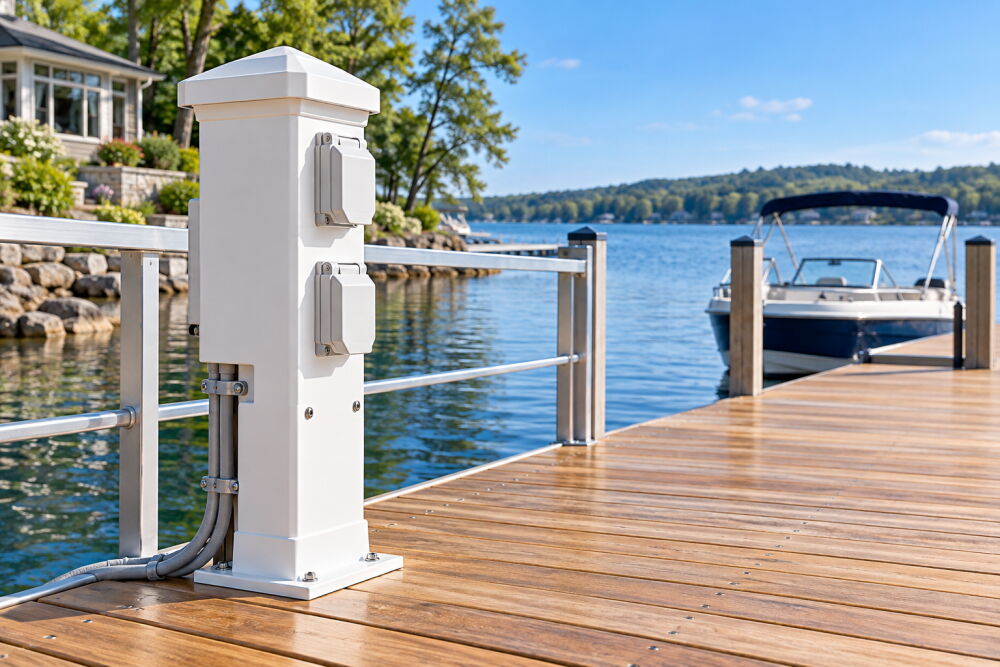
Waterfront living adds unique electrical risks. Docks, lift motors, lighting, and shoreline outlets bring electricity within reach of waves, rain, and corrosion. Before the busy season, a focused safety check helps prevent shocks, nuisance trips, and equipment damage. This practical checklist outlines what to check and why it matters, from ground-fault protection to wet-location wiring methods. It targets homeowners near lakes and marinas and applies to typical residential setups. Always de-energize circuits before inspection, and call a licensed electrician for testing, repairs, or any work inside panels and enclosures.
1. Locate Every Circuit That Reaches the Water
Start by identifying every circuit serving the shoreline and dock. Note which breakers feed dock lights, shore-power receptacles, a boat lift, or a de-icer. Confirm the panel labeling and write down where each disconnect is physically located. For property owners around Indian Lake, the Wells Electric Service service in Russell’s Point page is one local service-area resource you can reference when compiling contacts for inspections or repair scheduling.
Next, trace metal paths. Look for bonding jumpers connecting dock frames, gangways, and handrails to the equipment grounding conductor. A loose or missing bond can turn a corroded fastener into a shock point. A common scenario is feeling a faint tingle when stepping from a ladder onto an aluminum dock. That sensation can signal a ground fault or a break in the bonding path. Do not continue testing by touch. Turn power off at the disconnect and have a qualified pro investigate continuity and grounding.
2. Use the Right Protection: GFCI, AFCI, and ELCI
Near water, ground fault protection is essential. GFCI outlets or GFCI breakers are commonly required for exterior receptacles, circuits serving docks, and equipment near the shoreline. These devices trip quickly when they sense leakage current, reducing shock risk. For outdoor receptacles, choose weather-resistant (WR) and tamper-resistant (TR) receptacles with in-use bubble covers so the plug stays protected while connected. In living spaces fed by these circuits, some jurisdictions also require AFCI protection to detect arcing faults that can start fires.
Miswiring GFCIs is a frequent mistake. Connecting line and load backward, sharing a neutral with another circuit, or daisy-chaining from a non-GFCI device can silently defeat protection. Press the test and reset buttons monthly, and replace devices that will not trip or reset. If you notice a breaker that only trips during rain, moisture inside a cracked cover or a corroded cord cap may be the cause. Upgrading to a WR receptacle with a proper in-use cover and replacing the cord end often resolves weather-related nuisance trips.
3. Choose Wiring Methods Built for Wet Locations
Wet location wiring must handle sun, temperature swings, and spray. THWN 2 conductors pulled in PVC conduit are a common choice for runs from the house to a pedestal. Use Schedule 80 PVC where exposed to impact and expansion fittings on long, sunlit runs to prevent conduit separation. At the dock, route conductors into listed, weatherproof enclosures rated NEMA 3R or 4X, with gaskets intact and stainless steel screws to resist corrosion. Seal unused knockouts with listed plugs to keep insects and moisture out.
Where cords are necessary, they must be listed for wet locations and include an intact equipment grounding conductor. Install strain relief cord grips where cords enter boxes to prevent tugging on terminations, and create drip loops so water cannot run along the cord into the device. Avoid household extension cords on docks for any purpose. They are not designed for continuous outdoor exposure or shore power and can develop dangerous leakage currents long before they visibly fail.
4. Plan for Heavy Loads: Boat Lifts, De-icers, and Pumps
Motors for lifts and de-icers draw high inrush current at startup. On long runs to a dock, voltage drop can exaggerate the surge, dimming lights or causing sluggish lift operation. Plan dedicated circuits sized for both load and distance, and consider upsizing conductors to limit voltage drop. Provide a clearly labeled, lockable disconnect on shore so you can cut power before anyone services the lift or steps into the water near energized equipment. Keep control wiring in separate, protected enclosures and use listed splices rated for wet locations.
There is a tradeoff to manage: GFCI protection saves lives near water, yet older motors or marginal wiring can cause nuisance tripping by leaking small currents. The solution is not to remove protection. Instead, reduce leakage by replacing weathered cords, using sealed motor connections, and avoiding shared neutrals or multiwire branch circuits on GFCI-protected loads. A realistic example is a lift that trips a GFCI only when it rains. Those symptoms often point to a wet junction box or cracked conduit fitting, not a defective breaker.
Seasonal Testing, Permits, and After Storm Checks
Each spring, press the test buttons on all GFCI receptacles and breakers, then reset. Inspect receptacles for WR/TR markings, confirm in-use covers close fully over the plugs, and replace any cracked covers or brittle gaskets. Walk the conduit path and look for UV damage, loose straps, or scuffs from winter movement. If you are adding a new pedestal, relocating a lift, or extending power along a rebuilt dock, contact your authority having jurisdiction to confirm permit and inspection requirements before work begins. Clear signage such as “No Swimming Near Energized Docks” helps reinforce safe habits for guests.
After severe storms or extreme water level changes, recheck bonding jumpers, cord grips, and any flexible connections across dock joints. If you ever feel a tingle, see lights flicker when the lift starts, or notice frequent trips, de-energize the system and pause water activities until you evaluate the issue. Waterfront electrical systems face constant moisture, movement, and corrosion. A methodical checklist, appropriate protective devices, and durable wet location materials go a long way toward safer boating and relaxing summers on the water.



