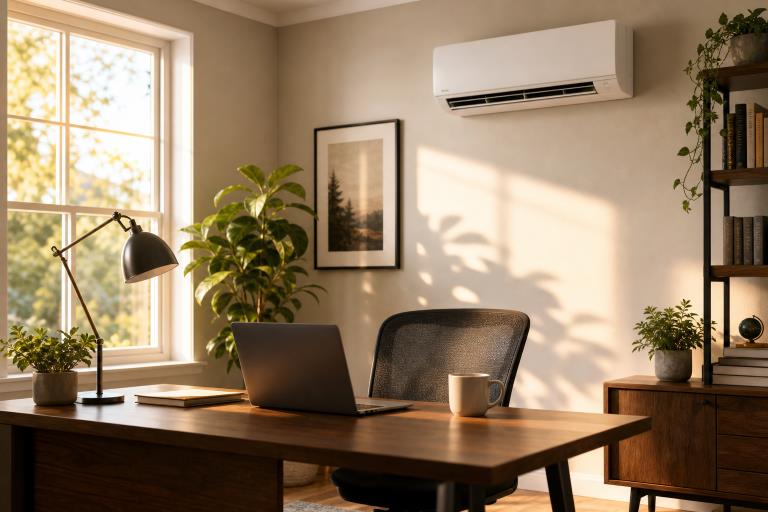
Key Takeaways
- Ductless heating and cooling can improve comfort in rooms that stay too hot, too cold, or are difficult to connect to existing ductwork.
- Proper system sizing, placement, insulation, and drainage are just as important as the equipment itself.
- Single-zone and multi-zone systems serve different layouts, comfort goals, and budgets.
- Routine filter cleaning and professional maintenance help protect performance and reliability.
- Energy savings depend on installation quality, building efficiency, and how each zone is used.
Ductless mini-split systems give homeowners a practical way to target problem rooms without rebuilding the entire HVAC system. Whether the issue is a hot upstairs bedroom, a chilly attic, a new addition, or a garage conversion, homeowners can view available services as they explore options for more consistent room-by-room comfort.
Unlike a traditional central system that relies on one thermostat and a network of ducts, ductless equipment can condition individual spaces based on how they are actually used, note Keyrenter Premier specialists. That flexibility can make a meaningful difference in homes where every room has different levels of sunlight exposure, insulation, or occupancy.
Why Room-By-Room Comfort Matters
One thermostat cannot always represent the needs of an entire house. South-facing rooms may warm quickly in the afternoon, while shaded bedrooms or spaces over garages can lose heat faster. Second floors often retain heat, and a home office filled with computers may need cooling while the rest of the house remains comfortable.
Zoning allows homeowners to focus heating or cooling on occupied areas rather than treating the home as a single, uniform space. It can be especially helpful for guest rooms, sunrooms, finished basements, detached workshops, and additions built after the original HVAC system was installed.
How Ductless Systems Work
A ductless system includes an outdoor condenser and one or more indoor air handlers. Refrigerant lines, electrical wiring, and a condensate drain connect the equipment through a small opening in the exterior wall. In cooling mode, the system moves indoor heat outside. In heating mode, a heat pump reverses the process, moving available outdoor heat indoors.
Although ductless installation avoids major ductwork changes, it still requires careful design. The line set needs protected routing, the drain must direct water safely away, and the outdoor unit needs proper clearance for airflow and service access.
Which Spaces Fit Best
Ductless equipment can fit many types of rooms, but each space should be evaluated before selecting a unit.
- Home offices: A separate zone can support daytime comfort without conditioning unused bedrooms or living areas.
- Finished attics: These spaces often need extra help, but roof insulation, air sealing, and ceiling height should be checked first.
- Garage conversions: A mini-split can add heating and cooling after conversion, provided the walls, floor, and ceiling are insulated.
- Sunrooms: Large glass areas create substantial solar heat gain, so shading and window performance matter.
- Older homes: Ductless systems can reduce the need for invasive construction when extending ducts would require opening plaster walls or ceilings.
Single-Zone Vs. Multi-Zone Systems
A single-zone system pairs one indoor unit with one outdoor unit. It is often a straightforward choice for one uncomfortable bedroom, an addition, or a detached workspace. A multi-zone system connects several indoor units to one outdoor condenser, allowing separate temperature control in multiple areas.
Multi-zone designs can reduce the number of outdoor units, but they need detailed planning. Indoor units must be matched to the outdoor unit’s capacity, and a failure at the shared condenser can affect every connected zone. A mixed approach may also work well, with central HVAC serving the main house and ductless units handling persistent trouble spots.
Planning The Indoor Unit Layout
Placement affects airflow, appearance, sound, and future maintenance. A high-wall unit should distribute air evenly across the room without continuously blowing onto a bed, desk, or favorite chair. It also needs enough open space for filter removal and service.
Questions To Ask Before Choosing A Location
- Can air circulate around furniture, doors, and large obstructions?
- Is the mounting wall strong enough for the indoor equipment?
- Can refrigerant and drain lines exit with minimal bends?
- Will the drain slope correctly or require a condensate pump?
- Will the outdoor unit remain clear of vegetation, snow, debris, and stored items?
Sizing And Efficiency Factors
Choosing the largest available unit is not a substitute for a room-by-room load calculation. Oversized equipment may reach the set temperature too quickly and cycle more often. Undersized equipment may run continuously during severe weather without delivering the desired comfort.
Installers should consider square footage, ceiling height, insulation, window direction, shading, air leakage, occupants, appliances, and local weather conditions. Zoned temperature control without ductwork can be effective, but sealing drafts and improving insulation first can reduce the load that the equipment must handle.
Installation Checklist
- Confirm that sizing is based on the actual room or home load.
- Review indoor-unit locations and the route for line sets.
- Verify electrical panel capacity, dedicated circuits, permits, and inspections.
- Ask how condensate will drain in both cooling and heating conditions.
- Confirm that refrigerant lines will be insulated and protected.
- Request operating instructions, filter guidance, warranty information, and commissioning details.
The lowest quote may not include electrical upgrades, drainage work, wall repairs, start-up testing, or follow-up support. A complete plan is usually more valuable than a low initial price with important work left unspecified.
Maintenance And Repairs
Simple Tasks For Homeowners
- Clean reusable filters according to the manufacturer’s instructions.
- Keep curtains, furniture, and decorations away from air outlets.
- Remove leaves, grass, and clutter from around the outdoor unit.
- Watch for water stains, unfamiliar odors, reduced airflow, or unusual sounds.
Problems That Need Professional Attention
Call a qualified technician if water is leaking from the indoor unit, ice is on the refrigerant lines, breakers keep tripping, heating or cooling is weak, or you hear grinding or buzzing noises. Refrigerant handling and electrical repairs require proper equipment and training.
Final Tips For A Comfortable Home
Ductless heating and cooling work best as part of a complete comfort plan. Identify the rooms causing the most frustration, address major insulation and air-leak issues, compare single-zone and multi-zone layouts, and request a detailed installation proposal. With the right design and regular care, a ductless system can provide steadier comfort without forcing every room to follow the same schedule.