Your January heating bill hits, and you stare at a number that would buy a decent used car. Winter in the Willamette Valley is mild by Midwest standards, but it lasts, and it drizzles sideways for months. That slow grind is what makes heating costs pile up here in a way visitors never expect.
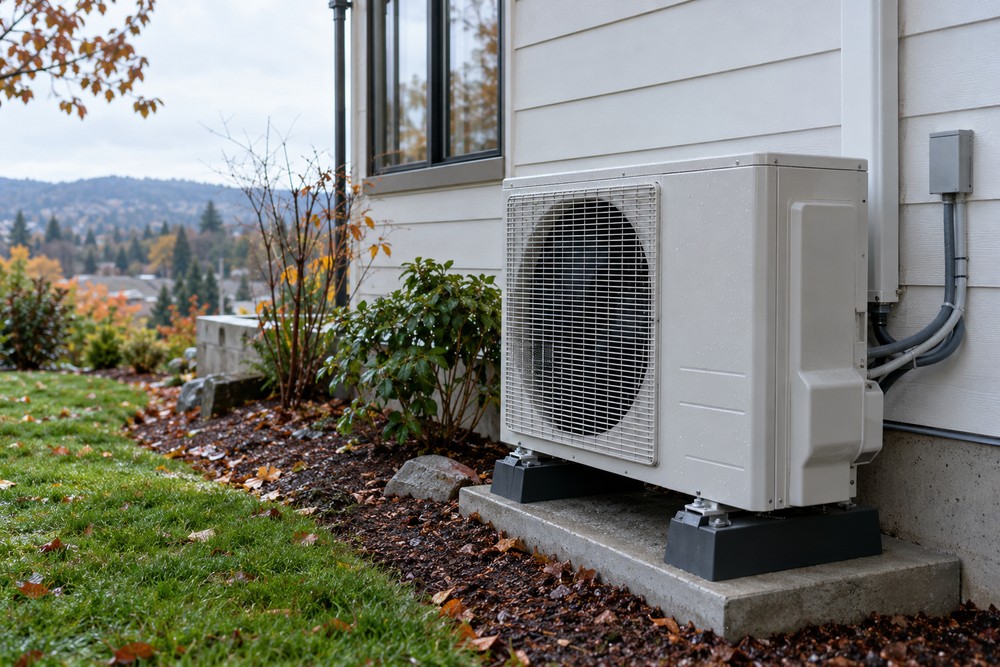
Ductless heat pumps are the most common answer for Oregon homes that have no ductwork, and they work just as well as a full-system upgrade for houses that do have it. The units move heat rather than make it, so a single zone can warm a 400 square foot living area on a fraction of the electricity a baseboard heater pulls. If you want to see what that looks like in practice, The Heat Pump Store runs showrooms in Portland, Eugene, and Salem, and their site lays out the equipment options clearly.
What follows is what I would tell a friend who texted me at 10 p.m. asking whether they should pull the trigger before next winter.
Why ductless fits Oregon better than most places
You don’t live in Minnesota. That matters more than you’d think. Heat pumps lose capacity as outdoor air gets colder, and in a place where January lows sit in the mid 30s, they barely break a sweat. A cold-climate unit rated for zero degrees is overkill for most of the valley, though it’s worth the money if you’re up in Bend or anywhere with real elevation.
The bigger Oregon factor is rain and humidity. Ducted systems in older homes leak conditioned air into crawl spaces and attics, and in a wet climate that leakage invites mold and wasted money. Ductless heads eliminate the duct run entirely. You get a wall unit, a line set, and a drain. That’s the whole installation story for a single zone.
Most of the valley sits in climate zone 4, where the standard sizing rule is 30 to 35 BTU per square foot for a well-insulated space. A 1,200 square foot home with decent insulation usually lands between 36,000 and 42,000 BTU, split across two or three zones. A 9,000 BTU head can handle a standard bedroom. Those numbers come from the same load-calculation principles laid out by the U.S. Department of Energy and every competent installer runs the math before quoting you.
What actually costs money, and what doesn’t
Here’s where people get burned. A single-zone DIY kit runs roughly $2,000 to $3,500 installed, but a whole-home system with four heads and a multi-zone outdoor unit lands between $12,000 and $20,000 depending on layout and electrical work.
The line item that surprises everyone is the electrical panel. Older Portland homes and a lot of Salem bungalows still run 100-amp service. Adding a heat pump circuit often means a panel upgrade, and that’s another $2,000 to $4,000 on its own. Ask about this early. I’ve watched people sign a contract and then discover the panel problem a week before install.
Rebates soften the blow more than most folks realize. The Energy Trust of Oregon has offered incentives to homeowners who install qualifying systems through registered trade allies, and the state has layered additional programs on top over the years. Rebate amounts shift, so check current figures rather than trusting a number you read six months ago.
Quick pre-purchase checklist
- Get a manual J load calculation, not a guess based on square footage alone
- Confirm your electrical panel has capacity for the new circuit
- Ask whether the quote includes the line-set cover and drain routing
- Verify the installer is a registered trade ally for whatever rebate you’re chasing
- Find out what the warranty covers and for how long
Winter performance, minus the hype
Ductless units don’t blast hot air like a furnace. They deliver a steadier, gentler warmth, and the indoor head sits high on the wall pushing air across the ceiling. Some people love it. Others miss the blast of heat from a register. I’d pick ductless every time for a retrofit, mostly because you skip the duct demo and the ceiling repairs, and you stop paying to heat a crawl space.
Defrost cycles catch people off guard. When it’s cold and damp, the outdoor unit periodically reverses to melt frost off the coils, and during that cycle the indoor head stops heating for a few minutes. That’s normal, not a malfunction. Oregon’s wet winters trigger more defrost cycles than a dry climate would, so don’t panic when you notice it.
You’ll also want to keep the outdoor unit clear of leaf litter. One rainy fall in the valley and that thing is buried in maple leaves. A five minute cleanup each month keeps efficiency where it should be.
Picking an installer (this part matters most)
Equipment brand matters less than the person installing it. A top-tier Daikin or Mitsubishi system with a sloppy install will underperform a mid-range unit done right.
Ask three questions before you sign anything. How many ductless systems have you installed in the last year? What’s your process for the load calculation? And what happens if I have a problem in February? Vague answers on any of those are your signal to walk.
Local presence helps too. A company with a physical showroom and a service team in the same city is easier to hold accountable than a one-truck operation that may not answer the phone next winter. Oregon also licenses contractors through the state, and you can verify a license and check complaint history through the State of Oregon before you hand over a deposit. That takes five minutes and I’ve never regretted doing it.
Financing programs exist, and utility-backed rebate paperwork is usually handled by the installer if they’re a registered ally. Let them do it. The forms are tedious and a missed signature can delay your check by weeks.
The bottom line before next winter
Ductless heat pumps make sense for most Oregon homes, especially older houses with no ducts, homes with problem rooms that never get warm, and anyone tired of baseboard heaters eating the power bill. They’re less urgent if you already have a decent furnace and low bills, though the cooling side is a real bonus in the handful of hot weeks we get each August.
Start with a load calculation and an electrical check. Then get two or three quotes and compare what’s actually included, not just the sticker number. The installer you choose will affect your comfort more than the logo on the box.
So, before the rain settles in for another eight months: what’s stopping you from getting one quote this month?