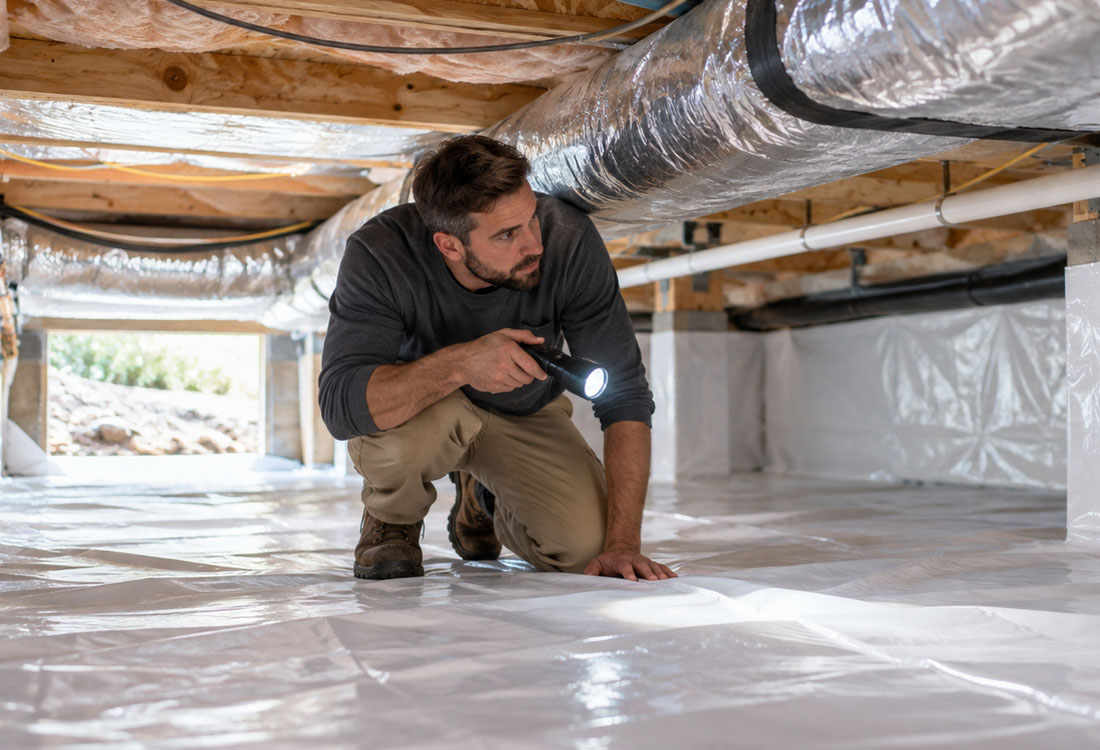
The crawlspace is one of the most overlooked areas of a home, yet its condition can influence the performance, durability, and comfort of the entire property. Because crawlspaces are located beneath the living areas, they are often exposed to soil moisture, groundwater, humid air, poor ventilation, and outdoor temperature changes. When moisture remains uncontrolled, it can affect wood framing, insulation, ductwork, flooring, and other components located above or inside the crawlspace. A properly designed encapsulation system can help create a cleaner, drier, and more controlled environment while reducing the conditions that contribute to long-term moisture-related problems.
Crawlspace encapsulation involves sealing the crawlspace from uncontrolled moisture and outside air by installing a durable vapor barrier across the floor and, when appropriate, extending it along foundation walls and other surfaces. Depending on the property’s conditions, the system may also include air sealing, drainage improvements, a sump pump, insulation, and humidity control. The goal is not simply to cover the soil with plastic but to create a coordinated moisture-management system suited to the specific crawlspace. Proper planning and professional installation can make a significant difference in how effectively the system performs over time.
Understanding What Crawlspace Encapsulation Does
Traditional vented crawlspaces can allow outdoor air to move freely through the space beneath the home. Although ventilation was once commonly considered a way to reduce moisture, outdoor air can actually introduce humid conditions during certain seasons. When warm, humid air enters a cooler crawlspace, condensation may form on surfaces such as pipes, ducts, insulation, and structural components.
Encapsulation changes this environment by limiting uncontrolled air and moisture movement. A heavy-duty vapor barrier is installed over exposed soil and may be sealed around foundation walls, support columns, seams, and other areas where moisture can enter. The system can then be combined with humidity control and drainage measures to maintain a more stable environment.The exact design should depend on the crawlspace’s condition. A property with standing water may require drainage and sump equipment before encapsulation, while a crawlspace with primarily humidity problems may require a different combination of vapor protection and dehumidification.
Why Moisture Is a Major Crawlspace Concern
Moisture is one of the most common challenges in crawlspaces because soil beneath the home naturally contains water vapor. Groundwater, plumbing leaks, poor grading, foundation seepage, and humid outdoor air can add even more moisture to the environment.When moisture remains elevated for long periods, wood components can be exposed to damp conditions that may contribute to deterioration. Insulation can also lose effectiveness when it becomes damp, while metal components such as ductwork and fasteners may be vulnerable to corrosion.Moisture can also migrate from the crawlspace into the living areas above. Since the crawlspace is connected to the home’s overall air environment through gaps and openings, improving conditions beneath the home can contribute to a more controlled indoor environment.
Signs Your Crawlspace May Need Attention
Homeowners may not regularly enter their crawlspace, so problems can continue unnoticed for long periods. A musty odor coming from floors or lower areas of the home can be an early indication of excessive moisture beneath the property. Damp insulation, condensation on pipes, standing water, or visible moisture on foundation walls can also signal a problem.Other warning signs may include deteriorating wood, rusting metal components, sagging insulation, pest activity, or unusually high humidity. In some cases, homeowners may notice that certain rooms feel uncomfortable even when the heating or cooling system is operating normally.These symptoms do not automatically mean encapsulation is the only solution. A professional inspection can identify where moisture is coming from and determine whether drainage, waterproofing, air sealing, vapor protection, or humidity control is needed.
The Importance of a Proper Vapor Barrier
A vapor barrier is one of the central components of a crawlspace encapsulation system. It is installed over exposed soil to reduce the movement of moisture vapor from the ground into the crawlspace air.For the barrier to perform effectively, installation quality is important. Seams should be properly overlapped and sealed, while edges and penetrations should be addressed to reduce pathways for moisture and air. The material should also be durable enough to withstand the conditions of the crawlspace.A poorly installed vapor barrier with open seams, exposed edges, or numerous gaps may not provide the same level of moisture control as a properly sealed system. Professional installation helps ensure that the barrier functions as part of a complete encapsulation strategy.
Sealing Crawlspace Walls and Openings
Moisture and outside air can enter through more than just the crawlspace floor. Foundation walls, vents, access doors, plumbing penetrations, and other openings can provide pathways for air and moisture.Encapsulation may involve sealing these areas to create a more controlled environment. Foundation walls can be covered or treated according to the design, while access points can be fitted with appropriate doors or covers.Air sealing should be performed carefully so that the crawlspace is separated from uncontrolled outdoor conditions without interfering with necessary mechanical systems or safety requirements. The finished system should be designed specifically for the structure.
Controlling Humidity After Encapsulation
Encapsulation can reduce moisture entering from the ground and outside air, but humidity may still be present from other sources. This is why humidity control can be an important part of a complete crawlspace system.A properly sized dehumidifier can help maintain more stable humidity levels after the crawlspace has been sealed. The equipment should be selected according to the size and conditions of the space rather than simply installing the largest available unit.Humidity management is especially important when the crawlspace contains wood framing, insulation, ductwork, or other materials that can be affected by prolonged dampness. Monitoring humidity levels can also help homeowners identify changes that may require attention.
Addressing Standing Water Before Encapsulation
Encapsulation should not be used to simply cover an active water problem. If standing water is present, the source should be identified and controlled before the crawlspace is sealed.Water may enter through foundation walls, plumbing leaks, groundwater, poor exterior drainage, or other pathways. Depending on the situation, drainage systems, sump pumps, grading improvements, or waterproofing may be necessary.A crawlspace that is properly encapsulated but continues to receive uncontrolled groundwater may still experience moisture problems. Addressing water at its source helps the encapsulation system perform more effectively.
The Role of Sump Pump Systems
Some crawlspaces require a sump pump as part of their moisture-control strategy. A sump system collects water in a designated basin and pumps it away from the foundation.The discharge system should be designed so that removed water does not simply return to the soil beside the crawlspace. Regular maintenance is also important because a sump pump can become a critical part of the property’s water-management system.Homeowners should periodically test the pump and inspect the discharge line for blockages or other problems. Backup equipment may also be appropriate in properties that experience significant groundwater or depend heavily on the sump system.
Protecting Structural Wood Components
Wood framing and other structural components inside a crawlspace can be affected by prolonged moisture exposure. Maintaining a controlled environment can help reduce the conditions that contribute to deterioration.
Encapsulation does not replace the need to inspect existing wood. If framing has already been affected by moisture, it should be evaluated and addressed as part of the overall crawlspace project.
Reducing moisture after repairs can help protect the remaining structure from continued exposure. Keeping the crawlspace dry and stable also makes it easier for homeowners and professionals to inspect the area in the future.
Improving Insulation and Energy Performance
Crawlspaces can influence the temperature and comfort of rooms located above them. When insulation becomes damp, damaged, or displaced, its ability to perform effectively may be reduced.Depending on the construction of the home, encapsulation may be combined with insulation improvements around foundation walls or other appropriate areas. The objective is to create a more controlled thermal boundary beneath the living space.Energy performance depends on many factors, including insulation quality, air leakage, heating and cooling equipment, windows, and overall building construction. Crawlspace improvements can contribute to better performance when they are properly integrated with the rest of the home.
Protecting Ductwork and Plumbing
Crawlspaces often contain important mechanical components, including HVAC ducts, water lines, electrical systems, and plumbing. These components can be exposed to temperature fluctuations and moisture when the crawlspace is poorly controlled.Reducing humidity can help create a more stable environment for these systems. Insulation and air sealing may also help reduce unwanted temperature changes where appropriate.
Before encapsulation begins, all visible mechanical systems should be inspected for leaks, damage, or other concerns. Repairing problems before sealing the space can help prevent future issues from being hidden behind the encapsulation materials.
Crawlspace Encapsulation and Indoor Comfort
The crawlspace is physically connected to the home, even when it is separated from the living areas. Air can move through gaps around floors, pipes, ducts, electrical penetrations, and other openings.When the crawlspace contains damp or musty air, some of that air can migrate into the living areas. Controlling moisture and sealing uncontrolled pathways can help create a cleaner and more stable environment beneath the home.Homeowners may notice improved comfort after crawlspace improvements, particularlywhen moisture and air leakage were contributing to uncomfortable floors or rooms. However, encapsulation should be viewed as one component of whole-home performance rather than a guaranteed solution for every indoor comfort issue.
Encapsulation and Pest Prevention
Damp crawlspaces can sometimes create conditions that are attractive to certain pests. Moisture reduction can make the environment less favorable for some unwanted activity, although encapsulation is not a substitute for professional pest treatment when an infestation already exists.Sealing gaps and improving access doors can also reduce opportunities for outside air and pests to enter. Before encapsulation, any existing pest problems should be identified and addressed appropriately.A cleaner, more accessible crawlspace can make future inspections easier. Homeowners and professionals can more readily identify leaks, damage, or other concerns when the area is organized and protected.
Why Professional Installation Matters
Crawlspace encapsulation involves more than placing a plastic sheet over the ground. The system must be designed around the property’s moisture sources, foundation conditions, drainage, ventilation, insulation, and mechanical equipment.Professional installers can evaluate whether the crawlspace has standing water, excessive humidity, foundation seepage, poor drainage, or other conditions that should be corrected before sealing. They can then select suitable materials and determine how the vapor barrier should be installed and sealed.Proper installation can also help prevent common problems such as loose seams, exposed edges, trapped water, inadequate drainage, or inaccessible equipment. A comprehensive approach provides stronger long-term protection than a basic surface covering.
Maintaining an Encapsulated Crawlspace
Although encapsulation reduces moisture exposure, regular maintenance is still important. Homeowners should periodically inspect the vapor barrier for tears, displacement, or damage caused by maintenance work or other activity.The crawlspace should also be checked for standing water, unusual odors, condensation, or changes in humidity. Sump pumps and dehumidifiers should be maintained according to their equipment requirements.Exterior drainage should remain functional as well. Gutters and downspouts should be kept clear, and surface grading should continue directing water away from the foundation. Encapsulation works best when the entire moisture-management system is maintained.
When to Consider Crawlspace Encapsulation
Homeowners may want to consider encapsulation when the crawlspace has persistent humidity, exposed soil, musty odors, damp insulation, recurring condensation, or moisture-related concerns. It can also be useful when a property owner wants to create a more controlled environment beneath the home as part of a broader moisture-management plan.An inspection is especially valuable when standing water, structural wood concerns, foundation seepage, or significant humidity is present. These problems should be addressed according to their specific causes rather than simply covered.For homes with existing drainage or foundation concerns, encapsulation can be coordinated with other services to create a more comprehensive moisture-control strategy.
Long-Term Benefits of Crawlspace Encapsulation
A properly designed encapsulated crawlspace can help protect structural materials, improve moisture control, and create a more stable environment beneath the home. Reduced humidity may help protect wood framing, insulation, ductwork, and other components from prolonged exposure to damp conditions.Sealing uncontrolled air pathways can also help improve comfort in rooms above the crawlspace. A cleaner and more accessible crawlspace can make future inspections and maintenance easier. For homeowners planning to maintain or renovate their property, encapsulation can be a valuable investment in the area beneath the home. Protecting the crawlspace can contribute to the durability and performance of the entire structure.
Planning a Crawlspace Encapsulation Project
Before beginning an encapsulation project, homeowners should understand the current condition of the crawlspace and identify any moisture sources. A professional assessment can determine whether drainage, waterproofing, plumbing repairs, insulation improvements, or humidity control should be completed before the vapor barrier is installed. The project should also account for access to utilities and mechanical equipment. Encapsulation materials should not prevent future inspection or maintenance of important systems. Access points, sump pumps, dehumidifiers, and other equipment should remain serviceable after installation. A well-planned project addresses the crawlspace as a complete system. Rather than focusing only on the visible soil surface, professionals can consider water entry, air movement, humidity, drainage, insulation, and structural conditions together. Homeowners looking for professional crawlspace encapsulations can benefit from a comprehensive approach that addresses these factors together for more dependable long-term moisture protection.
Conclusion
Crawlspaces play an important role in the overall condition of a home, even though they are often overlooked. Excessive moisture, humid air, standing water, poor drainage, and inadequate insulation can affect structural materials and mechanical systems while contributing to uncomfortable conditions in rooms above.Crawlspace encapsulation can help create a cleaner and more controlled environment by reducing moisture vapor from the soil, limiting uncontrolled air movement, and supporting better humidity management. Depending on the property, an effective system may also include drainage improvements, sump pumps, insulation, air sealing, and other moisture-control measures.The most effective results come from addressing the underlying conditions before the crawlspace is sealed and maintaining the system after installation. Regular inspections, functional drainage, properly maintained equipment, and attention to exterior water management can help preserve the benefits of encapsulation. With professional planning and quality installation, homeowners can protect the space beneath their property while supporting the long-term durability, comfort, and performance of the entire home.



