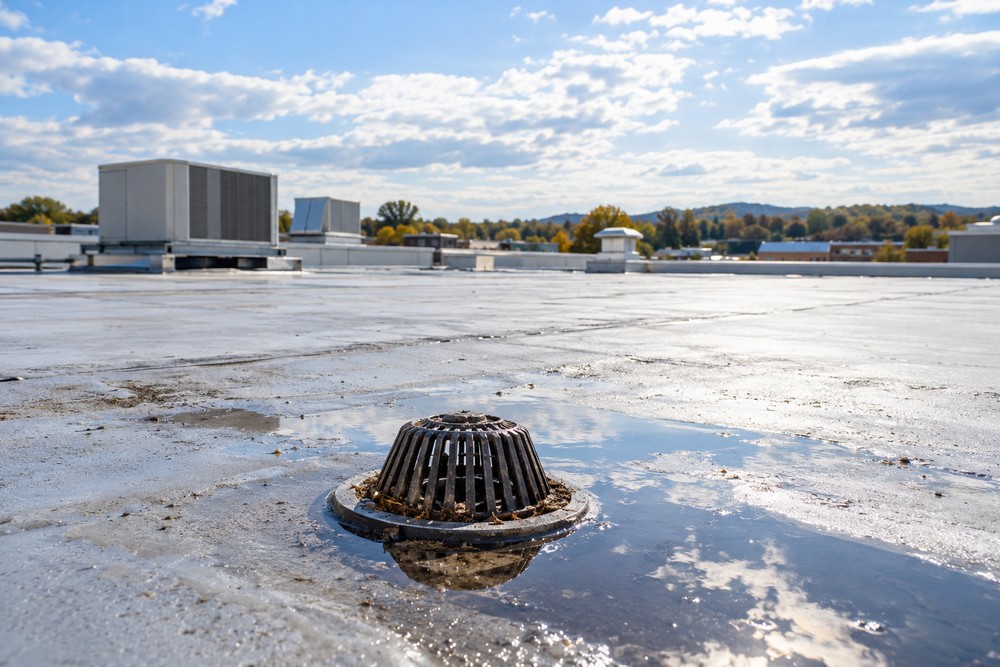
Two weeks after a hailstorm rolled through West Knoxville, a strip center owner I know got three repair quotes. The lowest one skipped the roof drain inspection entirely. Nine months later, standing water from that same drain found its way into a tenant’s ceiling tiles.
The cheapest fix on a commercial roof is almost never the cheapest outcome. It’s the deferred cost that gets you, sitting quietly in a capital budget line item you didn’t plan for. Most property managers in Knoxville don’t need a new roof. They need a schedule they’ll actually keep.
That’s where the right help matters. Working with expert commercial roofers early in a building’s life cycle usually costs less than emergency repairs after water gets into the insulation. And the difference comes down to timing, not luck.
Why Knoxville Roofs Age Faster Than You’d Expect
East Tennessee isn’t a brutal climate, but it’s an inconsistent one. You get long stretches of humid heat, sudden hail events in spring, and freeze-thaw cycles in January that most building owners underestimate. Membranes don’t fail from one big event. They fail from small openings that let moisture in, sit there, and expand through the winter.
The National Oceanic and Atmospheric Administration tracks severe storm patterns across the region, and East Tennessee sits in a corridor where hail and high wind events show up more often than the national average would suggest. That’s not a reason to panic. It’s a reason to inspect on a schedule instead of reacting to whatever the last storm left behind.
A single popped fastener or a cracked pipe boot doesn’t announce itself. Water finds the seam, travels under the insulation, and shows up as a stain on a tenant’s ceiling three rooms away from the actual damage point.
How Often Should You Actually Inspect?
Twice a year is the honest answer for most commercial buildings in this market, once in early spring after storm season and once in late fall before winter. Add a third walk-through after any hail event large enough to dent a car hood in your parking lot.
Here’s what most property managers get wrong: they treat inspection as a repair trigger instead of a planning tool. An inspection that only produces a “looks fine” report isn’t giving you anything you can budget against. You want dated photos, a drain condition note, and a short list of items that need attention in the next 90 days versus the next 12 months.
That distinction matters more than people realize. A seam that needs attention in 90 days is a maintenance line item. The same seam ignored for two years is a section replacement.
The Replacement vs. Repair Decision
Every building owner eventually faces a quote that says “we can patch it, but you should really replace it.” That’s not always an upsell. It’s occasionally a contractor covering themselves. Here’s how I’d sort it out.
- Patch it if the damage is isolated, the membrane is under 10 years old, and the surrounding field shows no blistering or saturation.
- Patch and monitor if the damage is isolated but you can’t confirm how long water has been entering.
- Replace the section if repairs are stacking up in the same area or the insulation beneath is wet.
- Replace the roof if you’re looking at widespread seam failure across multiple roof sections or the system is past its expected service life for its material type.
My stance: replace when the math on repeated repairs exceeds roughly a third of the replacement cost within a five year window. Below that, keep patching and keep documenting. Above it, you’re throwing money at a surface that’s already lost.
Reading a Repair Quote Without Getting Burned
Roofing quotes look similar on the surface. They usually aren’t. Three things separate a quote you can trust from one you’ll regret in eight months.
First, does it name the material and thickness? “TPO membrane” tells you almost nothing. Membrane thickness and fastener specification tell you whether the quote is comparable to the other two you’re holding. If they aren’t specified, the bids aren’t comparable and you’re picking on price alone.
Second, does it say who’s doing the work? A crew that shows up without a clear scope of what’s under the existing membrane is guessing. If the quote doesn’t mention what happens if they find wet insulation during tear-off, expect a change order later. Every experienced roofer knows what a wet insulation discovery looks like. The good ones put it in writing up front.
Third, warranty terms. A material warranty and a workmanship warranty are different documents. If a contractor only hands you the manufacturer’s warranty sheet, ask who covers the labor if the seam they installed fails in year three. According to the U.S. General Services Administration, roofing is one of the building systems most frequently cited in facility condition assessments as a leading source of unplanned capital spend. The labor side of that problem is where small contractors disappear.
A Maintenance Schedule You Can Actually Run
Here’s a version that works for a building portfolio without a dedicated facilities team.
- March: Post winter inspection. Check for freeze damage, split seams, and any ice damming aftermath.
- May: Post storm season walk. Anything the April and May storm cells left behind gets documented with a date and a photo set.
- August: Mid year drain and scupper clearing. Summer storms pile debris in drains faster than you’d expect.
- October: Pre winter inspection and maintenance work. Schedule any open items now, not in December.
- After any significant hail event: Documented inspection within 30 days, even if you don’t expect findings.
Keep the records in one place. When you go to sell the property or negotiate a lease renewal with a national tenant, that file is worth more than you think. It’s the difference between a buyer seeing deferred maintenance and a buyer seeing a managed asset.
What This Adds Up To
A commercial roof isn’t a fixed cost. It’s a managed one, and the management part is mostly calendar work. Twice yearly inspections, a documented file, and a repair quote you can read line by line will do more for your building’s roof life than any single product upgrade. According to the Bureau of Labor Statistics, facility and property management roles are expected to grow steadily in the coming years, which means more people entering this work without a roofing background to lean on.
If you’re managing a commercial property in Knoxville and you don’t have a mid year inspection already on the calendar, that’s the place to start. What’s the last documented roof inspection date on your building?