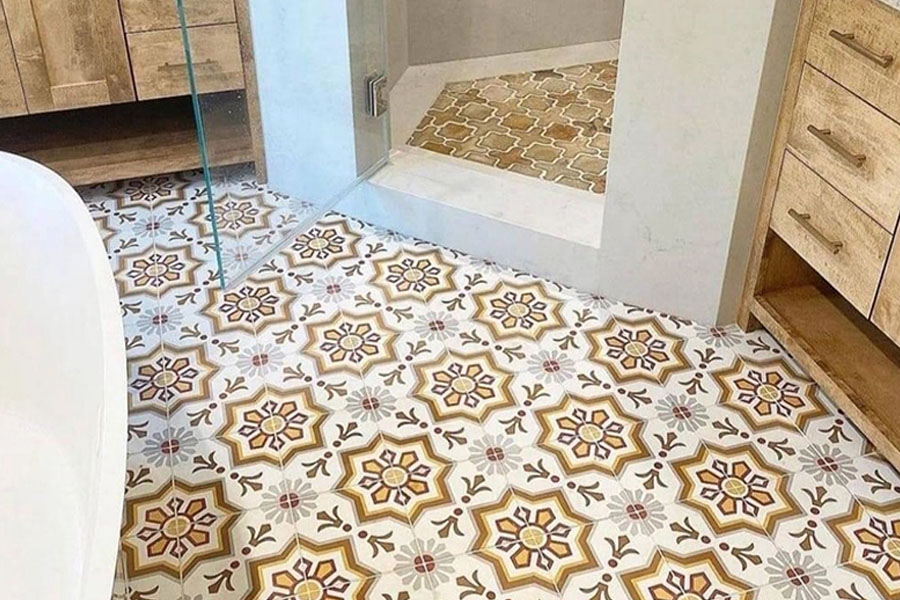
From Inspiration to Floor Plan: Seeing Beyond the Sample
Handling one tile is like holding a close-up snapshot. Color and texture are revealed, but size and repeat are not. Setting four, eight, or sixteen cement tile pieces together creates larger designs, note Astoria Charm professionals. Before committing, tape 4–16 samples on the floor to see the whole repeat. Return to the doorway, crouch to eye level, and see it from the usual angle. Stand in other room doorways if the room links. The appropriate pattern should appear purposeful from all angles.
Scale is pivotal. Small motifs can get busy in a large room, while a big graphic may feel overpowering in a compact powder room. Use the camera test: photograph the mockup, then view it at different zoom levels. Patterns that stay legible through the lens tend to read well in real life.
Color Strategy That Holds a Room Together
Rich pigments and soft, powdery cement tiles make color velvety rather than shiny. Use a dominant backdrop hue to support your walls and cabinetry, then add one or two accents that match metal finishes, textiles, or wood tones. If you like vivid colors, keep finishes simple. The band should keep time with the tile’s solo.
Take note of undertones. Warm taupe walls and a chilly gray pattern can clash. Place tile next to paint chips, cabinet samples, and countertop offcuts, then rotate the group throughout the day. A hue can go from balanced to bold in natural light, especially morning to afternoon.
Layout Moves: Borders, Pattern Rugs, and Flow
Think zones. Patterned rugs framed by solid tiles make a statement in entryway, kitchens, and dining rooms. Borders can delineate zones, transition to wood or carpet, and preserve perimeter cut edges. Long rooms might feel grounded with a boundary, like a picture frame containing the view.
Try centerlines. Snap chalk lines down the room’s visual axes and position important themes under pendants, the range, or a vanity. To emphasize movement in hallways, run the pattern down the spine. In square rooms, rotate patterns 45 degrees to expand. Diagonals energize and soften hard parallel walls.
Doorway continuity matters. If the pattern crosses a threshold, keep the layout aligned or finish with a transition strip. A misaligned motif at a doorway is like a sentence that ends mid-thought.
Performance Basics: Sealing, Slip, and Longevity
Dense, porous cement tile. A penetrating sealer is needed for kitchens, baths, and entryway. To prevent stains, pre-seal before grouting and apply final sealer once grout hardens. Topical treatments give shine and stain resistance, while matte sealers preserve the chalky hand. Occasionally reseal high-traffic areas. If water soon darkens the surface, re-seal.
Use pH-neutral cleansers. Avoid vinegar, bleach, and acid-based agents that fade colors and etch. Mat entrances and sinks. Oil and wine spills need immediate cleanup. Wet rooms can easily use cement tile on walls. Choose floor finishes with strong traction and make sure the sealant is not slippery.
Outdoors, consider climate. In freeze and thaw zones, cement tile can be risky unless the installation system is designed for exterior use and protected from saturation. Covered patios in mild regions are safer. UV exposure can soften colors over many years, so shaded areas retain vibrancy longer.
Installation Choices That Change the Outcome
Substrate matters. Surface should be flat, clean, and stiff. Patterned joints and geometry show little waviness. Use non-staining white thinset. Gray mortars shade light tiles. Avoid mastic. Back-butter tiles provide full coverage and edge support, especially on bigger formats.
Joint width varies by tile. Many cement tiles vary in size. To balance alignment and tolerance, plan a 1/8” joint. First dry-lay several rows to ensure a good rhythm. Face-up cutting with a wet saw and sharp diamond blade. To reduce edge spalling, tape the cut line. Rub edges lightly with a rubbing stone to clean joints.
Grouting alters everything. Sample boards for grout color testing. High-contrast grout emphasizes geometry and defines tiles. Tone-on-tone grout mixes the grid, highlighting the design. Apply grout release if the sealer manufacturer recommends it and carefully remove haze. The overnight haze might be tenacious.
Money and Timing: Ordering Smarter
Handcrafted cement tiles often have lead times. Order early and request one lot to keep color consistent. Expect slight shade variation, which is part of the material’s charm. Buy 10 to 15 percent extra for waste and future repairs. Complex layouts, diagonal patterns, or heavy cutting around cabinets call for a higher overage. Inspect boxes on arrival. If anything is off, resolve it before the installer is scheduled. Reschedules can stall a project and ripple through other trades.
Weight impacts logistics. Cement tile is thicker and heavier than many ceramics, which can affect shipping, stair loads, and door clearances. Compare finished floor heights to nearby appliances and rooms. Doors may require a transition strip or undercut.
Blending Materials Without Visual Noise
Maintain calmness when cement tile meets wood, stone, or carpet. Metal edge trims crispen and protect tile edges. Mixed patterns should vary in scale and intensity. Bold floors with gentle backsplashes or vice versa. For counters with prominent veining, consider a tile color that complements the stone. Like a duet, each material should let the other shine.
Radiant heat is compatible with cement tile if the system is installed by the book. Bring the heat up slowly after installation to avoid thermal shock. The pleasant thermal mass of cement pairs beautifully with radiant systems and makes winter mornings more inviting.
Where Pattern Sings: Applications by Room
Kitchen floors welcome motifs that connect islands and work zones. Use a pattern rug under the dining table to anchor the space. For backsplashes, scale down to a tighter pattern or use a border at the underside of wall cabinets to create a finished edge and to address outlet placement cleanly.
Field-tile walls and graphic floors offer a spa-like tranquility with personality in bathrooms. Consider a tiny perimeter border to facilitate wall and tub front cutting. For powder rooms, go dramatic. Visitors only see the room momentarily, making it ideal for bold color.
Entries and mudrooms benefit from darker backgrounds and forgiving motifs that mask grit. Laundry rooms can handle cheerful palettes that turn chores into something closer to a dance.
FAQ
Can cement tile go in a shower?
Yes, it performs well on shower walls when properly sealed. For shower floors, confirm traction levels, use a slip-conscious sealer, and maintain a strict sealing schedule. Avoid constant water submersion such as pools or steam room benches without a specialized system.
How often should I reseal cement tile?
Frequency depends on traffic and cleaners, typically every 1 to 3 years. Perform the water drop test a few times a year. If water darkens the tile quickly, apply a fresh coat of penetrating sealer.
What grout color works best with patterned cement tile?
If you want crisp geometry, choose a contrasting grout. For a unified look, pick a grout that matches the tile background. Always test on a spare tile set before committing.
Are cement tiles slippery when wet?
Unsealed cement has good traction. Some sealers can reduce grip. Choose a matte penetrating sealer and avoid high-gloss topical coatings on floors in wet areas. Bath mats and prompt drying further improve safety.
Can I use cement tile with radiant heat?
Yes. Use a compatible thinset and follow manufacturer warm-up protocols. Increase temperature gradually after installation and sealing to protect the assembly.
Will cement tile fade in sunlight?
Pigments are mineral based and durable, yet prolonged, direct sun can soften color over many years. Covered or shaded areas preserve color best. High-quality sealers help resist weathering.
What is the right grout joint for cement tile?
Plan for about 1/8 inch to accommodate slight size variation and to keep patterns aligned. Dry-lay and adjust as needed. Tight joints demand very consistent tiles and a perfectly flat substrate.
How much extra tile should I order?
Order 10 to 15 percent more than the measured area. Increase the overage for diagonal layouts, complex borders, or rooms with many cuts. Extra inventory is invaluable for future repairs.
Can I install cement tile myself?
Skilled DIYers can succeed with careful prep, the right tools, and patience. The margin for error is small with patterned layouts. For larger areas or intricate designs, hiring a pro can protect your investment.
What cleaners are safe for cement tile?
Use pH-neutral cleaners and soft pads. Avoid acids, bleach, and abrasive powders that can etch the surface or strip sealer. Quick cleanup of spills keeps tiles looking fresh.