Why Many Backyards Feel Exposed
Privacy goes beyond walls and hedges. Sightlines, sound, and space utilization from sunrise to dusk. One balcony at the appropriate angle can destroy a fence. Winter bare trees can turn a summer refuge into a fishbowl. First, check where you relax, cook, and eat. Note where you feel watched. Different times of day, walk your perimeter. View from upstairs windows and the street. Map eye heights at 5, 10, and 15 feet with a string line or laser level. Discovering blind areas will determine your build.
Layering: The Most Reliable Strategy
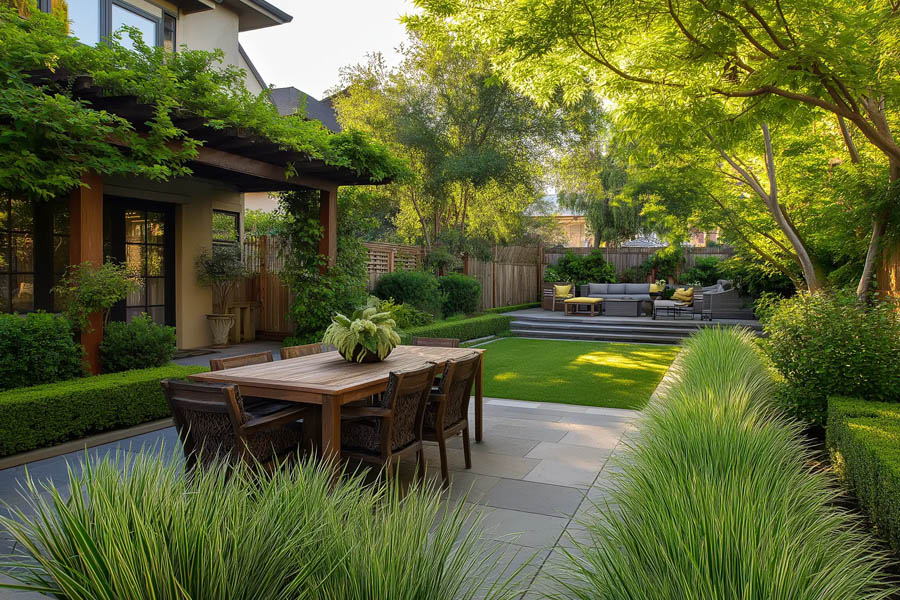
Layering beats any single product. Think of it like a theater set that uses backdrop, wings, and scrim.
- Base layer: grade changes, low walls, planters, and berms to lift plantings and interrupt sightlines at seated height.
- Mid layer: fences, hedges, clipped screens, lattice, and louvers at 4 to 6 feet to block ground level views.
- Canopy layer: pergolas, pleached trees, shade panels, and tall trellises to address second story and overhead angles.
Blend solids with filtered elements. A solid panel right behind a bench kills views and stops wind. A louvered screen outside a dining area softens views without turning the space into a box. Plants thread the layers together so the whole composition feels intentional, not barricaded.
Acoustic Privacy: Calmer Soundscapes
Sightlines are only half the story. Sound travels like water and pools in hard corners. If traffic or neighbors are loud, add mass and absorbency.
- Mass: Heavier fences reduce sound better than thin pickets. A double board fence with minimal gaps, masonry, or a timber wall adds heft. Where codes allow, include a sound-deadening membrane behind boards and cap the top to reduce flanking.
- Absorbency: Layer plants close to the barrier. Dense, leafy shrubs and textured foliage break up reflections. A 3 to 6 foot deep planting bed in front of a wall makes a noticeable difference.
- Masking: Water features, from a simple scupper to a bubbler bowl, add a steady hush that masks sporadic noise. Place the source near seating, not at the far end of the yard.
- Layout: Avoid long parallel hard surfaces. Stagger panels, add angled returns, or use planted corners to prevent echoes.
Treat the space like an instrument. Tuned correctly, it will sound quiet even when the world outside is not.
Small Yards and Rentals: Moveable Privacy That Works
When you cannot dig posts or pour footings, moveable pieces carry the load.
- Rolling planters: Tall, narrow planters with locking casters planted with columnar evergreens or clumping bamboo form a mobile wall. Rotate seasonally to balance growth and light.
- Weighted screens: Freestanding metal or wood panels fixed to weighted bases slip behind furniture and grill stations. Choose open patterns for wind relief.
- Deck clamps: Rail-mounted posts with pressure plates support fabric panels or slatted modules without drilling. Check clamp ratings and add guy lines for gusty conditions.
- Tension shades: Shade sails on removable eyebolts and sleeves provide overhead cover where building attachments are limited. Use quick links to drop them in storms.
- Convertible curtains: Outdoor curtains on cable or track create instant retreat zones. Opt for UV-stable fabric with grommets and bottom weights.
These pieces let renters and small-space owners test layouts and change their minds without a single hole in the ground.
Climate-Smart Choices That Look Good Year-Round
Choose what thrives where you live. Healthy materials and plants are the most private because they stay intact.
- Hot and dry: Consider olive forms, Texas sage, leathery pittosporum, rosemary standards, and steel or fiber cement screens that will not warp. Drip lines under mulch keep hedges dense without overspray.
- Coastal and windy: Use perforated panels or diagonally slatted screens that bleed wind. Rugged plants like escallonia, oleander, and New Zealand flax hold structure where salt and gusts are constant. Use stainless fasteners to avoid corrosion.
- Cold and snowy: Evergreen structure matters. Norway spruce, yew, and hornbeam trained as pleached panels keep form. Build fences with deeper posts and heavier footings below frost depth. Leave a small gap at the bottom of solid panels for drifting snow.
- Humid and rainy: Airflow prevents mildew. Mix open lattice with broadleaf evergreens like tea olive and camellia. Choose composites or well-sealed hardwoods. Space boards for ventilation and add gravel skirts at the base to keep splashback down.
- Deer pressure: Boxwood, inkberry holly, bayberry, and some viburnum cultivars resist browsing. Back them with a discreet wire fence or mesh behind plantings where local herds test boundaries.
- Tropical and subtropical: Clusia, areca palm, and podocarpus form clean, fast screens. Combine with aluminum or powder-coated steel for a bright, modern frame that stands up to sun and storms.
When in doubt, start with a pilot area. One 8 to 12 foot module tells you how the material looks and weathers before you commit.
Build It Right: Lines, Codes, and Footings
Privacy should never start a boundary war. Confirm your property lines with a recent survey. Mark utilities before digging. Talk to neighbors early. A friendly chat can save headaches and might lead to a shared cost.
- Heights: Many towns cap fence height at 6 feet in rear yards and lower near streets for visibility. Corner lots often have sight triangles with stricter rules.
- Style: Good neighbor fences present a finished face to both yards. Alternating panels or a shadowbox style feels fair and looks better from both sides.
- Footings: In frost zones, set posts below frost depth. In wet soils, bell the footing or use helical piles to resist uplift. In high wind areas, add hold-downs, through bolts, and diagonal bracing. Where rot is a risk, seat posts on brackets above concrete and use ground-contact rated material.
- Drainage: Solid runs can trap water. Add weep gaps or step panels with grade. Use French drains where downspouts meet screens to prevent puddling.
A well-built privacy element disappears into your routine. A poorly built one keeps showing up in your to-do list.
Night Privacy and Lighting That Does Not Backfire
After sunset, glass becomes a mirror to the street and a window for neighbors. Design for darkness as carefully as for daylight.
- Aim light down and shield fixtures. Use warmer bulbs to reduce glare and improve comfort.
- Place soft light within plantings so the viewer looks into illuminated leaves rather than your seating.
- Add translucent panels or ribbed acrylic near eye level at lounge zones to blur silhouettes without feeling boxed in.
- Use motion sensors away from conversation areas. Sudden light on the perimeter can deter peeking without washing the patio.
- Dim everything. Layers of subtle light beat a single bright source and maintain the mood.
Think like a photographer. Control the highlights and you control what others see.
Materials and Maintenance: Beauty That Lasts
Every choice has a lifecycle. Plan the care from day one.
- Wood: Cedar and hardwoods are warm and forgiving. Seal end grain, keep boards off soil, and maintain with oil or stain on a schedule. Hidden fastening reduces staining and splits.
- Composites: Low maintenance and stable, but heavier. Allow for expansion and contraction. Clean annually to prevent mildew film.
- Metal: Powder-coated aluminum resists rust and stays light. Steel feels solid but needs careful coating. Break up large surfaces to prevent drumming in wind.
- Masonry: Stone and block are permanent and quiet. They demand proper footings and drainage. Combine with greenery to avoid a fortress feel.
- Living screens: Irrigation is nonnegotiable for the first two seasons. Prune lightly but often to keep density. Mulch annually. Install root barriers where spread is a concern.
Write the maintenance into your calendar. A weekend each spring and fall keeps privacy tight and attractive.
Layout Playbook: Four Field-Tested Patterns
- Patio beside a neighbor’s window
- A 6 foot louvered screen parallel to the shared line at the patio edge
- A 2 foot deep hedge bed in front with layered grasses and a medium shrub
- A trellis wing angled 45 degrees to block the diagonal view
- Pool overlooked by a second story
- A pergola with privacy slats over the lounge side, not the whole pool
- Tall, narrow evergreens in staggered rows behind the pergola posts
- Frosted glass panels at seated height beside chaise lounges
- Narrow side yard used as a pass-through
- Alternating panels and lattice sections to avoid a tunnel feel
- A crushed stone path shifted off center with pockets for planters
- Wall-mounted planters at eye level to break the run
- Sloped lot facing the street
- A low retaining wall topped with a 4 to 5 foot airy screen to preserve light
- Terraced planting bands with evergreen bones and seasonal color
- A set of offset steps that divert direct views to the front door
Use these as starting points and tune them to your dimensions.
Budget Tiers: Spend Where It Counts
- Under 300 dollars
- Strategic fabric screens, a pair of planters with tall grasses, cable-mounted curtains, or a compact bubbler for sound masking
- 300 to 1500 dollars
- One or two freestanding screen modules, a small shade sail kit with quality hardware, or a cluster of rolling planters for a balcony
- 1500 to 6000 dollars
- A mixed run of custom wood or composite panels with a gate, a compact pergola over a dining set, irrigation for a new hedge, and integrated lighting
- 6000 dollars and up
- Site-built pergola or pavilion with louvers, masonry or gabion accents, pleached tree allees, and a recirculating water wall for sound and drama
Spend first where you sit and linger. Privacy dollars go farther when they hug the places you actually use.
FAQ
How do I figure out the right height to block a specific window?
Hold a straight pole vertically at the screen place and clip tape at various heights. Make sure a teammate is at the issue window while you raise or lower the tape to determine the cut line. Mark the ultimate height, then add 6–12 inches for sitting adjustments, slope, and yearly growth.
What is the best way to secure a privacy post on a deck without compromising waterproofing?
Align guardrail-rated surface-mount post bases over joists. Through-bolt with stainless hardware and blocking. Do not penetrate membrane roofs without a roofer’s flashing plan. Choose ballast bases or clamp-on railing posts with lighter screen materials for membrane decks.
Can landscaping alone reduce noise from a busy road?
Plants soften but do not eliminate steady road noise. A 3 to 6 foot deep, dense planting bed in front of a solid barrier improves performance, but the barrier provides the primary reduction. Combine mass, absorption, and masking water features for the best result.
How do I keep moveable screens safe in high wind?
Choose panels with perforations or angled slats to relieve pressure. Add wide bases with sand or concrete ballast. Use ground anchors or discreet guy lines for storm days. Store fabric sails and curtains when high wind is forecast.
Are motorized louvered pergolas worth it for privacy?
They are effective where overhead overlook is the main issue. Adjustable louvers give control over light and sightlines in a way fixed slats cannot. They cost more and need power and maintenance. In tight lots with multiple neighbors, the flexibility often justifies the price.
What is a good neighbor fence and why choose it?
A good neighbor fence shares the finished look. Both sides see alternating boards or mirrored panels, so no one feels stuck with the back. It builds goodwill, looks balanced, and often meets community standards more easily than a single-sided design.