Replacing a missing tooth can affect far more than appearance. Gaps may change how you chew, speak, smile, and distribute bite pressure. For many people, understanding the potential dental implant advantages is a useful first step when comparing long-term tooth replacement options.
Implants are not the right choice for every person or every situation. The best plan depends on oral health, bone support, medical history, budget, comfort preferences, and goals for daily function. A careful consultation can help determine whether an implant, bridge, denture, or another approach makes the most sense.
Why Consider Dental Implants?
After tooth loss, nearby teeth can gradually drift toward the empty space. This may make cleaning harder and can alter the bite over time. The jawbone in the area may also lose volume because it no longer receives the same chewing stimulation. Replacing a tooth can support comfort and function, but it should be viewed as a health decision rather than a quick cosmetic fix.
Some people need to replace one tooth, while others are managing several missing teeth or an unstable denture. A dental professional can explain the benefits and tradeoffs of each option, including the amount of treatment involved, expected maintenance, and future repair needs.
How Dental Implants Work
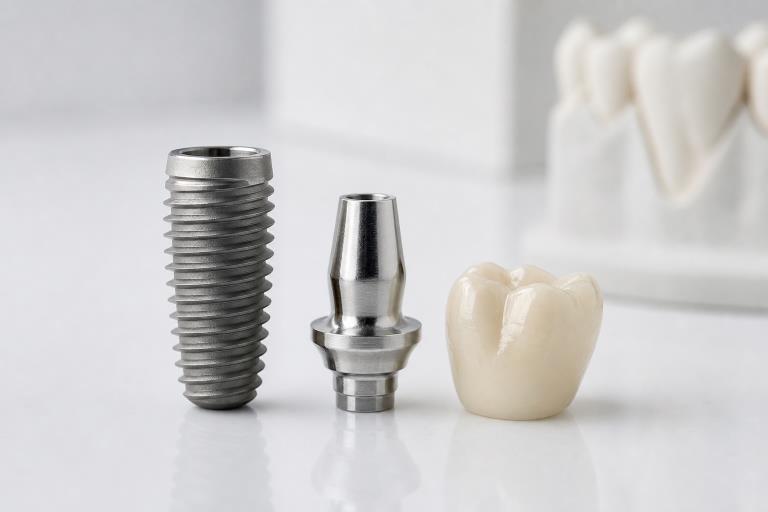
A dental implant is a replacement system that supports a new tooth or set of teeth from within the jaw. As explained in this overview of dental implant treatment, the system typically includes an implant post placed in the bone, an abutment that connects the components, and a visible restoration, such as a crown, bridge, or denture.
- Implant post:A small post placed in the jawbone.
- Abutment:A connector that joins the post to the replacement tooth.
- Restoration:The crown, bridge, or denture is designed to restore visible teeth.
Placement and restoration design matter because implants must handle real chewing forces. Healthy gums, adequate bone, a balanced bite, and ongoing professional care all contribute to a stable long-term result.
Choosing a Replacement Option
Single-Tooth Implants
A single-tooth implant usually supports one crown. It can replace an individual missing tooth without requiring a traditional bridge to be placed on healthy neighboring teeth.
Implant-Supported Bridges
When several adjacent teeth are missing, two or more implants may support a bridge. This approach can reduce the number of posts needed compared with placing one implant for every missing tooth.
Implant-Supported Dentures and Full-Arch Care
Implants can also help secure a removable denture or support a fixed full-arch restoration. These complex plans may involve extractions, temporary teeth, bone grafting, healing periods, and a final restoration designed around the patient’s bite and facial appearance.
Who May Be a Good Candidate?
Age alone does not determine implant candidacy. During an evaluation, the dental team may review gum health, active infection, bone height and density, diabetes control, smoking or tobacco use, medications affecting bone or bleeding, teeth grinding, and the ability to maintain daily hygiene. Limited bone does not always rule out treatment, but it may mean that grafting or another preparation step is needed.
Treatment Planning and Main Stages
Planning begins with a medical and dental history, oral exam, gum assessment, and X-rays or 3D imaging when needed. These records help evaluate bone levels, nerves, sinus spaces, and implant placement. The appointment also covers timeline, temporary teeth, final restoration, and fees. Treatment usually follows: first, addressing gum disease or decay, removing unsavable teeth; then considering bone grafting if support is limited. The implant post is placed with anesthesia and comfort measures. Some patients get a temporary tooth, but immediate temporary teeth aren’t always suitable due to healing site protection. After healing, the final crown, bridge, or denture is fitted and adjusted for comfort, appearance, speech, and bite. Periodic adjustments may be needed post-delivery for wear or bite changes.
Healing, Osseointegration, and Daily Care
Osseointegration is the healing process in which bone bonds with the implant surface. Healing time varies according to bone quality, implant location, grafting needs, overall health, and bite forces. Research on long-term implant outcomes also underscores why ongoing monitoring matters, since survival does not rule out the possibility of biological or mechanical complications later.
Short-term swelling, tenderness, mild bruising, and minor bleeding can occur after surgery. Follow the treating clinician’s instructions for food choices, medication, cleaning, and activity. Smoking, poor plaque control, and placing excessive pressure on a temporary restoration can slow recovery.
Implants cannot develop cavities, but the surrounding gums and bone can become inflamed. Brush twice daily with a soft toothbrush, clean between teeth with floss or interdental tools recommended for the restoration, and attend regular exams and cleanings. A night guard may be recommended for grinding, and removable implant-supported dentures require cleaning both the denture and attachment areas.
Risks, Costs, and Questions to Ask
No procedure is risk-free. Early issues include swelling, discomfort, bleeding, infection, or delayed healing. Long-term problems can involve inflammation, bone loss, loose parts, chipped restorations, implant failure, or damage from grinding and uneven bite. Contact a dentist if pain worsens, swelling lasts, gums bleed, or an implant or restoration feels loose. Costs depend on the number of teeth replaced, imaging, extractions, grafting, sedation, temporary teeth, materials, lab work, and follow-up. Request a detailed treatment plan and inquire about insurance, savings accounts, or payment options.
Questions to Bring to a Consultation
- Which replacement options fit my oral health and goals?
- Is gum disease under control, and is there enough bone for placement?
- Could grafting, extractions, or temporary teeth be needed?
- How long could the entire process take?
- What does the written estimate include?
- How should I care for the implant, and what happens if a problem develops?
Final Thoughts
Dental implants are a long-term treatment that requires planning, healing, maintenance, and realistic expectations. Carefully comparing options, protecting gum health, and asking direct questions can help patients choose a tooth replacement plan that supports everyday comfort and long-term oral health.