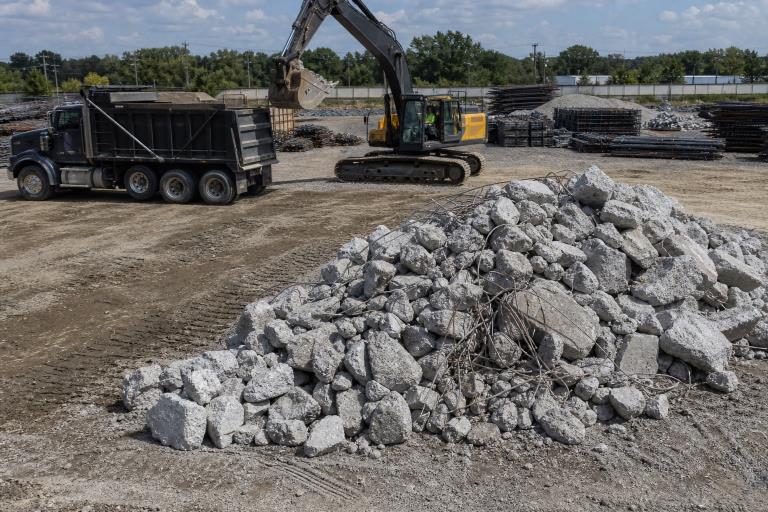
Concrete removal does not have to mean sending usable material into a disposal stream. With early planning, clean handling, and a clear destination for recovered aggregate, project teams can turn demolished slabs, curbs, foundations, and pavement into a useful resource. A practical concrete recycling plan helps connect demolition decisions with future material needs.
The most successful approach treats recovered concrete as part of the project supply chain. That means identifying what will be removed, separating it from contaminants, confirming processing requirements, and coordinating trucking before equipment arrives on site.
Why Circular Planning Matters
Planning before demolition gives teams more options than deciding after material is already mixed, loaded, and hauled away. Clean concrete can often be processed into aggregate for base, fill, drainage, and other approved uses. This can reduce disposal exposure, avoid unnecessary purchases of virgin aggregate, and make hauling more predictable. Federal guidance on reclaimed concrete material also identifies applications such as pavement aggregate, concrete bases, flowable fill, and asphalt concrete aggregate.
Start With A Material Audit
Before work begins, estimate the volume of concrete, map where it is located, and identify whether it contains rebar, wire mesh, or embedded fixtures. Note possible contaminants such as soil, asphalt, brick, wood, drywall, plastics, and trash. Teams should also identify the aggregate size needed later, along with local acceptance requirements and project specifications.
Material Audit Checklist
- Estimated tons or cubic yards of concrete to be removed.
- Concrete locations and planned removal phases.
- Reinforcing steel, mesh, or other embedded materials.
- Likely contamination risks.
- Potential reuse applications and required material sizes.
- Facility acceptance rules, testing needs, and documentation requirements.
Separate Concrete At The Jobsite
Source separation is one of the simplest ways to protect recovered material value. Establish separate stockpiles for concrete, asphalt, soil, masonry, wood, and general debris. A clean staging area reduces rejected loads, extra sorting, and truck delays at the receiving facility.
For example, a renovation project removing slabs, soil, and asphalt in phases should load each material separately. Sending a clean concrete load first, then hauling soil and asphalt through their appropriate channels, is usually easier than sorting a mixed pile later.
Plan The Processing Route
The processing route should fit the intended end use. Typical steps include an initial inspection, removal of visible debris, primary crushing, secondary crushing when a smaller product is needed, screening into size ranges, magnetic separation of ferrous metal, and final quality checks. Road base may call for a different gradation than drainage stone, pipe bedding, or general fill, so define the final product before material is processed.
Match Material To The Right Use
Processed concrete can serve several construction purposes when it meets the project design, local requirements, and testing criteria. Common uses include roadway base, pavement subbase, temporary construction roads, structural or general fill, pipe bedding, drainage layers, access pads, and working platforms.
Simple Matching Guide
- Road base:Confirm gradation, compaction targets, and applicable specifications.
- Drainage layer:Verify cleanliness and sizing for expected water movement.
- Pipe bedding:Confirm stable support and particle characteristics that will not damage the pipe.
- Fill:Define moisture, density, placement, and compaction requirements.
Check Quality And Project Requirements
Recycled aggregate should be judged by performance, not appearance alone. Review gradation, cleanliness, moisture, density, durability, and contamination levels. The project engineer, plans, specifications, and agency requirements should guide the decision. A material that works well as a temporary access base may not be appropriate for a drainage layer or a specified structural application.
Keep weight tickets, test results, acceptance records, delivery receipts, and final-use documentation. These records support approvals, closeout packages, sustainability reporting, and future project planning.
Control Hauling And Site Logistics
Recovery plans depend on efficient movement between the jobsite, processor, and final destination. Confirm travel distance, truck availability, legal load limits, route restrictions, loading conditions, and delivery windows before demolition starts. Balanced loads and clearly marked access points can shorten turnaround time and reduce avoidable delays.
Questions To Ask Before Scheduling Trucks
- What concrete materials are accepted, and what contaminants are prohibited?
- Are rebar and wire mesh acceptable?
- What hours, traffic patterns, and unloading procedures apply?
- What products and gradations are available for return delivery?
- What tickets, test data, or advance notice are required?
Measure Cost And Environmental Results
Compare disposal and recovery across the full project system, not one line item. Track tipping charges, sorting labor, crushing and screening costs, hauling distance, avoided aggregate purchases, truck trips, recovered tonnage, and material diverted from disposal. A lower disposal charge can lose its advantage if poor routing or long truck waits increase transportation costs.
Common Mistakes To Avoid
- Waiting until demolition is underway to choose a material destination.
- Mixing concrete with soil, trash, asphalt, or other debris.
- Ignoring embedded steel during loading and processing planning.
- Selecting an end use before reviewing specifications.
- Underestimating travel time, truck limits, and site access constraints.
- Making broad sustainability claims without project data.
A Simple 2026 Action Plan
- Estimate concrete volume and identify material types.
- Inspect for contamination and embedded metal.
- Separate concrete before loading.
- Identify approved processing and reuse routes.
- Confirm product size, testing, and documentation needs.
- Build hauling limits and delivery timing into the schedule.
- Track recovered tonnage, costs, deliveries, and final uses.
- Review results after completion and improve the next plan.
The growing focus on circular construction efforts reflects a broader industry need to retain more value from materials that would otherwise become waste. For project teams, the practical starting point is straightforward: plan early, keep loads clean, confirm requirements, and manage recovered concrete as a usable construction material.
Conclusion
Successful concrete recovery begins well before demolition. Clean separation, suitable processing, performance checks, and efficient hauling help preserve material value while supporting cost and schedule control. The strongest plans make recovered concrete part of the supply chain from the start, rather than an afterthought once removal is complete.