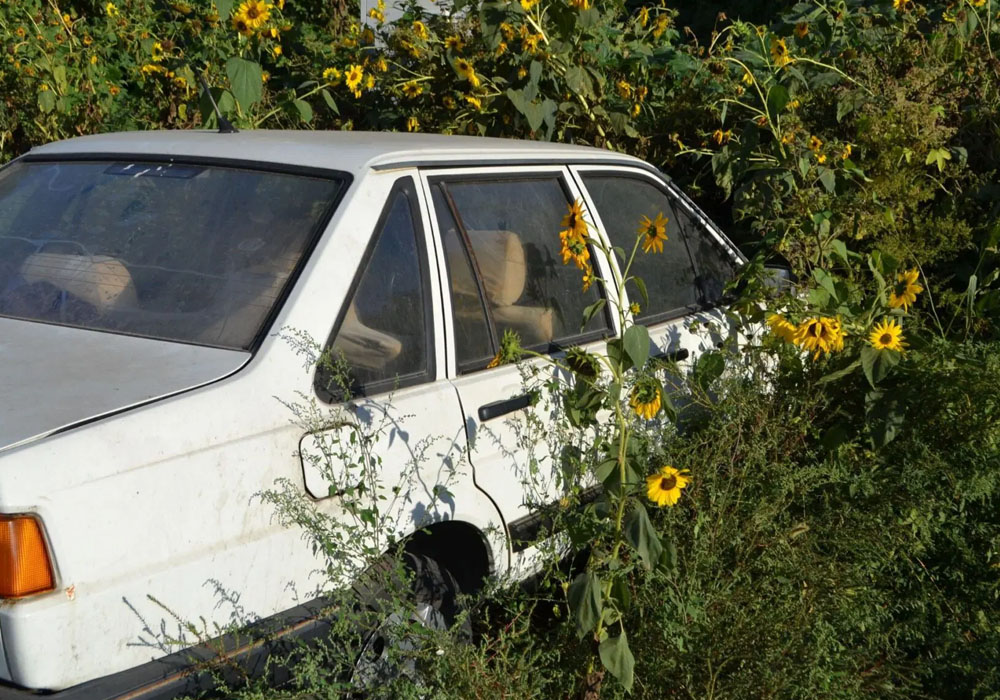
An unused car in your garage isn’t as harmless as it seems. Many times, people don’t realize the costs associated with keeping an old car that doesn’t run parked on their property until it’s too late. It can impact your finances in more ways than you think.
The fines can start faster than you’d expect
Many local homeowners associations (HOAs) and municipal code enforcement don’t mince words when it comes to non-running vehicles on your property: Move it – or we will. And if they tow, the cost and inconvenience is all on you. Those bulky vehicles are easy targets for enforcement officers because they’re in plain sight and easy to identify as not operational.
Sobering fact: Depending on where you live, it’s not just a quick hop and skip to the impound lot – the tow truck could be coming from a private company miles away, legally charging you a hefty per-mile fee to your property line. Then they’ll slap on a storage fee just for keeping it on their lot until you can produce proof of registration, insurance, and a current driver’s license – because a wrecker counts as a motor vehicle under the law too.
What’s leaking onto your property right now
A vehicle sitting for months isn’t airtight. Engine oil, coolant, and brake fluid break down over time, and as seals and gaskets dry, those fluids escape onto your pavement. What appears to be a small stain is petroleum-based fluid seeping into porous asphalt or concrete and, below that, the earth.
It’s problematic for a couple of reasons. First, repairing or resurfacing your driveway costs you money. More importantly, toxic automotive fluids – antifreeze, in particular – can leach into the groundwater supply. It’s illegal to dispose of those fluids improperly, and you don’t want to, anyway. You’re not on the hook for passive seepage in most instances, but you are responsible for the damage it causes to your property.
The scrap value is dropping while you wait
Here is the money side that almost nobody puts together. Scrap value at end-of-life is a function of two things: the weight of recyclable metal and the condition of salvageable parts. Both of those decrease the longer the car degrades in the backyard.
Rust and corrosion are not just cosmetic concerns. Surface rust begets structural rust, and once metal is compromised at that stage, it loses both its physical integrity and its potential reuse value. Parts that could have been pulled and resold – alternators, starters, door panels, seats – degrade in the open. The market price of scrap fluctuates, but a vehicle in worse physical condition will always fetch the lower amount.
The simplest way to plug that leak is to sell a junk car to a licensed auto recycling yard that includes the cost of towing and properly handling the title as part of the service. You get paid based on weight, the asset is removed from your yard or garage at no expense to you, and the recycling process ensures the fluids are disposed of correctly. It’s not widely known, but cars are actually the most recycled consumer product – roughly 95% of retired vehicles are processed each year. There’s a well-established infrastructure to handle this.
Rodents don’t see a junk car – they see a house
A parked vehicle with an unspoiled engine compartment, soft insulating material, and shelter is an open invitation to mice and rats. They find their way inside, take up residence in the air filter housing or behind the dashboard, and begin to gnaw. Wiring harnesses are particularly vulnerable because the insulating materials used to protect electrical cables are often irresistible to rodents. If the damage becomes extensive, junk car removal can be an option for disposing of a vehicle that is no longer practical to repair.
The problem doesn’t end there. Once a rodent population makes its home in a vehicle parked nearby, it’s just a matter of time before they spread. Pest control, replacement wiring, and possible structural damage can easily reach the thousands of dollars – and it all leads back to the decision to abandon the car in the first place.
Catalytic converter theft is also a problem. An unattended vehicle, especially an obviously inoperative one, is a low-risk target for thieves. Converters contain precious metals that have real value on the black market, and a thief with a reciprocating saw can remove one in less than 120 seconds.
The driveway has real value you’re giving away
Having a driveway and garage is very useful. It’s where a functioning car is shielded from weather, where you store tools, or where you secure some extra space for work. A non-functional car just blocks the use of something valuable and potentially useful. It’s not just taking up space, it’s taking up space which could be generating real utility and possibly money.
The first impression is so important when making any kind of sale. A rundown, non-functioning car in plain view says to everyone – whether it’s a potential buyer, an assessor fixing your tax bill, or a neighbor submitting a complaint about your property standards – that you don’t keep up your property. And if your neighbor makes that call, you know they’re going to mention the car is the reason and that you should’ve gotten rid of it ages ago.
The longer you leave it, the more likely you are to get fines and potential extra repair costs as well as your local wildlife deciding your car is now their new home. The scrap yard and the recycler can be your rational friends here since you’re going to meet them at some point and you may as well do it while you can still carry the bulk of your old battery in without needing a gut check.