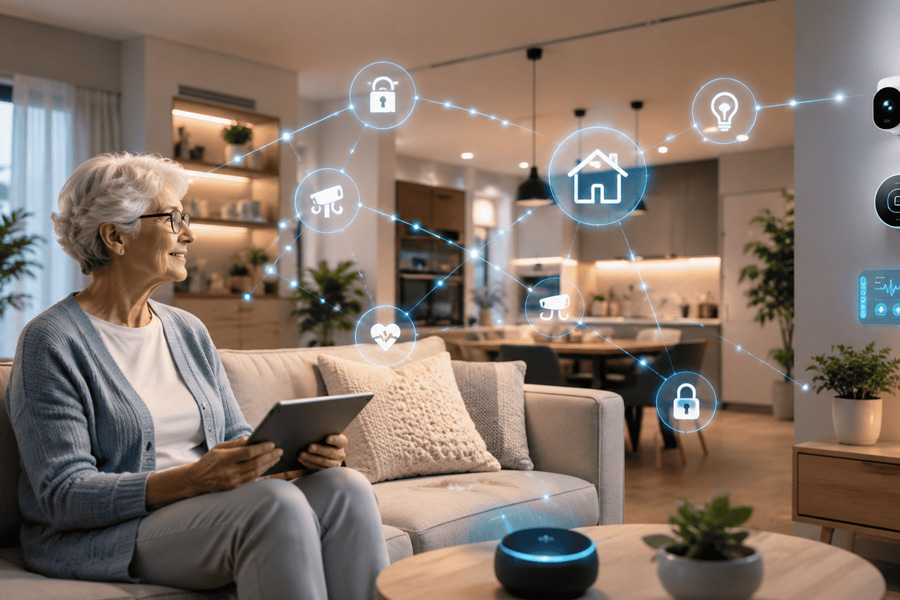
Why Tech-Ready Homes Beat Simple Downsizing
Moving to a smaller footprint used to mean compromise. Today it means refinement. The homes that serve active adults best are not just compact. They are orchestrated so that every square meter responds to how you live, reports Avalon Property Management solutions. A tech-ready space anticipates needs before they become chores. Lights meet you in a dark hallway. The door verifies guests without interrupting your book. Heating tunes itself as you move through rooms. This is not gadgetry for its own sake. It is infrastructure, like plumbing and insulation, that quietly supports independence.
The property bones differ most. Like kitchen architecture, connection, power management, and device networks are crucial. You can skip workarounds when the wiring, network, and support systems are in place from the start. Easy, not experimental, describes the residence.
The Day-in-the-Life Test
Imagine waking up to gentle morning light. The kitchen kettle starts as your bedroom speaker verifies the day’s plan. Your wristband tracks your heart rate and sleep quality and nudges your home to heat up. After asking for news, you dictate to a friend. Your caregiver checks in via a private dashboard to ensure your routine is normal without calling.
Midday, the doorbell rings and your phone shows a delivery. Intercom is used to allow parcel locker access. You join a language lesson in the afternoon using a large-screen app with easy controls and captions. The corridor is dim at night, and bedroom air filters rise silently as you read. No remotes or menus were juggled. The house managed the day like a stage manager, invisible yet ready.
Safety Without The Hospital Vibe
Best safety tech integrates into daily lives. Silent motion sensors learn your habits and spot significant changes. If you stay too long, the system checks in with a gentle chime and audio prompt before notifying a family member. Wearables or ceiling sensors can detect falls without invading bathroom and bedroom privacy.
Entryways get wiser without looking fortified. Smart locks produce temporary codes for cleaners and dog walkers, and video doorbells have wide-angle, glare-controlled views. Local and phone-based smoke, heat, and water leak sensors are important when you’re abroad. To gain confidence. Feel cocooned without being watched.
Comfort, Energy and the Monthly Bill
Climate control is where smart homes pay for themselves. Modern thermostats learn your preferences and the rhythm of your week. They preheat a room just before you typically use it, then glide to an eco mode when you head out. If you have solar, the system can shift heavier tasks like water heating to the sunniest hours. Smart blinds reduce heat loss on cold nights, and ceiling fans sync with sensors so you feel cooler without cranking the air conditioner.
Small details matter. A night scene command dims lights, lowers blinds, and puts non-essential plugs on standby. Room-by-room control cuts undetected waste. The monthly bill becomes another house responsibility, not a surprise at the end.
Connectivity That Just Works
Smart homes are only as good as their networks. Consider connection the nervous system. Powerful, centrally managed Wi-Fi with many access points minimizes dead zones, ensuring voice assistants hear you and video calls are clear. Home gadgets have their own network to avoid mixing with streaming or business calls. Router battery backups and mobile data failover keep crucial devices online during brief outages.
Device compatibility important. Use systems that support common standards to configure new devices without starting from scratch. Voice commands, routines, and automations are simpler when brands speak the same language. Long-term digital use is easier with fewer apps.
Privacy, Control and Consent At Home
Always have sensible boundaries when living smart. Determine which data stays at home and which is shared with family or caregivers. Many hubs analyze voice and sensor data locally, removing normal interactions from the internet. Use granular permissions for shared access. A daughter may receive water leak and missed prescription reminders, while a neighbor receives a plant watering door code.
Cameras and microphones deserve special care. Use physical shutters where possible. Set recording schedules and privacy modes that align with your daily habits. Label devices clearly so guests know when a camera is active. Transparency builds comfort. This is your home, not a public lobby.
New Build vs Retrofit: Choosing Your Path
Creating from scratch is advantageous. Builders can install conduit to crucial locations, hide camera and blind power, and hide structured cabling behind walls. It avoids battery swaps for high-use gadgets and keeps devices flexible for upgrades. Smart living communities often have fiber to the home, good cellular coverage, and telemedicine or coworking facilities.
Retrofitting can succeed with the appropriate approach. Start with non-wall-tearing cornerstone enhancements. Smart switches look and feel like toggles but allow app and voice control. Drillless wireless sensors detect water leaks, open windows, and motion. Mesh networks boost Wi-Fi in minutes. Add a hub to unify devices and prevent brand-specific apps.
Getting Real About Costs and Lifespan
Smart homes are investments, not purchases. Budget three levels. The first is essential: network hardware, hub, and sensors. Comfort and security: locks, lighting control, thermostats, and cameras as needed. Third is specialized: motorized shades, hearing-friendly doorbells, health and mobility sensors. Add the third as needed after the first two.
Devices age like appliances. Hubs, network gear, smart locks, and thermostats typically last five to seven years. Choose long-support manufacturers for firmware updates to ensure security. The cost of batteries is quiet. Set twice-yearly reminders to examine and replace them. Well-maintained systems are reliable.
Community Features That Matter
Beyond your front door, smart communities double benefits. Secure package rooms reduce courier racing. Clubhouses with hybrid meeting rooms simplify class enrollment and hosting. For evening walks, well-lit streets with call points provide peace of mind. Energy sharing or group-buying solar lowers bills and promotes resilience in some neighborhoods.
Digital community platforms can also simplify life. Booking a tennis court, reporting a maintenance issue, or RSVP-ing to a film night happens in a single app. You get more time back for the things you moved for in the first place.
FAQ
How do I keep smart home controls accessible if I have vision or hearing changes?
Choose gadgets with large, high-contrast UI and excellent voice feedback. A doorbell that flashes lights or vibrates a wearable can complement visual signals. Visitors still need physical buttons and smart switches. Training voice assistants to varied voices helps with speech loudness and clarity.
What happens if the internet goes down?
Plan for graceful decline. Local control is possible with many systems even without internet. Physical inputs and local automations should control lights, locks, and thermostats. A tiny router battery backup maintains important tasks online during minor outages, while a mobile data failover can span larger gaps.
Are voice assistants safe to use for private conversations?
Protect privacy with built-in features. Use physical mic mute buttons, disable wake words in sensitive rooms, and examine speech history. Look for devices that handle common commands locally. Use assistance in the kitchen or living room and mobile devices for personal tasks.
How can I avoid juggling too many apps?
Adopt a central hub or platform that integrates multiple brands. Prioritize devices that support common interoperability standards so they can live inside one dashboard. Create a few meaningful routines, like Good Morning and Good Night, that bundle actions across the home. Fewer, smarter automations beat dozens of fragmented ones.
What smart security features offer real value without feeling intrusive?
Use a video doorbell, smart lock, and well-placed lighting controls. Leak detectors near sinks and water heaters and interconnected smoke and heat sensors provide whole-home alarms. For more privacy in residential spaces, limit inside cameras to utility areas. Control alert recipients and timing to make notifications useful rather than overwhelming.
Is retrofitting worth it in an older property?
Focus on the right layers. Start with a solid network and hub. Instead of replacing every bulb, replace a few high-traffic light switches. Install smart thermostats, doorbells, and locks for daily convenience and security. Add sensors or motorized blinds where they will have the most influence as you discover what you want.