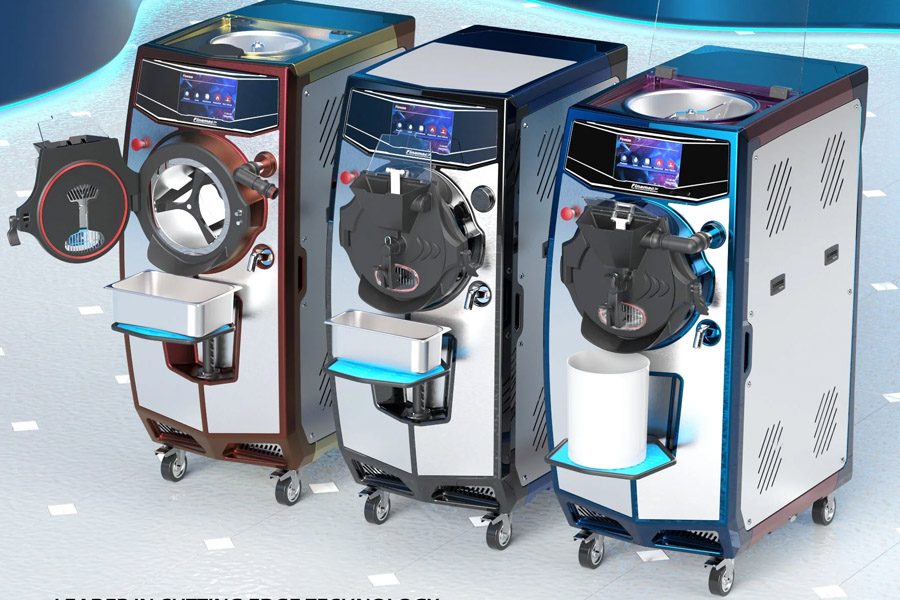
From espresso bar to frozen dessert hub
A frozen dessert program may make calm afternoons peak for a café. The goal is to add lucrative, high-quality things to a coffee brand, not to copy a scoop shop. Backbone is batch freezers and NSF-certified devices. Planning, texture control, solid cleanliness, and tight service flow transform them into income. Consider your freezer a second espresso machine—size, position, and manage it with precision.
Production math that keeps lines short
Before choosing equipment, model your real throughput. Work backward from servings, not hope.
- Portion size: 90 to 110 milliliters for gelato or ice cream by the scoop, 150 milliliters for sorbet cups, 120 milliliters for affogatos.
- Yield per batch: A 3.5 liter batch produces roughly 30 to 36 standard scoops depending on overrun.
- Cycle time: Quality café batch freezers often finish in 10 to 15 minutes. Add 5 to 8 minutes for extraction and quick clean between flavors.
- Daily run time: Two hours of focused prep can produce 7 to 9 batches, enough for 210 to 325 servings depending on portion and overrun.
If your weekday target is 60 desserts and weekends peak at 150, a 3 to 5 liter batch freezer cycles comfortably in a single morning prep block. Plan to run core flavors daily and rotate one or two seasonal items twice a week, which stabilizes inventory and limits waste.
Space, power, and the micro kitchen puzzle
Tight counters are not a deal breaker. Carve a compact dessert cell that does not tangle with the coffee line.
- Place the batch freezer on a sturdy, waist height prep shelf within arm’s reach of a hand sink.
- Reserve a second shelf for sanitized containers, lids, paddles, and scales to prevent cross traffic.
- Confirm power draw and circuit requirements before purchase. Many compact commercial units run on 120 V, some require 208 to 240 V. Match plug type and breaker capacity.
- Plan cold chain: one undercounter freezer set to hardening range for quick set, one display freezer or dipping cabinet for service. A small blast chiller accelerates set time if volume warrants it.
Map staff motion during prep and service. Dessert tasks should run in parallel with coffee, not across it. A clean flow turns a shoebox kitchen into a stage.
Texture, overrun, and cold chain control
Guests judge with the spoon. Texture is earned through cold control and air management.
- Overrun: Gelato typically targets 20 to 35 percent, American ice cream 40 to 80 percent depending on style, sorbet near zero. Program cycles or manually adjust based on mix solids and fat.
- Draw temperature: Extract product slightly soft so it spreads smoothly into pans. Too cold and you trap air inconsistently. Too warm and ice crystals form later.
- Hardening: Move pans to a hardening freezer as quickly as possible. Rapid set locks in microstructure and reduces ice crystal growth.
- Service temperature: Gelato displays around minus 11 to minus 13 Celsius, hard ice cream often colder. Match display temp to product style to avoid chalky textures.
Set a quick-scan routine: visual check for ice crystal formation, spoon test for elasticity, and thermometer reads at three depths in pans. Small habits prevent big disappointments.
Clean machines, clean inspections, clean conscience
NSF certification gives you a machine designed for cleanability and food contact safety. Turn that into daily practice with simple SOPs.
- Disassemble and sanitize contact parts at least once per production day. Use labeled containers for clean parts only.
- Tag and rotate gaskets, scrapers, and seals. Replace at the first signs of wear to prevent micro harborage and contamination.
- Adopt a color coded tool system. One scraper for dairy, one for fruit bases, one for allergen recipes to prevent cross contact.
- Record sanitizer concentration, wash temperatures, and reassembly times in a daily log. A tidy logbook is your best conversation with inspectors.
If you run nut flavors or gluten inclusions, create an allergen daypart strategy. Produce allergen items at the end of a prep block with a full teardown immediately after.
Menu engineering that fits a coffee-forward brand
Put coffee at the center. Build desserts that make sense for your clientele, not just for social photos.
- Espresso companions: Affogato flights with two mini scoops and a split shot, nitro float with chocolate sorbet, cardamom gelato for cappuccino pairings.
- Seasonal cadence: Rotate one dairy and one dairy-free flavor every 14 days. Announce changes on the register screen and receipts to prime repeat visits.
- Texture variety: Balance dense gelati with one high overrun ice cream for contrast. Offer a bright sorbet to reset the palate.
- Leftover strategy: Spin end-of-day pints from unsold pans and sell as take-home. Discount smartly to maintain perceived value.
Limit your permanent board to four or five stalwart flavors. Use one slot for a chef’s whim that keeps the team engaged and regulars curious.
Costing, pricing, and margin discipline
Clarity on unit economics prevents impulse pricing.
- Ingredient cost per liter: Track milk or plant base, cream, sugars, stabilizers, inclusions. Many cafés land between 2.50 and 5.00 per liter for gelato bases, more for premium inclusions.
- Labor per batch: Include prep, pasteurization if applicable, cleaning, and extraction. Assign a real hourly rate and prorate over cycle time.
- Packaging and utilities: Cups, spoons, lids, pint containers, freezer energy, and water for cleaning add up. Assign a per serving cost.
- Gross margin target: Cafés often target 70 percent or better on scoops, slightly lower on pints. Affogatos often outperform due to coffee synergies.
Example: A 3.5 liter batch yields 32 scoops. Total batch cost at 22 is 0.69 per scoop. Price at 4.75 per scoop and you net 4.06 gross. Sell 60 scoops per weekday and 120 per weekend day to push an additional 2,000 to 3,000 gross per week before fixed costs.
Labor and scheduling without added headcount
Use the quiet shoulder between morning rush and lunch for your production window. Cross train your strongest baristas to run the freezer.
- Assign a single owner for base prep, sanitation, and logs. Consistency beats creativity in the first 60 days.
- Time block: 90 minutes for two core flavors and one rotating. Add 20 minutes for teardown and sanitizer checks.
- Service roles: One person owns the dipping well during peaks. Pre-portion take-home pints during lulls to avoid clutter.
Post a simple weekly plan on the walk-in door. What gets written gets done.
Maintenance that protects uptime
Freezers fail when they are ignored. Keep them humming with light daily care and scheduled service.
- Daily: Wipe exterior vents, check noise levels, monitor cycle time for drift, log temperatures.
- Weekly: Inspect scraper blades and seals, audit fasteners, clean condenser filters if accessible.
- Quarterly: Professional check on refrigerant pressures, amperage draw, and calibration.
- Spares: Keep a labeled bin with gaskets, scrapers, sanitizer strips, food safe lubricant, and a backup paddle. A 20 dollar part can save a Saturday.
Build a single page troubleshooting flowchart for staff. If draw time spikes or product texture shifts, they can spot issues before a busy shift.
Energy, noise, and the guest experience
A café is intimate. The wrong machine can sound like a small airplane at takeoff. Evaluate:
- Decibel rating at one meter during freeze. Quieter units protect your ambiance.
- Energy consumption per cycle. Efficient compressors and smart defrost routines lower operating costs.
- Heat rejection. In small spaces, machines can warm the room. Position near an area with good airflow and away from espresso machines and ovens.
If your café feels like a living room, the equipment should behave like a well mannered guest.
Launch timeline: 30 days to confident service
Map a short, disciplined rollout to hit profitability fast.
- Week 1: Delivery, electrical validation, staff training on disassembly and sanitation, dry runs with water and sanitizer only.
- Week 2: Spin two base flavors repeatedly to dial cycle times and texture. Set up logs, label systems, and allergen protocols.
- Week 3: Add one dairy-free option and one inclusion-heavy flavor. Start small batch pints and capture feedback at the register.
- Week 4: Public launch with a pairing menu. Offer a bundle price on espresso plus gelato and a two scoop tasting flight. Track sell-through daily and adjust batch sizes.
Keep the plan simple and repeatable. Complexity can come later.
FAQ
How big should my first batch freezer be for a 40 to 80 scoop per day target?
For that range, 3–4 liter batches are ideal. One or two cycles per flavor in a late morning prep block can meet afternoon and evening demand without holding surplus inventory. If weekend peaks exceed 150 scoops, consider a 5–6 liter unit or a second prep block.
Do I need both a hardening freezer and a display freezer to start?
Starting with a single display freezer is fine if you serve items the same day and monitor batch time. A specialized hardening freezer enhances texture uniformity and set time, especially for inclusion-heavy recipes, and critical as volume increases. Add it when serving pans are soft or refilling takes longer.
What are the most common sanitation mistakes with ice cream machines in cafés?
The biggest pitfalls are incomplete disassembly, skipping gasket inspections, and inconsistent sanitizer concentration. Crevices behind seals and worn scrapers can harbor residues that normal rinsing will not remove. Build a checklist that includes gasket removal, visual inspection under bright light, and a quick test of sanitizer parts per million before reassembly.
How many flavors should I offer at launch without overwhelming production?
Four core flavors plus one rotating special is a balanced starting point. It limits changeovers, keeps cleaning manageable, and gives guests variety. Increase to six or seven only when your prep routine is smooth and waste is below a comfortable threshold.
What pricing psychology works best for café desserts tied to coffee?
Start with an affogato or float at a premium, then compare single scoops and pints. Espresso and single scoop at a discount encourages attachment without compromising margin. Keep price boards simple and round to recognizable values for register speed.
How do I prevent waste when demand is unpredictable?
Stagger output. Spin smaller batches more regularly, use pint-friendly flavors, and define a weekly flavor cadence so regulars know your routine. Track daily flavor sell-through for two weeks, then modify batch sizes by 15% based on the trend. Freeze extra into pints by day three to preserve texture and value.
Is a dairy-free option worth the extra complexity for small cafés?
As long as it’s one of your five slots. A good sorbet or plant-based gelato expands your audience and performs well on warm afternoons. Avoid cross-contamination using different paddles and containers. Changing tastes every two weeks keeps interest high without complicated prep.
What signals tell me it is time to upgrade or add a second unit?
If cycle times rise despite clean filters, you sell out before close, or prep blocks choke the coffee line, you have reached a capacity ceiling. Seasonal surges that compel menu breadth or quality sacrifices are another clue. Through recovered sales and smoother operations, a second unit or larger freezer will pay for itself rapidly.