What Makes Limestone Visually Special
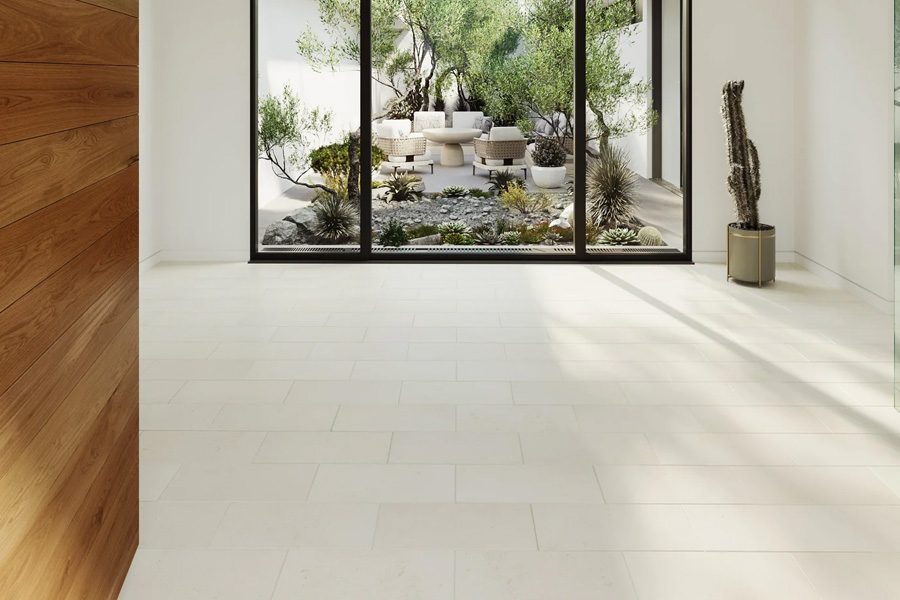
Limestone wears age beautifully. Each tile holds subtle mineral swirls, shell flecks, and tonal shifts that look like the whisper of a shoreline spread across your floor. Unlike uniform porcelains, limestone’s movement is gentle and organic, which keeps large surfaces from feeling flat. In bright rooms, a honed face diffuses light softly. In darker spaces, a brushed or tumbled surface adds tactile interest that pulls the eye without shouting.
From creamy beige to smoky gray and soft taupe, color families are varied. Some are silky and cloudlike, while others include tiny fossils that tell a natural tale. Limestone may be a neutral basis or a quiet standout depending on finishes and furniture.
Choosing the Right Finish and Format
Finish determines both vibe and performance.
- Honed: Matte, smooth, and versatile. Ideal for contemporary and classic schemes.
- Brushed: Slightly textured, with raised grain that enhances grip and character.
- Tumbled: Rounded edges and softened faces for a timeworn, Old World feel.
- Antiqued or distressed: A curated patina that looks like history underfoot.
- Bush hammered or sandblasted: Heavier texture for traction in wet zones.
Formats carry mood. Large squares or rectangles give calm, expansive lines. Planks introduce flow similar to wood floors. Modular French patterns add animation and suit spaces that want a sense of craft. Edge details matter too. Straight edges read crisp and modern. Pillowed edges soften transitions and disguise minor lippage. Keep grout joints slim where possible to spotlight the stone itself.
Room by Room: Smart Uses Indoors
- Entry and hallways: Limestone holds up well to daily comings and goings if sealed appropriately. Choose a brushed or tumbled finish for extra traction and to mask micro-scratches from grit.
- Kitchens: As a floor, limestone brings warmth that balances steel and glass. On counters, it looks gorgeous but demands a disciplined approach to spills. Acidic foods can etch, so floors are typically the safer placement.
- Bathrooms: Honed or textured slabs on floors lend spa calm. In showers, pick a denser limestone with good slip resistance and a small-format tile for better grip and drainage.
- Living spaces: Large-format honed tiles create a serene foundation for rugs and layered textiles. Limestone pairs well with radiant heat since it stores warmth and releases it evenly.
- Stairs and landings: Use matching treads with eased or bullnose edges for comfort and continuity. The subtle patina that develops adds character rather than looking worn.
Extending the Look Outdoors
When chosen correctly, limestone can make patios and terraces feel like internal rooms. Prioritize textured coatings and gripping stones for pool decks and wet zones. Choose a dense, low-water-absorption type and arrange for drainage in freeze-thaw regions. Clean transitions between house and garden are created by coping stones and thresholds in the same material.
Design Pairings That Elevate Limestone
- Metals: Aged brass or blackened steel set off warm beiges and creams, while brushed nickel or stainless echo cooler grays.
- Wood: Oiled oak amplifies limestone’s organic tone. Dark walnut anchors pale stones and draws contrast.
- Walls: Limewash, plaster, or mineral paints mirror limestone’s matte elegance and let the floor breathe visually.
- Textiles: Linen, wool, and jute complement the stone’s texture. Patterned rugs add a layer of softness without hiding the floor’s detail.
- Color: Keep palettes gentle. Think chalky whites, mushroom, clay, and slate blue. Let the stone be the quiet constant.
Installation Basics That Protect Your Investment
Stone is less forgiving than ceramic tile, so preparation matters.
- Structure and flatness: Subfloors need to be very stiff and very flat. Stone floors demand tighter tolerances to prevent cracking or lippage.
- Layout: Dry lay tiles to balance color variation, vein direction, and pattern flow across sight lines. Stagger cuts where they will be least visible.
- Mortar and back-buttering: Use a white thinset for light stones to avoid shadowing. Full coverage is essential, especially on larger tiles.
- Joints and movement: Plan movement joints in larger spaces and at transitions. Keep grout lines consistent and appropriate for the tile size and edge style.
- Seams and thresholds: Coordinate heights with adjacent floors early so you can avoid awkward ramps or trip points.
Care, Cleaning, and Patina
Limestone’s charm grows with a little age, but care keeps it beautiful.
- Sealing: Apply a penetrating sealer before or right after install, then reapply as needed. A quick water drop test helps gauge if it is time to reseal. If water darkens the stone quickly, it is ready for another coat.
- Cleaning: Use pH neutral cleaners and soft pads or mops. Avoid acids and harsh abrasives. Wipe spills promptly, especially oils and pigmented liquids.
- Etching and stains: Etches are surface dull spots from acids, not true stains. They can sometimes be blended with stone polishing compounds. Oil or dye stains may require a poultice to draw them out.
- Protection: Felt pads under furniture, entry mats to catch grit, and breathable rugs prevent unnecessary wear in busy spots.
Sustainability and Longevity
Stone floors can outlast generational trends. Its lengthy lifespan reduces replacement waste and offsets the initial expense. Damaged tiles can be raised and replaced. Many limestones can be resurfaced in place to restore brilliance without a complete overhaul. Wall colors, fixtures, and textiles blend with the stone’s neutral tonality as style changes.
Budgeting and Sourcing Tips
- Grade and selection: Tighter color matching and fewer natural features typically cost more. Embrace variation if you want warmth and character at a friendlier price.
- Thickness and format: Larger, thicker pieces raise cost and installation time. Balance impact with practicality for your space.
- Waste factor: Order extra for cuts, patterning, and attic stock for future repairs. Complex patterns or tight selection criteria require a higher overage.
- Sampling: View at least a few square feet, not a single tile. Stone changes with light, and broader sampling avoids surprises.
FAQ
Is limestone too soft for busy households with kids and pets?
Limestone is not as hard as granite, but the right finish and sealer make it resilient for family life. Choose honed or textured finishes that camouflage micro-scratches, place mats at entries, and keep claws trimmed. Patina will accumulate gently and looks intentional on limestone.
Will limestone feel cold underfoot?
Stone has high thermal mass and takes on the ambient temperature of the room. In sunny rooms it warms pleasantly. Paired with radiant heat, limestone becomes a comfortable, consistent surface that retains warmth long after the system cycles off.
Can limestone go in a shower or near a pool?
Yes, with careful selection. Opt for denser varieties and textured finishes for grip. Use smaller formats or mosaics in showers for traction and drainage. Maintain proper sealing and ventilation to keep surfaces looking their best.
How often should I reseal limestone floors?
Frequency depends on traffic and cleaner use. Many homes reseal every one to three years. Test with a water drop on a cleaned, dry area. If the stone darkens quickly, it is ready for another coat.
What is the difference between staining and etching on limestone?
A stain changes color by absorbing into the stone. An etch is a dull spot or mark from contact with acids that microscopically alter the surface. Stains respond to poultices. Etches may need polishing or professional honing depending on depth.
Which finish is best for slip resistance?
Brushed, tumbled, sandblasted, and bush hammered finishes increase texture and traction. Honed can work in many rooms but may be slippery when wet, especially in glossy variants. In wet zones, prioritize texture.
Can I use dark grout with light limestone?
You can, but test first. Some limestones are porous enough that dark pigments can lodge at edges or in micro pits. Pre sealing before grouting and using appropriate grout types help keep joints crisp.
How does limestone compare with marble for flooring?
Marble is typically denser and can take a higher polish, which looks formal but shows scratches and etches more readily. Limestone offers a softer, matte character that hides wear better and reads warmer in everyday spaces.