How Florida Homes Gain Heat Before Noon
Summer in Florida is not a season. A marathon. Sunlight hits roofs, radiant heat builds up in the attic, hot air creeps through tiny openings, and unconditioned ductwork bakes. Insulation upgrades as a system have an influence since cooling loads originate from multiple directions. Consider your home a cooler that needs to be sealed, shaded, and lined to keep the cold out. Get that properly, and the AC relaxes.
Attic Strategy: Floor Blanket or Roof Deck Shield
The attic is the frontline in a Florida home. There are two high performing approaches.
- Insulate the attic floor and ventilate it. This is the typical retrofit route. Deep, continuous insulation throughout the attic floor and ceiling plane air sealing are the goals. In typical Florida homes, an R38 to R49 attic floor seals the gap between sweltering attic air and living quarters. Installation to the correct depth generates a thick thermal blanket from loose fill fiberglass or cellulose around joists and impediments.
- Insulate the roof deck and seal the attic. Spray foam under the roof sheathing brings the attic into the conditioned envelope. The payback is greatest with attic ducts and air handlers. The gadget runs in indoor temperatures instead of 120 degrees attic air. Closed-cell foam has higher R per inch and an effective moisture barrier. Open cell foam seals well at a reduced cost but requires moisture management. Latent load and duct losses are often greatly reduced by the sealed attic path.
Both paths can work beautifully. The right choice hinges on your duct locations, roof design, and budget.
Air Sealing Comes First, Always
Insulation slows heat flow, but air sneaks in like water through a cracked hull. In Florida’s humidity, that is a double hit, heat plus moisture. Before you add fluffy inches, tighten the pressure boundary.
Common leak points tend to hide in:
- Attic access hatches and pull down stairs
- Top plates where interior walls meet the attic
- Recessed lights and ceiling fans
- Plumbing and electrical penetrations
- Chases, dropped soffits, and around duct boots
Fill gaps and cracks with caulk and durable sealing foam. Install stiff coverings and weatherstripping on attic doors. Where needed, use airtight IC-rated can light covers or retrofit boxes. Tight ceiling planes prevent humid air from entering insulation and cavity condensation.
Radiant Control: Reflecting the Sun Before It Becomes Heat
Radiant barriers don’t insulate like batts and loose fill, but they block a lot of radiant energy from superheating the attic. A good radiant barrier reduces attic peak temperatures and insulation load when installed on the bottom of rafters or draped over them with air gap. Radiant barriers increase system airflow when combined with the right attic strategy. Homes with dark, sun-baked roofs feel it most.
Walls That Hold Their Ground in Humidity
In many older Florida homes, wall insulation ranges from sparse to nonexistent. Exterior walls that face direct sun often run hot to the touch by late morning. Retrofitting without major demolition is possible.
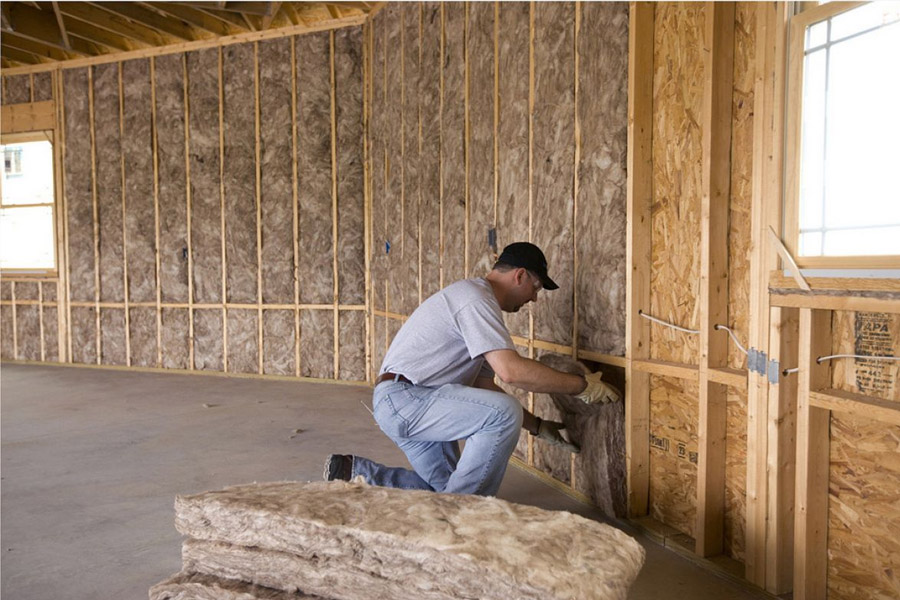
Plugging gaps and quieting hot areas using dense pack cellulose injection through tiny holes in each stud bay. For deeper remodels or extensions, cavity insulation and external rigid foam increase R value and reduce thermal bridging. In humid conditions, simplify vapor control. Avoid inside polyethylene in air-conditioned areas, place the principal air barrier on the conditioned side, and let assembly dry outward. Make sure open cell foam walls can dry inward and outside cladding sheds bulk water.
Ducts in the Hot Zone: Insulate, Seal, or Relocate
Every cubic foot of cool air that travels through an unconditioned attic picks up heat. If the ducts are leaky, you lose cooled air before it ever reaches a register, and you pull hot attic air into the system. That is a cost spiral.
- Seal duct joints with mastic, not tape
- Insulate ducts to at least R8 when they must remain in the attic
- Replace crushed or poorly supported flex runs that choke airflow
- When feasible, bring ducts and the air handler inside the conditioned envelope, either by sealing the attic or by rerouting through soffits or dropped ceilings
Few upgrades pay back faster than cutting duct losses in a Florida home.
Moisture Control Is a Performance Feature, Not a Bonus
Humidity loads are a reality in coastal and peninsular climates. Insulation choices should defend against moisture while allowing assemblies to dry.
- Closed cell spray foam creates a robust air and vapor retarder that blocks humid air migration and reduces condensation risk in critical zones, including roof decks and rim joists
- Rigid foam boards, especially foil faced, manage both thermal and vapor control when used at the roof or exterior walls
- Fiberglass and cellulose can perform well if the air barrier is tight and bulk water is kept out, but avoid scenarios where humid air can reach a cool surface within the assembly
If indoor humidity remains stubborn after air sealing and insulation upgrades, evaluate ventilation rates and AC sizing. Right sizing and adequate run times remove moisture more consistently than an oversized system that short cycles.
Ventilation That Fits the Insulation Plan
Ventilation strategy depends on the attic approach you choose.
- From soffit to ridge, vented attics need unobstructed passageways. Clear blocked soffit vents, add continuous baffles to prevent insulation from leaking into the eave, and make sure ridge or roof vents exhaust fully. In tight homes with poor air sealing, attic fans can remove conditioned air from the living room.
- Sealed attics rely on the foam boundary for control. Do not combine powered attic ventilation with a sealed roof deck. Maintain the integrity of the air barrier at all penetrations, and let the attic float near indoor conditions with minimal exchange.
In both cases, vent bath fans and kitchen hoods to the outdoors, never into the attic.
Materials That Stand Up to Florida’s Climate
Florida punishes building materials with heat, UV, salt air in coastal zones, and year round humidity. Choose insulation that holds performance over time.
- Blown fiberglass and cellulose deliver cost effective R value for attics. Cellulose treated with borates resists pests and adds density that can help reduce convection in high heat conditions
- Closed cell spray foam shines where space is tight or moisture control is critical. It strengthens roof decks and acts as a powerful air barrier
- Open cell spray foam seals air paths affordably, but requires careful detailing in roof assemblies to avoid moisture entrapment
- Foil faced rigid foam boards offer high R per inch with radiant control. They pair well with roof or wall retrofits and as duct insulation jackets
A good installation beats a great product installed poorly. Depth, continuity, and airtightness are the traits that save energy day after day.
Smart Sequencing for Faster Payback
Order matters. Tune airflow after sealing and insulate. While in the attic, fix ductwork. Gas appliance combustion safety and ventilation strategy should be assessed before encapsulating the roof deck. When upgrades match how your home gains heat, expenses drop and comfort rises.
FAQ
What attic R value should a Florida home target?
R38 to R49 on the attic floor performs well in most ventilated Florida homes. Attic depth counts, so check the installed inches everywhere, not just at the hatch. If you spray foam the roof deck, you can reduce the R value by eliminating extreme attic conditions and duct losses, but the foam layer must be continuous and thick enough for moisture control.
Is a radiant barrier worth adding in a hot climate?
A well-installed radiant barrier can lower attic peak temperatures and cooling loads, especially on sunny roofs. With proper attic floor insulation and clear soffit to ridge ventilation, it works best. Encapsulating the attic with spray foam at the roof deck prevents radiant heat from reaching living spaces or ducts, making a radiant barrier less necessary.
Open cell or closed cell spray foam for a roof deck in Florida?
In humid areas and seasonal changes, closed cell foam’s greater R per inch and vapor retarder assist regulate moisture. Florida roof decks are safer with it. Open cell foam closes air channels well but allows greater vapor movement, requiring careful detailing and possibly a vapor retarder layer under the drywall. Choose the assembly that dependably handles air and vapor when in doubt.
Do I need to remove old attic insulation before adding new material?
Existing insulation that is dry, clean, and pest-free can usually stay. Air-seal the ceiling plane and add loose fill to the target depth. If insulation is matted, filthy, or damp, remove it before rebuilding. When transitioning to a sealed attic with foam at the roof deck, fibrous insulation on the attic floor might decouple it from the home and is commonly removed to track indoor conditions.
Can insulation upgrades really help with indoor humidity?
Yes. Air sealing and insulation minimize condensation and limit outside humidity in homes. By decreasing uncontrolled infiltration, your AC spends more time eliminating moisture from indoor air rather than reheating after a brief cycle. A complete sealing and insulation upgrade reduces musty odors and dampness for many homeowners.
What about termites and foam in Florida?
Foam should not hinder vital examinations in termite-prone regions. Leave a clean examination strip at wall bases and follow local termite protection and treatment best practices. Closed cell foam on the roof deck does not block termite examination pathways, but wall and foundation details should be planned so pest specialists can observe.