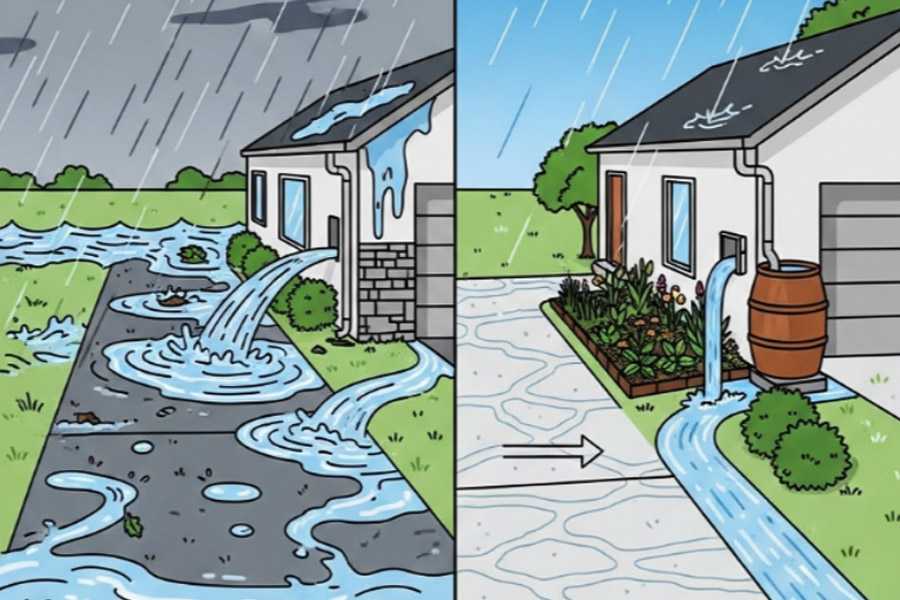
Why Small Drainage Missteps Become Big Headaches
Water travels persistently. Give it a path and it moves calmly. Block it and it carves its own path, sometimes toward your foundation. A tiny grading dip, clogged outlet, or loose shingle can redirect thousands of gallons during a storm, reports McKenna & Vane Carroll County. Thus, drainage is a network. Roofs, gutters, downspouts, soil, hardscapes, and grading all contribute. When one falters, others work harder until something gives. Early problem detection maintains network balance and structure.
Field Checks You Can Do in 20 Minutes
You do not need instruments to catch early trouble. Simple checks reveal where water is trying to linger or push through.
Walk the perimeter after rain. Look for sediment fans, sheet flow, and sparkling low places. Slow drainage leaves these marks. Tap base trim and siding. Chronic wetness causes spongey wood or blistered paint. In the basement, smell musty air, look for a white crust at wall bases, and glide a straightedge over the floor to detect cupping or heaving. Watch downspouts for water shooting out or swirling toward the wall. Clear flowing water is excellent. Splashing near the foundation IS NOT.
A garden hose is a useful probe. Run water in a valley on the roof and see if it disappears into gutters without overshooting. Flood a suspected low spot for three minutes and time how long standing water persists. If it lingers more than an hour on a mild day, infiltration is sluggish and grading or soil structure needs help.
Yard Grading That Actually Moves Water
Gravity is free and reliable if you give it a consistent slope. Around a typical home, a commonly recommended target is a drop of about 6 inches within the first 10 feet away from the foundation. That gentle pitch is enough to carry water past the zone where it can build up against walls.
Shaped soil depends on stability. To avoid water soaking in at the base, cap the first few feet with a hard, compacted layer and keep mulch thin near the home. Avoid edged dams or raised beds that trap water against walls. In limited spaces, utilize a shallow swale to collect sheet flow and direct it to a safer disposal location. A swale is a quiet, grassy watercourse with regular bottom. It should keep water only long enough to transport it.
Gutters and Downspouts That Do Real Work
Gutters are roof runoff highways. Slope and size matter. For long roof runs in severe rain areas, 6 inch gutters and 3 by 4 inch downspouts work well. A small 1/16 to 1/8 inch per foot pitch toward outlets keeps flow going without looking crooked.
Ground expansions are required. Discharge 4–6 feet from the foundation. 10 feet is best for restricted drainage. Install buried corrugated piping to a yard pop-up emitter to avoid long extensions. The outlet location should be open and lower than the home to prevent water backup.
Leaf guards can reduce clogs, but they are not a license to skip maintenance. Inspect after windy storms and at the start of each season. Downspouts that tie into underground pipes should have a cleanout near the base so blockages are easy to clear.
Roof Details That Steer Water Right
A solid roof protects drainage upstream. Damaged shingles or missing flashing cause water to cascade where it shouldn’t. Valleys need specific attention. Leaf and granule accumulation lifts water over the gutter. Splash guards outside corners prevent fast flow from overshooting. Runoff should not saturate siding and trim, so check kickout flashing where roof edges meet walls.
Look for black stripes below gutters. They suggest frequent overflow, which could be a pitch issue, an undersized downspout, or debris choking the outlet. Correcting these small details keeps the rest of the system from being overwhelmed.
Soil and Landscaping That Work With Water
Tempo is set by soil texture. Clay sponges up and releases water slowly. Sandy soil drains fast yet erodes. Instead of battling structure, improve it. Aeration and compost help tight soils penetrate. Mulch beds should have gentle outward slopes, not water-pooling berms. Plant choice important. Native roots stabilize slopes and absorb stormwater.
Consider green runoff storage and slowing. A rain garden downward from downspouts collects the initial flush, settles sediments, and infiltrates designed soil. Permeable pavers surrounding patios and pathways limit sheet flow and keep water out of gutters that may become buried by waterfalls from impermeable surfaces.
Foundation Protection Playbook
When exterior management is not enough, interior defenses buy time and safety. A sump pit with a reliable pump and check valve evacuates water before it rises onto floors. Add a battery or water powered backup so you are covered during outages. Test monthly by lifting the float.
Exterior waterproofing is the gold standard when practical. That means clean walls, a continuous membrane, and a footing drain with perforated pipe laid on washed gravel, wrapped in non woven fabric, and sloped gently to daylight or a collection point. Inside retrofit options, like a perimeter drain beneath the slab leading to a sump, can relieve pressure when excavation is not feasible.
Window wells need covers and drains tied to gravel beds or footing drains. Without them, wells become ponds that feed basement leaks.
Hardscape and Driveway Drainage Fixes
Flumes of water flow over hard surfaces. A trench drain blocks drainage if your driveway slopes toward the garage or house. Clean and clear the grate and outlet. For patios that lean toward entrances, a modest overlay can restore slope. When replacing, use permeable systems with an open graded base that stores and infiltrates rain instead of delivering it to walls.
When to Bring In a Specialist
Some issues appear identical but have distinct causes. Hydrostatic pressure or a high water table may cause horizontal cracking in block walls, seasonal heaving, or seepage with light rain. A trained drainage or foundation contractor, or an experienced excavation contractor, can verify elevation, camera subterranean lines, and map soil behavior. Correct diagnosis prevents band aids that never reach the root.
A Simple Maintenance Calendar
- Spring: Clean gutters, reattach loose hangers, check downspout extensions, rake debris from swales, inspect the sump pump, and note yard depressions that appeared after winter.
- Summer: Aerate compacted lawn areas, topdress with compost where water lingers, trim vegetation away from siding, and verify that irrigation does not wet the foundation.
- Fall: Clear leaves from valleys and gutters, confirm gutter pitch while sections are empty, extend spouts for winter storms, and inspect grading after the first big rain.
- Winter: Keep snow piles away from foundation walls and window wells when possible, and check that meltwater exits away from the house.
FAQ
How far should downspouts discharge from the foundation?
Aim for at least 4 to 6 feet on typical lots. If your soil is slow draining or slopes back toward the house, extend farther or route into a buried line that daylights in a safe location.
What is a practical yard slope near the house?
A commonly recommended guideline is a drop of about 6 inches over the first 10 feet away from the foundation. Maintain that pitch and avoid creating ridges or edging that traps water.
Do 6 inch gutters make a difference?
On long roof runs or areas with intense rain, 6 inch gutters paired with larger downspouts handle higher flow and reduce overshoot at corners and valleys. Proper pitch and clean outlets are just as important as size.
How can I tell if water is getting through my foundation?
Watch for damp baseboards, musty odors, efflorescence, and paint that bubbles near the floor line. In finished spaces, persistent carpet dampness after storms is a clue. A plastic sheet taped to the wall can reveal moisture buildup behind finishes.
What is the simplest way to improve clay soil drainage?
Increase structure rather than over tilling. Core aerate, topdress with compost, and use deep rooted plants. Strategic grading and surface conveyance are still necessary in heavy clay.
When should I consider a French drain?
Use a French drain to intercept subsurface flow along a slope or to relieve soggy strips where water consistently collects. Build it with perforated 4 inch pipe laid on washed gravel, wrapped in non woven fabric, and sloped gently to an outlet. It is not a fix for roof runoff dumped at the foundation, which should be handled at the surface first.
Are rain gardens high maintenance?
A well designed rain garden needs occasional weeding, seasonal trimming, and mulch refreshes. After establishment, maintenance is similar to any planting bed, with the added benefit of managing runoff and supporting pollinators.
Do I need a battery backup on my sump pump?
Yes if your area loses power during storms. A backup keeps water moving when the main pump is offline. Test both pumps and the check valve regularly so they are ready when you need them.
Can landscape features trap water against the house?
Yes. Raised beds, timbers, and solid edging can form unintended dams. Keep features set back and lower than the foundation, and maintain a clear outward slope in the first several feet from the wall.
What should I do if my driveway sends water into the garage?
Install a trench drain across the driveway near the opening, regrade small sections if possible, and maintain a clear discharge path. If rebuilding, consider a permeable system with base storage to capture peak flows.