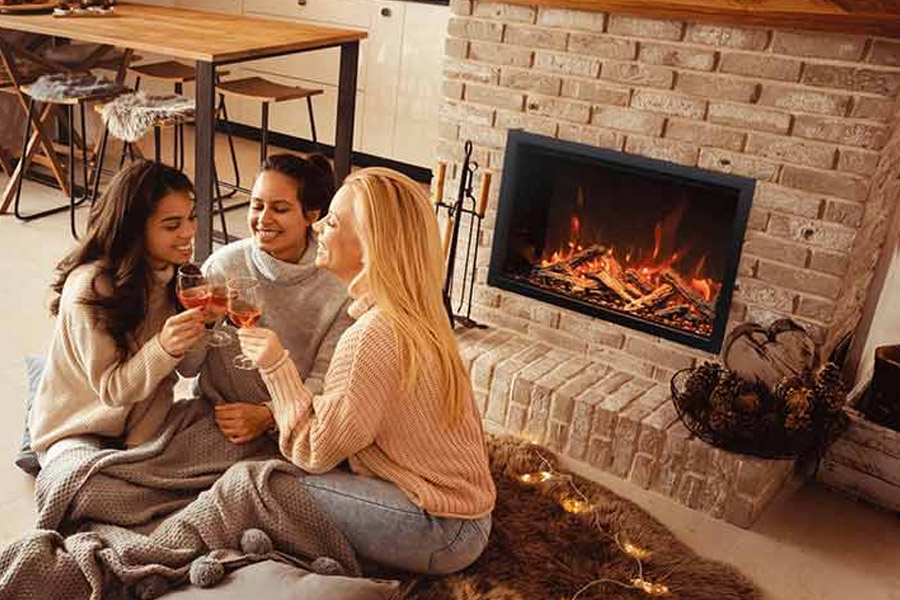
What Buyers Actually Value
Homeowners rarely buy fireplaces alone. They buy a coordinated look, feel, and function. Comfort is as important as romance. An instant-on flame with a remote and thermostat beats carrying logs for many. Others like wood’s crackle and aroma to set the mood on winter nights. When purchasers compare homes, a fireplace only breaks the tie if it solves a problem or improves the room, notes MHN Property Management Schertz.
- Gas tends to win for everyday ease, clean glass, sealed combustion, and predictable heat.
- Wood attracts purists and design lovers, but it must be safe, efficient, and visually compelling to offset perceived upkeep.
- Electric gets points for simplicity and placement flexibility, typically as a mood feature rather than serious heat.
- Pellet systems appeal to efficiency seekers who want a renewable fuel with thermostat control and robust heat output.
The more a fireplace aligns with the lifestyle and operating expectations of your local buyer pool, the more it can tip offers upward and keep your days on market down.
Installation Paths and Realistic Costs
The route you take to add or upgrade a fireplace strongly influences both resale appeal and budget. Costs vary with structure, venting, finish quality, and whether you are opening walls or building flues.
- Gas insert in existing masonry opening: often the best cost to impact ratio. Many projects land in the mid four figures when you include gas line, venting, surround updates, and controls. It transforms a drafty masonry box into a sealed, efficient heat source with a modern look.
- New direct-vent gas unit on an exterior wall: expect framing, vent penetration, and a full surround or built-in. Finished projects often run higher than inserts but can be placed where they add the most design value.
- Wood-burning with new chimney: the most complex. You will weigh structural support, chimney height and routing, spark arresters, and clearances. Costs can climb quickly once masonry and roofing enter the picture.
- Electric feature wall: relatively modest investment with dramatic visual payoff. Most budgets go to carpentry, millwork, and finishes like tile or plaster rather than the unit itself.
- Pellet stove: practical in colder regions for serious supplemental heat. You will need a power source, outside air supply where required, a vent path, and space for pellet storage.
A clean, code-compliant install with tasteful finishes typically returns more than a larger but poorly integrated project. Many buyers will pay a premium for a fireplace that looks original to the home rather than an obvious afterthought. Not every fireplace project makes financial sense. If your home needs extensive updates or you’re looking for a faster, simpler sale, selling as-is with a company like www.pavelbuyshouses.com may be the better option.
Climate, Codes, and Local Norms
Climate sets expectations. In snowy markets a fireplace reads as essential comfort. In warm coastal regions it reads as mood and design. The direction of value is different in each place.
Codes and policies important. Some cities ban wood-burning in new buildings or demand high-efficiency units. Ventless gas may be legal in one place but not another. Condos and townhomes can regulate fuels and venting. Check local and HOA regulations before upgrading, then design within them. Beautiful installations that contravene local laws are liabilities.
Local norms shape buyer psychology. In neighborhoods where almost every comparable home has a living room fireplace, not having one can push you down the showing list. In areas where they are rare, a striking fireplace can become a signature feature that photographs well and draws traffic.
Design Integration That Sells
Buyers respond to balance. The firebox scale, surround thickness, and mantel proportions should suit ceiling height and room width. Materials matter, not just for trend but for longevity and maintenance.
- Brick can be revived with limewash or slurry for a soft, collected look.
- Large-format slab stone or porcelain gives a clean, modern line.
- Hand-troweled plaster lends a European calm and reads high-end in photos.
- Tile can swing classic or contemporary with the right pattern and grout choice.
- Built-ins flanking the fireplace turn one wall into a destination and provide storage that increases perceived utility.
Avoid clutter around the firebox. A simple hearth, balanced art or a single mirror, and warm layered lighting let the flame be the star. In open plan homes, linear gas fireplaces can anchor long walls and help define zones without heavy partitions.
Maintenance, Documentation, and Risk
A fireplace that looks good but scares inspectors does not help at resale. Think like a buyer and their insurer.
- Have wood-burning systems swept and inspected yearly. Keep receipts.
- For gas units, document service calls, pilot and valve checks, and vent integrity.
- Test carbon monoxide alarms nearby and replace batteries before showings.
- If you upgraded, keep permits and final approvals. Buyers and appraisers trust paper.
If a unit is inoperable, be straightforward. Providing a recent inspection with a repair estimate disarms fear and lets buyers price the fix into offers rather than walk away.
Appraisal and Marketing Effects
Appraisers assign fireplaces market-based worth. That benefit is most apparent when recent comparable sales include fireplaces and purchasers actively seek them. Two consequences commonly outweigh an evaluation line item.
- Photography and clicks. A striking hearth scene in the lead images can lift online engagement. More clicks typically mean more showings, which can mean more offers.
- Time on market. In colder seasons or regions, a functional fireplace can keep a listing competitive against nearby homes with similar square footage and finishes.
Staging multiplies this effect. Angle seating toward the fire, layer texture with throws and pillows, and keep wood neatly stored in a small rack or basket. You are selling the evening, not just the firebox.
Who Should Add One vs Skip It
Add or upgrade if your home is in a climate where supplemental heat is welcome for several months, your neighborhood comps mostly include fireplaces, you have a logical wall for a balanced design, and your budget can cover both the unit and a finished surround without cutting corners.
If your market rarely employs fireplaces, you lack a natural focal wall, ducting or venting would require disruptive structural work, or the project would compel you to cut expenditures on kitchens, baths, or flooring that buyers prioritize, skip it. Well-executed electric feature walls may create the ambiance at a fraction of the complexity.
Quick Update Ideas for Existing Hearths
If you already have a fireplace, small moves can create outsized impact.
- Convert an open masonry box to a sealed gas insert for efficiency and clean glass.
- Replace brass trim with black or brushed metal for a modern lift.
- Reface with new tile or plaster and simplify the mantel profile.
- Add a discreet fan kit or heat shift system to move warm air without noise.
- Update lighting with wall sconces or uplights that graze the surround texture.
FAQ
How much can a fireplace change a sale price?
Depending on the market. Well-executed units can match or outperform similar homes without fireplaces in cold-climate communities. In warmer markets, marketing and emotion matter more than pricing. Consider it a feature that increases your buyer pool and strengthens offers when all else is equal.
Are ventless gas fireplaces a problem for resale?
That depends on buyer perspective and jurisdiction. Buyers like the clean design and easy installation in some places. Others doubt them due to indoor air and humidity issues. Keep manufacturing documentation, oxygen depletion sensor data, and maintenance records if you have one. Direct-vent sealed units are more popular when in doubt.
Is adding an electric fireplace before listing worth it?
If you lack a sensible vent path or are racing a timeline, an electric unit integrated into a well detailed feature wall can boost photos and help define a living area. Do not oversell it as a primary heat source. Present it as an ambiance upgrade that complements efficient HVAC. In style driven markets, that can be enough to justify the modest spend.
Will a nonworking fireplace scare buyers away?
It can. Nonfunctional equals unknown cost and risk in buyers minds. A recent professional inspection that diagnoses the issue and outlines repairs with a ballpark figure turns a red flag into a manageable line item. Some sellers offer a credit so the buyer can choose their preferred unit or finish.
What permits and safety steps should I have in place?
For upgrades or new installations, permits and final inspections from your local building department protect you and reassure buyers. Keep records for gas line work, vent penetrations, and any structural changes. Install carbon monoxide alarms in adjacent spaces, confirm clearances to combustibles, verify hearth dimensions, and add a protective screen or glass barrier if required by the unit. Documentation plus visible safety measures signal a home that has been cared for.