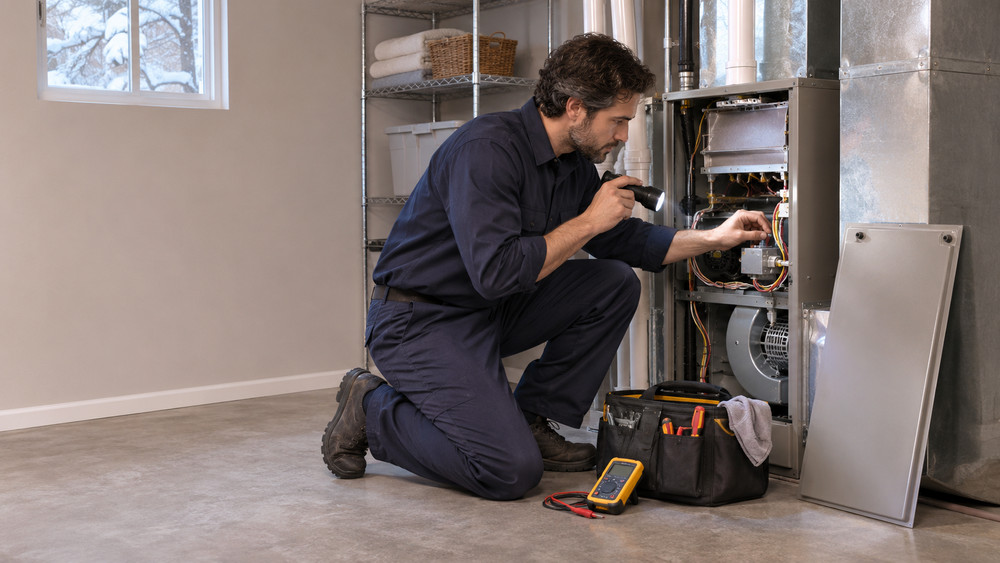
Of course you hope your heating will work properly when you first turn it on after summer. But equipment can seem okay with short runs on mild days, only to develop difficulties once there are long continuous periods of operation.
Clearly, there are many other aspects of the equipment which benefit from being assessed by a trained technician as part of a service visit. All areas relating to starting up, producing heat, shutting off, and various hazard conditions would ideally be covered.
So what can you reasonably expect from such a service call? Some of the following items will be applicable.
Benefits of a fall service call
It’s common for the heating plant to be unused for a considerable time. Besides accumulated dust and general deterioration, something could be slightly amiss and only become apparent after longer periods of running.
Obviously, all of these are desirable to identify when it’s still relatively mild outside! As well as highlighting deficiencies, various functions can be evaluated to determine if they are within manufacturers’ specifications.
Naturally, there are variations depending on the type and fuel used for heating. 42% of U.S. households used electric power as their primary source for heating in 2024, with a spread of natural gas and other types of fuel making up the balance.
So clearly it would be useful to perform tests relating to safe and efficient combustion if applicable, or examine various aspects of the outside compressor section and refrigerant lines of a heat pump. Clearly, one wouldn’t want to overlook important areas, but all appliances obviously aren’t identical!
As you’d imagine, the fall would be an advantageous time to have this completed according to ENERGY STAR, to avoid the rush of repairs as the weather turns colder.
Checking the thermostat, air filter, general airflow
All of these would take very little time, and clearly could all have a significant effect on satisfactory operation, so most techs will start here.
Suitable settings to initiate a call for heat would be tested along with resulting operation, including speed or speeds of the blower. If there is a program feature this would be an opportunity to verify correct settings.
Various features of the air filter will be evaluated: degree of plugged-up condition, suitability of the particular filter being used, ease of air passing over and through it, and so on. The ease of passage of air at various supply registers around the house may be assessed.
You may wish to confirm if a blower inspection and measurements of supply and return air temperatures are included as part of your Manasquan heating tune-up. All of these will give an indication of the effectiveness of the unit to supply adequate quantities of heat.
Any readily apparent problems impeding air passage around the duct system would ideally be identified as well, such as obstructed or missing registers or returns. Obviously, restricted amounts of air passing through the equipment could lead to sub-par performance.
Tip: It’s always worthwhile compiling a list of problem areas, such as inadequately heated areas of the house, noises associated with airflow, rate of plugging of the air filter, to mention a few.
Burners, combustion process and related hazards
The following would be relevant only if there was an applicable fuel burned on-premises.
Suitable cleanliness and functioning of all components involved with igniting and sustaining combustion would be checked, and cleaned and adjusted if required in line with manufacturers’ recommendations.
Depending on design and condition, greater scrutiny may be warranted for any defects developing in the heat exchanger. Hot combustion gases flow through the inside of the heat exchanger while household air passes over its outer surfaces, transferring heat without mixing the two air streams, so any breaches could be caused for concern, and additional tests may be indicated.
All associated exhaust and intake pipes would be checked to ensure adequate size, clear passage, sound construction and secure attachment. Further measurements of pressures, leaks, and various by-products of combustion (such as CO) may be taken, again depending on the fuel and design of appliance.
All appliances burning fuel should be checked annually along with their associated venting, according to the U.S. Consumer Product Safety Commission. Naturally working CO detectors throughout the house are strongly recommended.
Note: Obviously none of the above adjustments or tests should be attempted by the homeowner. Anyone detecting activation of CO detectors should proceed outdoors and phone 911. In the case of suspected gas leak, vacate the premises and telephone the appropriate company from somewhere remote.
Various electrical components
Some source of voltage will of course be required to operate many moving and controlling parts of all types of heating plant.
As appropriate, a technician may:
- visually examine wiring and make firm any poor contacts
- take voltage and amperage readings across motors, comparing to recommended values
- examine the blower motor wheel for accumulated debris or defects
- examine the condition of any capacitor or motor shaft bearings
- observe a complete operating cycle
Obviously many malfunctions would only be evident once the unit had been operating for some time, for example continued operation after reaching a satisfactory temperature, insufficient blower speed, or activation of a safety device due to overheating.
As can be imagined there are several different devices to safeguard against hazardous situations which should all function correctly. Continued maloperation would need to be traced, instead of defeating the relevant safety switch or other control.
High-efficiency condensing furnaces produce condensate as water vapor in the exhaust cools, so associated lines and traps may be inspected for blockage, leaks and other defects.
Variation with type of heating plant
It would be fairly naive to think all tests applicable to a “standard” gas furnace would apply equally to all heating equipment.
For example, an outdoor and indoor section both contribute to heating with an air-source heat pump. Various aspects of ease of airflow around and through the outdoor unit and condition of the coils may be checked, as well as associated fan speed, connections, ability to defrost, and so on. Any suspicion of loss of refrigerant would require suitable tests by experienced personnel.
Likewise there would be several features to evaluate on a hot-water boiler, such as general condition and leaks, pressure, operation of any pumps and venting (and combustion tests where applicable).
And it goes without saying various checks applicable to combustion appliances would not apply to an all-electric resistance system.
Ideally the manufacturer’s recommendations and the individual characteristics of each unit should dictate the extent and nature of checks carried out. It’s reasonable to ask what checks would be relevant.
Questions to ask on completion
Ideally one would want some explanation of various functions tested, with comments as to if any were deficient in any way. Any recommended repairs should be explained along with the degree of urgency, and of course pricing.
At minimum one would expect some form of report detailing at least:
- areas and components serviced
- relevant values measured
- recommendations for repair, and any other areas to watch
- future service interval, such as changing air filter
Logically, this would be useful information to retain with any manuals pertaining to the appliance, to alert future techs to previous issues.
One should be aware what work would be encompassed within any flat rate quoted. Obviously, additional parts and labor may well be required as a consequence of faults discovered. No amount of testing will guarantee defect-free operation going forward, so details of any shortcomings found would be preferable!
Obviously, assist access as much as possible, and try to be as informative as possible regarding circumstances surrounding any malfunction. There’s no need to unseal any covers accessing gas fittings, et cetera.
Summary
Hopefully, you can see from the above that a thorough service should encompass many aspects of starting, operating and shutting down safely the equipment, and detect many degrees of deterioration. As always, it pays to arrange the visit ahead of the onset of cold weather and advise of any current difficulties, and request appropriate details on completion of the work.