Key Takeaways
- Comfort depends on temperature, humidity, airflow, sunlight, insulation, and filtration.
- Checking filters, vents, drainage, and the outdoor unit can help identify problems early.
- Indoor humidity should generally remain below 60 percent, with 30 to 50 percent often considered an ideal range.
- Ceiling fans can improve comfort for people in occupied rooms, but they do not cool an empty room.
- Persistent water, electrical problems, unusual sounds, or major temperature differences deserve prompt attention.
In Ocala, Florida, home comfort is shaped by more than the number displayed on a thermostat. Long stretches of heat, frequent afternoon rain, strong sun, and occasional winter cool snaps can affect humidity, airflow, energy use, and the way each room feels.
A practical heating & cooling routine starts with the basics: clean airflow paths, realistic thermostat settings, moisture awareness, and regular checks before a small concern becomes a disruptive problem. The goal is not to chase a perfect temperature all day, but to create steady, healthy conditions throughout the home.
Why Ocala Home Comfort Is About More Than Temperature
A room can read 75 degrees and still feel sticky, stale, or warm. High humidity slows the evaporation of perspiration, while direct afternoon sun, limited airflow, and warm upstairs rooms can make the discomfort more noticeable. Homes near tree cover may also contend with leaves, pollen, and storm debris around exterior equipment.
Central Florida weather also makes seasonal planning useful. Cooling may be needed for much of the year, yet a chilly morning can reveal a heating issue that went unnoticed during warmer weather. Rather than making extreme thermostat changes, look at the whole home: whether air is reaching each room, whether doors and vents are blocked, and whether moisture is building up indoors.
Build a Seasonal Comfort Calendar
Late Winter and Spring
Before the hottest part of the year arrives, test both heating and cooling modes, check the filter, and make sure supply registers and return grilles are open and unobstructed. Outside, remove leaves, grass clippings, and stored items from around the equipment. Trim vegetation enough to preserve open airflow, while following the equipment manufacturer’s clearance guidance.
Summer and Fall
During heavy summer use, watch for weak airflow, rising indoor humidity, water near indoor equipment, or new noises. In fall, test the heating function before the first cool night. A short seasonal check is easier than discovering an issue when the system is needed most.
Use Thermostat Settings That Fit Humid Weather
For many households, modest changes in setting are more comfortable than large swings. A programmable or smart thermostat can help establish a schedule for sleeping, working, and being away, but the setting should still account for people, pets, and indoor moisture. When comparing air conditioning options, remember that cooling performance includes moisture removal as well as lowering the air temperature.
Avoid turning cooling completely off for long periods during humid weather if the house tends to retain moisture. Instead, use a reasonable setback and review the indoor humidity level after several days. If the home repeatedly feels clammy despite normal cooling cycles, the cause may involve drainage, equipment operation, ductwork, air leakage, or another condition that requires diagnosis.
Keep Air Moving Through the Home
Walk through the house once a month and confirm that furniture, rugs, curtains, and storage bins are not covering supply registers or return grilles. Closing many vents can create airflow problems, so use room-by-room adjustments cautiously. If one bedroom is always much warmer or cooler than the rest of the home, note when it happens and whether the difference changes with sun exposure or time of day.
Ceiling fans can make occupied rooms feel more comfortable by moving air across the skin. Turn them off when the room is empty, since the fan does not lower the room’s actual temperature. The U.S. Department of Energy notes that a dirty or clogged filter can dramatically reduce airflow, so airflow concerns should begin with a filter check.
Control Humidity Before It Creates Larger Problems
A simple hygrometer gives homeowners a clearer picture of indoor moisture than temperature alone. The Environmental Protection Agency advises keeping relative humidity below 60 percent, ideally between 30 and 50 percent, because controlling moisture, ventilation, and filtration can improve indoor air quality. Use bathroom exhaust during showers, run the kitchen exhaust when appropriate, repair plumbing leaks promptly, and keep drainage areas around the home free of standing water.
Take musty odors, recurring condensation, peeling paint, damp carpet, or wet spots seriously. Do not simply paint over a moisture-damaged surface. Finding and correcting the water source is the important first step.
Make Filter Care and Outdoor Checks Routine
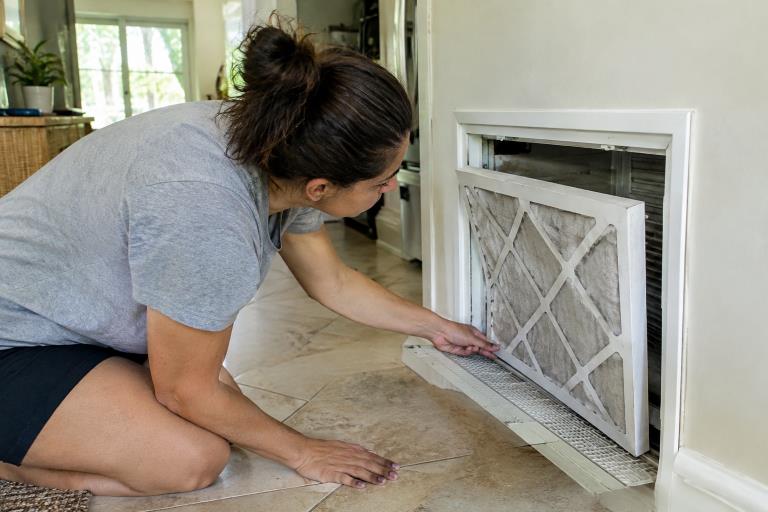
Check the filter monthly during periods of frequent use, then replace or clean it according to the equipment and filter instructions. Use the correct size, and do not assume the highest-rated filter is automatically right for every system. Homes with pets, renovation dust, or allergy concerns may need more frequent checks.
Outside, inspect the unit visually after storms. Keep the surrounding area clear, look for standing water or visible damage, and avoid opening electrical panels or spraying internal components. If storm damage is suspected, do not restart equipment until it has been assessed safely.
Know When a Small Issue Is a Warning Sign
- The system runs almost continuously on a mild day.
- Several vents have noticeably weak airflow.
- Water collects near indoor equipment or a drain line.
- Grinding, repeated clicking, buzzing, or a persistent burning smell occurs.
- A breaker trips more than once.
- One or more rooms stay far hotter or colder than the rest of the home.
Repair, Replacement, and Monthly Planning
Age alone does not determine whether equipment should be repaired or replaced. Compare the immediate repair, operating cost, reliability, comfort concerns, expected service life, and whether replacement equipment would be properly matched to the home and ductwork. Oversized equipment can cool quickly without running long enough to remove adequate moisture.
Each month, check the filter, clear vents and returns, review humidity, inspect for water or unusual dust, look around the outdoor unit, and listen during a normal cycle. In Ocala, steady attention to these fundamentals can help a home stay more comfortable through hot, humid summers and the occasional cool-weather surprise.