A neighbor of mine repainted his trim three times in one summer because the new shingles he picked made the siding look pink. True story. He spent nearly $900 on paint chasing a decision he could have made in an afternoon with a fan deck and a hose.
Roof color is one of those choices that looks cosmetic and behaves structural. It changes what your house says from the curb, it changes how much heat your attic holds onto in July, and it changes how often you’ll squint at your own front elevation wondering what went wrong. If you’re working with a team like The Happy Roof, you’ve already got someone who’ll walk you through shingle samples on your actual driveway instead of a showroom wall. That’s the right place to start. The rest of this is about making sure the color you pick is one you still like in five summers.
Here’s what most homeowners get wrong: they pick the shingle first and the trim second. It should be the other way around.
Why does roof color change your energy bill at all?
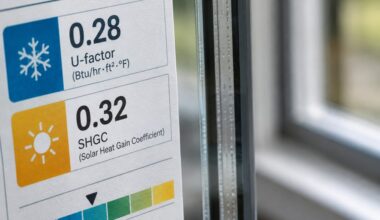
Sunlight hits your roof and either bounces off or gets absorbed as heat. Dark shingles absorb more. Light shingles reflect more. That’s the whole physics of it, and it’s why the Department of Energy has spent decades studying what they call cool roofs. According to energy.gov, a cool roof can lower peak cooling demand in a single-story home by a meaningful margin compared to a standard dark roof, especially in climates with long, sunny summers.
St. Louis sits in a mixed-humid climate where August afternoons regularly push into the nineties, and that matters. If your attic is already under-insulated, a dark roof is stacking one problem on top of another. The heat that gets through the shingles has nowhere to go except down into your living room.
I’d pick a mid-tone shingle in a Climate Zone 4 city over a charcoal one every time, unless the house’s architecture really demands the darker look. The savings aren’t dramatic enough to wreck your curb appeal for, but they’re real enough to notice on a July bill.
Roof color won’t make or break your energy use on its own. It sits on top of insulation, ventilation, and window performance. Fix the insulation first, then fuss over the shingle.
The three-color rule that saves you from a repaint
Here’s a framework I’ve watched work on dozens of homes. Call it the Three Anchor Rule. Every exterior palette has exactly three anchors, and the roof is only one of them.
- Anchor one: the fixed elements. Brick, stone, or any surface you’re not replacing. This is your baseline and it doesn’t negotiate.
- Anchor two: the roof. It’s the largest single color field on the house, so it sets the temperature of the whole palette. Warm brown, cool gray, or black are the three families you’re choosing between.
- Anchor three: the trim and gutters. This is where you get to cheat. Trim is cheap to change relative to shingles, so it’s the variable, not the constant.
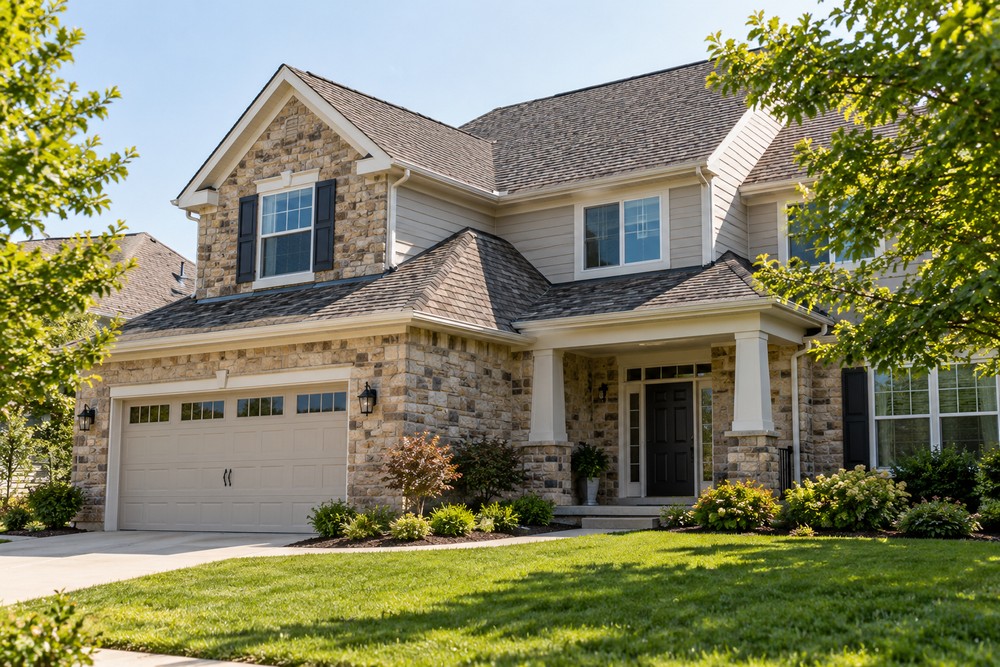
Pick the roof to complement the fixed elements. Pick the trim to bridge the two. If your brick has warm undertones, a cool gray shingle will fight it every day for the next thirty years. Warm brown or a taupe blend is the safe call.
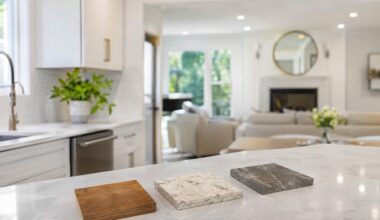
One more piece of texture people skip: order full-size samples, not the little 3-inch squares. Tape them to a piece of plywood and lean it against the house for a week. Shingle colors shift in morning light, afternoon light, and under an overcast sky. A roof that looks perfect at 9 a.m. can look muddy at 4 p.m.
What the color actually does at the curb
Curb appeal isn’t a vibe. It’s a set of visual jobs your exterior has to do, and roof color plays into a few of them.
| Roof color family | Reads as | Best fit when |
|---|---|---|
| Charcoal or black | Formal, high contrast | Light siding, lots of masonry, larger homes |
| Weathered gray | Modern, neutral | Mixed siding materials, contemporary architecture |
| Warm brown or taupe | Traditional, grounded | Brick exteriors, Craftsman or colonial styles |
| Light gray or tan | Airy, low contrast | Smaller homes, tight lots, hot exposures |
Notice I didn’t put “increases home value” in that table. Color choice nudges buyer perception, sometimes a lot, but anyone who tells you a specific shingle color adds a specific dollar amount is guessing. What it does do is make your house look intentional or accidental. Buyers can’t always name the difference, but they feel it walking up the driveway.
There’s a weather angle too. Hail season in the Midwest is real, and if you’re going to replace shingles anyway after a storm, color is one of the few things you get to choose inside an insurance claim. The National Weather Service tracks hail frequency by region, and if you want to understand how often your zip code gets hit, their data at weather.gov is worth a look before you settle on a style that might need replacing again.
A short checklist before you sign anything
- Get two full-size samples in each color family you’re considering, not one.
- Check the samples at three times of day: morning, midday, and dusk.
- Take a photo from the street, not from the ladder. That’s how everyone else sees your house.
- Confirm the shingle’s solar reflectance rating if cooling costs are your priority.
- Decide the trim color before installation day, not after.
- Ask how the shingle color will age. Some granules fade more than others over a decade.
Number six is the one people forget. New shingles look almost glossy for the first year. What you’re buying is the color the roof wears at year ten, not year one. Ask the installer which blends in your price range have a reputation for holding their tone.
What about the environmental side?
Discarded roofing material is a measurable chunk of what ends up in landfills, and the Environmental Protection Agency keeps an eye on construction and demolition waste trends. Their overview at epa.gov is a reasonable starting place if you care about what happens to the old shingles after they come off your house.
Some manufacturers recycle asphalt shingles into road base or new pavement mix. Not every contractor has a relationship with a recycler, so this is a question worth asking before the dumpster shows up in your driveway. It costs you nothing to ask, and it sometimes changes the answer.
Making the call
Roof color is two decisions wearing one coat of paint. The first is aesthetic: which anchor family your house belongs to. The second is practical: how much heat you can afford to absorb and how long you want to look at what you picked.
I’d spend an hour with samples taped to plywood before I’d spend a minute arguing with a paint swatch. The shingles are the thing you can’t repaint. Everything else is negotiable.
So here’s the question to take into your driveway this weekend: when you stand across the street and look at your house, does the roof feel like it belongs there, or like it landed from another neighborhood? Whichever one you land on, pick the trim after, not before.