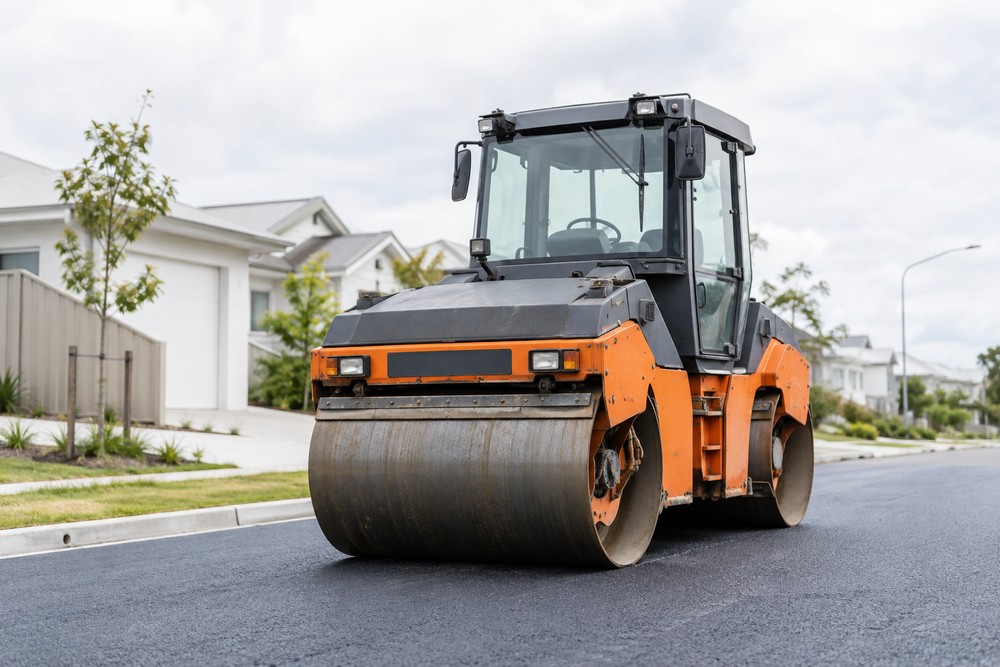
A residential street closes at eight in the evening. By five the next morning it’s covered in fresh black asphalt, and the first commuters roll over it before the line marking has fully dried. Most residents only notice the smell.
None of that overnight job was improvised, though. The planning started weeks before, and the asphalt services behind a job like this go a long way past the paving crew. Mix design and lab testing come first. Long after opening day, crack sealing and patching keep the surface going.
Every Mix Starts on Paper
Asphalt isn’t one product. The stuff on a quiet cul-de-sac would fall apart within a few years on a freight route that sees B doubles from dawn till dark. Producers adjust for each case.
- Aggregate size and grading
- Binder type and quantity
- Additives for strength or easier handling
- How much recycled material goes in
Lab testing backs all of this up. Samples are checked for density and strength. A mix that fails in the lab never makes it onto a truck.
Climate plays a part too. A road baking through a western summer needs a binder that won’t soften and rut under heavy wheels. One in a cooler, wetter area needs to resist cracking and water damage instead.
Milling Comes Before Paving
Pave straight over a tired, lumpy road and every dip comes back through the new layer within months. The road also ends up sitting higher. Kerbs get shorter, and stormwater starts pooling in places it never used to.
Road profiling fixes that. A milling machine grinds off a set depth using a drum fitted with cutting teeth, leaving a rough, level base for the new layer to grip. The millings aren’t dumped. Most of it gets trucked back to the plant and ends up in the next batch of asphalt.
Next the crew sweeps the milled surface and sprays on a light tack coat. It looks like nothing much, but it’s what helps the old and new layers bond instead of sliding apart under braking trucks.
Temperature Runs the Whole Night
Asphalt leaves the plant hot, often somewhere around 140 to 160 degrees. From that point the crew is working against the clock.
- Trucks need to arrive before the load cools too far
- The paver spreads the mix at an even thickness
- Rollers compact it while it’s still workable
- Joints between passes get extra attention, since they’re common weak spots
Compaction matters more than most people realise. A layer that isn’t packed tightly enough lets water and air in, and it’ll start breaking down years earlier than it should. That’s why crews keep rolling well after the surface already looks finished.
Weather can stop everything. Rain on a fresh layer or a cold, windy night can cool the mix before it’s properly compacted. Plenty of night shifts get called off at short notice for exactly this reason.
Working Around the Traffic
Busy roads are rarely closed in daylight. At night works, lane closures and detour routes are usually locked in weeks ahead, long before a single machine is unloaded. Residents usually get letters or signs a week or two ahead.
The traffic control side is a big job in itself. Signs, barriers and traffic controllers all need to be in place before the first truck arrives, and packed away before the morning rush. On a tight night, that can eat a surprising share of the shift.
Recycled Content in Road Mixes
Reclaimed asphalt services pavement, known as RAP, is the most common recycled ingredient. It’s old road, milled, processed and blended into new batches. How much goes in depends on the road type and the specs set by the road authority.
Some producers go further.
- Crushed glass standing in for part of the sand
- Crumb rubber from old tyres
- Processed coffee cups
- Other reclaimed materials, tested before use
None of this makes asphalt production low energy. Heating rock and bitumen still takes a lot of fuel. Warm mix asphalt, made at lower temperatures, is one way the industry is trying to bring that down.
The Clock Starts at Opening
From day one, sun and rain begin stiffening the binder. Traffic flexes the pavement thousands of times a day. Fine cracks appear first. Water follows, and then potholes.
Regular inspections catch this early. Crack sealing and cold mix patching, done on time, can stretch a road’s life well beyond what the original design assumed.
The line marking usually goes down last, sometimes on a separate night once the surface has settled. Until then, temporary markers keep traffic in the right lanes.
Back on That Street
The commuters who drove over the new surface that morning saw a smooth road and not much else. Underneath sat a tested mix, a milled base and possibly a share of crushed glass and rubber. The night crew had packed up before sunrise. Good road work usually goes unnoticed. That’s generally a sign it was done properly.