Not every surface in a home experiences the same level of daily contact. A decorative shelf may remain untouched for days, while a door handle, kitchen counter, or light switch can be used repeatedly within a few hours. Treating both areas with the same cleaning schedule can direct effort away from places that need attention more often.
Household routines provide useful clues about where cleaning should be concentrated. Family size, work schedules, children, pets, visitors, and room layout can all affect which surfaces receive frequent contact. Understanding these patterns makes it easier to develop a routine based on actual use rather than cleaning every area at identical intervals.
Cleaning Services can support this approach by addressing frequently used areas alongside broader household cleaning needs. Bundl Home Cleaning & Maintenance can be considered when homeowners want help maintaining spaces that receive different levels of daily activity. The goal is to create sensible priorities without making routine upkeep unnecessarily complicated.
High-Touch Areas Develop Different Cleaning Needs
High-touch surfaces are simply areas that people handle frequently during normal household activities. Door handles, cabinet pulls, appliance handles, switches, railings, faucets, and certain countertop areas are common examples.
These surfaces can show fingerprints, cooking residue, dust, or ordinary household grime faster than nearby areas. Their condition may change noticeably even when the rest of the room still appears reasonably clean.
Frequency of contact is therefore useful when deciding where to begin. A surface handled many times each day may deserve attention before a decorative object that has collected only a light layer of dust.
Entry Doors Collect Evidence of Daily Household Traffic
Entryways create one of the clearest examples of uneven surface use. Door handles, locks, nearby switches, railings, and storage areas can receive repeated contact as household members come and go.
Outdoor conditions can add another layer of cleaning needs. Wet hands, dusty belongings, bags, coats, and shoes may leave visible residue around commonly used entry points, particularly during changing weather.
Homeowners can include these areas in shorter routine cleaning sessions instead of waiting for a full-room cleanup. Small, regular attention can keep frequently handled surfaces from being overlooked between larger cleaning days.
Interior Doors May Have Very Different Use Patterns
Not every door needs the same schedule. A pantry or main bathroom door may be handled throughout the day, while the door to a spare bedroom might rarely be touched.
Observing actual household movement helps establish practical priorities. Cleaning based on use avoids spending equal time on surfaces that accumulate dirt at very different rates.
Kitchens Contain Many Frequently Handled Surfaces
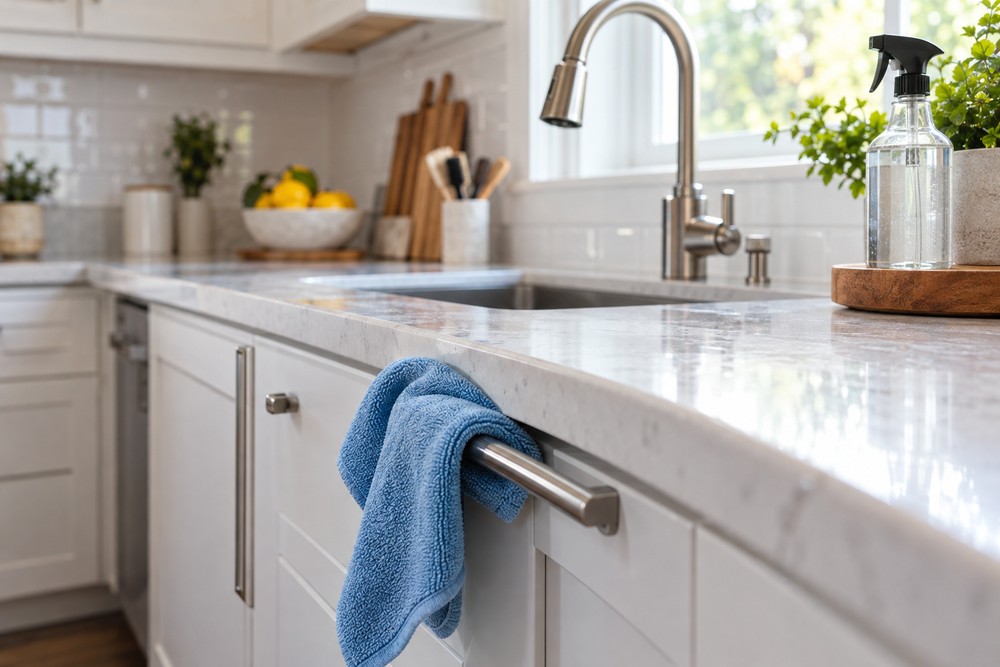
Kitchen activity involves constant movement between storage, appliances, preparation areas, and sinks. Refrigerator handles, cabinet pulls, faucets, drawer fronts, and frequently used counters may receive contact during several separate activities.
Cooking can also leave residue that differs from ordinary household dust. Grease, crumbs, moisture, and food splashes may affect surfaces near preparation and cooking zones, making location as important as frequency of touch.
Bundl Home Cleaning & Maintenance can help homeowners address these commonly used spaces as part of a broader household routine. Cleaning methods should still suit the individual surface because cabinets, appliances, counters, and fixtures can have different care requirements.
Bathroom Fixtures Require Their Own Cleaning Rhythm
Bathrooms combine frequent hand contact with water, grooming products, and daily personal routines. Faucet handles, counters, toilet areas, cabinet pulls, and door handles can quickly show signs of repeated use.
A household with several people sharing one bathroom may need to address these areas more frequently than a lightly used guest bathroom. Identical rooms can therefore require very different schedules depending on who uses them.
Reducing countertop clutter can make routine cleaning easier. When frequently handled surfaces remain accessible, homeowners can address them without moving numerous personal items every time.
Living Rooms Have Both Busy and Quiet Surfaces
Living areas can contain heavily used furniture alongside decorative spaces that receive little direct contact. Remote controls, side tables, certain chair arms, and frequently handled storage may need attention more often than picture frames or display shelves.
The difference becomes more noticeable in households where the living room serves several purposes. A space used for relaxing, homework, entertaining, and children’s activities will develop different cleaning needs from a formal room used only occasionally.
Cleaning Services can be organized around these patterns rather than treating the entire room as one task. Separating high-use areas from quieter surfaces makes it easier to decide what needs attention now and what can reasonably wait.
Home Offices Create Concentrated Areas of Contact
A home office may not receive much foot traffic, yet a small number of surfaces can be used continuously. Desks, drawer handles, chair arms, switches, and other work-area components may receive hours of daily contact.
Electronic equipment requires particular care. Screens, keyboards, and devices should be maintained according to appropriate manufacturer guidance rather than treated like ordinary furniture surfaces.
Paperwork and work supplies can also interfere with cleaning access. Keeping frequently used desk areas reasonably organized allows surrounding surfaces to be maintained without disrupting important documents or equipment.
Low-Traffic Areas Still Need Periodic Attention
Prioritizing high-touch surfaces does not mean ignoring quieter parts of the home. Dust can still settle on upper shelves, decorative objects, unused furniture, baseboards, and rooms that receive little activity.
These areas simply operate on a different timeline. Instead of including every low-use surface in frequent cleaning sessions, homeowners can incorporate them into periodic room rotations or more detailed household cleaning days.
This distinction helps prevent routine cleaning from becoming unnecessarily large. Time can be directed toward areas that change quickly while slower-developing dust and residue are handled at appropriate intervals.
Household Changes Can Shift Cleaning Priorities
Cleaning needs are not permanently fixed. A guest room can suddenly become a high-use area when relatives visit, while a home office may receive less activity during a vacation or schedule change.
School breaks, remote work, visitors, celebrations, and changes in household membership can all alter how rooms are used. Cleaning priorities should adjust accordingly instead of following a rigid schedule that no longer matches daily life.
Bundl Home Cleaning & Maintenance can provide support when changing routines increase the amount of household upkeep required. Homeowners can also reassess which surfaces are receiving the most contact whenever daily patterns shift significantly.
Short Cleaning Sessions Can Focus on Frequently Used Areas
A complete room cleaning is not always necessary when only a handful of surfaces show signs of heavy use. Short maintenance sessions can focus on the places that accumulate visible residue most quickly.
Homeowners might address kitchen handles, bathroom fixtures, entry points, and frequently used counters while leaving lower-use surfaces for another scheduled session. This approach separates immediate maintenance from more detailed cleaning.
Cleaning Services can complement these smaller household habits by handling broader tasks at suitable intervals. The combination can help prevent homeowners from treating every cleaning session as an all-or-nothing project.
Practical Priorities Create a More Manageable Cleaning Routine
Effective household cleaning depends partly on recognizing that rooms and surfaces experience different levels of use. A frequently handled switch, faucet, or appliance handle can require attention well before a decorative shelf in the same room.
Watching how people move through the home provides a practical basis for setting priorities. Kitchens, bathrooms, entryways, living spaces, and work areas can each contain small zones that experience considerably more contact than their surroundings.
A flexible routine allows homeowners to address those busy surfaces while maintaining quieter areas on a suitable schedule. By matching cleaning frequency to actual household activity, everyday upkeep can become more focused, manageable, and responsive to the way the home is genuinely used.



