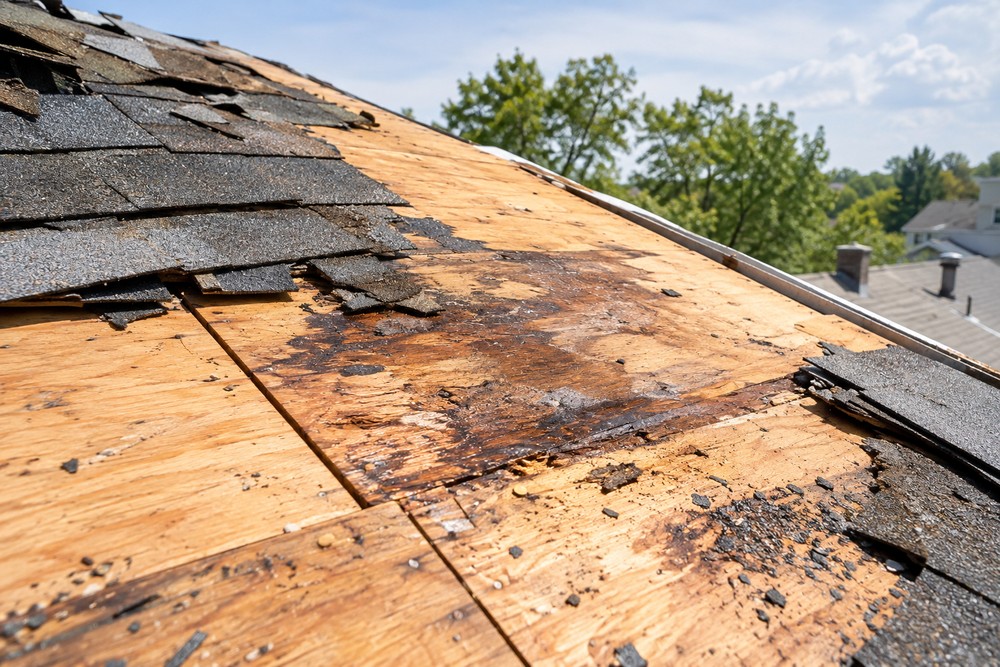
Most homeowners see the finished surface of a roof but rarely have an opportunity to view the structural layer beneath it. Shingles and other exterior materials cover the roof deck, leaving much of its condition concealed during ordinary inspections. That hidden position means some concerns cannot be fully understood until existing materials are removed during a major roofing project.
Roof Replacements create a practical opportunity to examine areas of decking that were previously covered. Most of the underlying surface may remain suitable, while isolated sections can reveal staining, deterioration, movement, or other conditions requiring closer attention. Discovering something after removal does not necessarily mean it should have been obvious before the project began.
Class Roofing can discuss how unexpected decking conditions will be handled before removal starts. Establishing that process early gives homeowners a clearer understanding of what may happen if concealed concerns become visible. It also separates confirmed existing conditions from possibilities that cannot reasonably be evaluated until the roofing surface is opened.
Understand the Roof Deck’s Place in the Roofing Assembly
The roof deck forms the continuous structural surface beneath many exterior roofing materials. It provides a base for other parts of the roofing assembly and spans across supporting structural members. Because finished materials cover it, homeowners generally see little or none of the deck from outside.
Some portions may be visible from an unfinished attic, depending on the home’s construction. Even then, an interior view does not reveal every condition on the exterior side. Insulation, framing, stored belongings, and finished attic areas can further limit what can be observed.
Understanding this limitation helps homeowners set realistic expectations before work begins. A roof can be inspected carefully while still containing concealed areas that only become visible after removal.
Existing Roofing Can Hide Localized Decking Conditions
Exterior roofing materials can conceal relatively small areas of underlying deterioration. A section may look generally consistent from above while the decking beneath one location has changed. Previous moisture exposure or older construction details can remain hidden until surface materials are taken away.
This is one reason project planning should allow for discoveries that cannot be confirmed beforehand. It does not mean homeowners should expect widespread problems under every older roof. The point is simply that concealed construction contains some uncertainty.
Class Roofing can evaluate exposed areas as removal progresses and identify sections that deserve additional consideration. Homeowners benefit when the condition is documented clearly rather than described only in general terms. Photographs can provide useful context for areas that were previously inaccessible.
Past Moisture Can Leave Evidence Beneath the Surface
Decking may contain discoloration or other evidence associated with previous moisture exposure. Such evidence needs careful interpretation because an older mark does not automatically establish an active problem. Conditions may have changed since the staining originally developed.
The surrounding area can provide additional context. Roofing transitions, penetrations, previous work, and nearby materials may all deserve consideration when unusual decking conditions appear. Looking at one mark without its surroundings can encourage conclusions that the evidence does not support.
Old Evidence and Active Damage Are Not the Same
A visible stain can remain long after the moisture source has stopped. Conversely, physical deterioration may require attention even when the original event occurred years earlier. The current condition of the material matters more than appearance alone.
Homeowners should ask what has actually been observed after exposure. Clear explanations can distinguish staining, physical deterioration, and other visible conditions. That distinction makes discussions about the next step easier to understand.
Soft or Damaged Areas Can Change the Work Scope
Once old materials are removed, sections of decking may show physical conditions that affect the planned installation. Areas that no longer provide an appropriate surface cannot simply be treated as though they match sound surrounding material. Their extent should be understood before new roofing covers them again.
Roof Replacements therefore involve more than exchanging one visible exterior layer for another. Removal also creates a temporary opportunity to evaluate the surface that will support the new assembly. Addressing relevant exposed conditions at this stage prevents them from immediately disappearing beneath finished materials.
The amount of affected decking can vary significantly between properties. One home may reveal a small localized concern, while another may contain several areas requiring attention. Actual conditions should determine the response rather than assumptions based solely on roof age.
Previous Roofing Work May Become Easier to Understand
Older homes can have complicated roofing histories. Past repairs, alterations, additions, penetrations, or previous installation methods may not be fully documented. Removing existing materials can reveal evidence that helps explain how particular sections were handled in earlier projects.
Differences in decking materials or localized replacement areas may show that previous work occurred. These discoveries are not automatically defects. They provide historical context that can help explain why one portion of the roof differs from another.
Class Roofing can consider those variations alongside current physical conditions. What matters is whether exposed materials provide an appropriate foundation for the planned work. A visible difference deserves evaluation, but it should not automatically be treated as a failure.
Roof Edges Can Reveal Conditions Hidden by Components
The perimeter of a roof contains transitions between decking, edge materials, gutters, and other exterior components. Some portions are difficult to view completely while the existing roofing remains in place. Removal can make relationships between these elements easier to examine.
Homeowners may have noticed exterior symptoms without knowing what was happening underneath. Once the area is exposed, contractors can see whether the visible concern corresponds with conditions in the supporting materials. This can clarify situations that were uncertain during preliminary observations.
Not every edge requires additional work. The advantage of exposure is that decisions can respond to what is actually present. Suitable areas can proceed normally, while unusual sections receive appropriate attention.
Openings and Penetrations Deserve Careful Observation
Roof penetrations interrupt the continuous decking surface. Plumbing vents, exhaust components, skylights, and similar features create openings that must integrate with surrounding materials. Once existing roofing is removed, the deck around these locations becomes easier to examine.
Changes near an opening can provide useful information about previous conditions. However, homeowners should avoid assuming that every discolored area proves the penetration currently leaks. Present material condition and the surrounding assembly still require evaluation.
Roof Replacements allow these concealed transition areas to be considered before new surface materials cover them. That temporary visibility can support better-informed decisions. It also provides an opportunity to document what was found for future household records.
Unexpected Discoveries Should Be Documented Clearly
Unexpected conditions are easier to manage when homeowners understand what was found and where it is located. Photographs can show the affected section while the roofing remains open. A description of the observed condition can add context to the visual record.
Homeowners can ask how much of the deck is affected and whether the concern appears localized or extends farther. These questions focus attention on the physical condition rather than speculation. They also make changes to the project scope easier to follow.
Clear documentation can remain useful long after the work is finished. Future homeowners or contractors may otherwise have no way to know what was discovered beneath the completed roof. Keeping project records creates a more useful history of the property.
Plan for Concealed Conditions Before Removal Starts
The best time to discuss unexpected decking concerns is before old roofing is removed. Homeowners can ask how discoveries will be communicated, how additional work will be explained, and what documentation will be available. This establishes a process before anyone knows whether hidden concerns exist.
Planning does not require assuming the worst. Many exposed areas may be suitable for continued use without unexpected changes to the project. Preparation simply acknowledges that concealed construction cannot always be fully evaluated in advance.
A clear process also reduces confusion when timing matters. Once a roof is open, decisions about unsuitable exposed materials may need to be made efficiently. Prior discussion gives homeowners a framework for understanding those decisions.
Let Exposed Conditions Guide the Roofing Project
Removing old roofing provides information that an exterior inspection cannot always supply. Decking that was hidden for years becomes visible, allowing its physical condition, previous work, transitions, and localized changes to be evaluated before new materials cover the surface. That opportunity is an important part of major roofing work.
Homeowners do not need to assume that concealed damage exists simply because the deck cannot be fully seen beforehand. Instead, they can recognize the limits of preliminary observation and prepare for possible discoveries. Clear documentation and communication help keep any necessary decisions tied to actual conditions.
The most useful approach is to let the exposed roof determine what requires attention. Suitable decking can remain part of the assembly, while areas showing relevant physical concerns can be addressed according to what is found. This keeps the project grounded in observable conditions rather than predictions about surfaces that were previously hidden.



