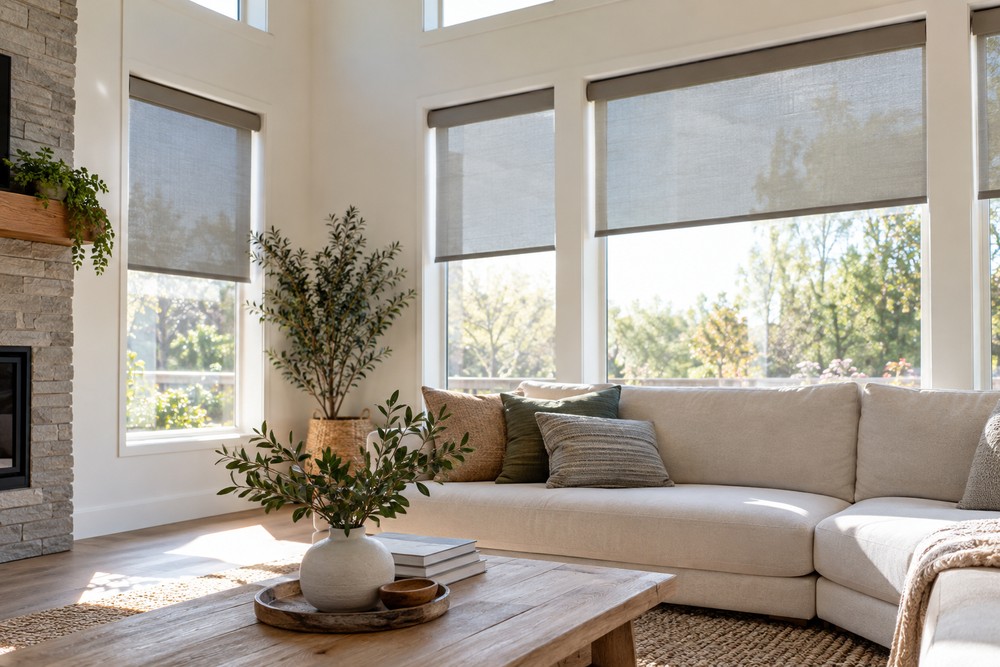
Window coverings are often selected for privacy, light control, and appearance, but the way they operate also affects everyday comfort. A covering that is simple to adjust may be used throughout the day, while an inconvenient one may remain in the same position. For some windows, easier operation can therefore be as relevant as color or material.
Motorized Shades offer an alternative to repeatedly reaching, pulling, or manually adjusting individual coverings. Their practical value depends on the location of the windows, household routines, furniture placement, and how often adjustments are normally needed. Automation is most useful when it addresses an actual inconvenience rather than being added simply as another feature.
Shutters & Shades can be considered when homeowners are deciding where automated operation would make a meaningful difference. Not every opening requires the same solution, and easily accessible windows may remain straightforward to operate manually. Identifying the situations where convenience matters most can create a more purposeful window covering plan.
Identify Windows That Require Frequent Adjustments
Some coverings are changed only in the morning and evening, while others may be adjusted several times throughout the day. A home office can require changes as sunlight moves across a computer screen. Living areas may also need different positions for daytime activities, television viewing, and evening privacy.
Observing existing habits can reveal which windows receive the most attention. If household members regularly walk across a room to adjust the same covering, simplifying that task may provide noticeable convenience. Windows that remain untouched for long periods are less likely to benefit from the same level of operating technology.
This evaluation also helps homeowners avoid treating every window identically. A practical plan can prioritize frequently adjusted openings while using simpler solutions elsewhere. Matching features to actual behavior keeps technology connected to a clear household purpose.
Consider Windows Positioned Behind Large Furniture
Furniture placement can turn an ordinary window into an inconvenient one. A deep sofa, large desk, dining table, or other substantial piece may make the covering difficult to reach without stretching or moving around obstacles. Repeating that effort each day can discourage regular adjustment.
Changing the furniture layout is not always desirable or practical. Major pieces are usually positioned according to room size, walking paths, television placement, or other functional needs. Window coverings should work with those arrangements rather than requiring the room to be organized around access.
Motorized shades in Tampa can be particularly relevant in these situations because routine operation does not depend on standing directly beside the window. The exact control method depends on the selected system. Homeowners should review available operating options before deciding whether automation solves the access problem effectively.
Look Closely at High and Awkward Window Locations
Some homes include windows positioned above stairways, counters, tall walls, or other difficult locations. These openings can provide useful daylight and architectural interest, but direct access may be inconvenient. A covering that requires frequent physical reach can become impractical in such positions.
Avoid Building a Routine Around Difficult Access
Homeowners should not assume they will regularly use a step stool or reach across a counter simply to operate a covering. A method that feels manageable once may become frustrating when repeated every morning and evening. Everyday convenience deserves more attention than occasional demonstration.
Window height should therefore be considered early in the selection process. Measurements, surrounding architecture, and the intended operating method all need to work together. Planning these details before choosing decorative finishes reduces the chance of creating an attractive but inconvenient arrangement.
Simplify Rooms With Several Separate Windows
A room containing many windows creates a different challenge from one with a single opening. Adjusting one covering manually may take little effort, but repeating the process across several windows can become time-consuming. The issue becomes more noticeable when adjustments occur multiple times each day.
Homeowners should consider whether all windows usually need the same position. Some rooms receive sunlight from different directions, which may require separate adjustments as conditions change. Understanding those patterns can help determine whether individual or grouped control would better match normal routines.
Shutters & Shades can fit into this planning stage by helping homeowners think about how several coverings will function as a system. Available features can vary, so specific control arrangements should be confirmed before selection. The goal is to make regular operation simpler without adding unnecessary complexity.
Plan Around Changing Daylight Throughout the Day
Natural light rarely remains consistent from morning to evening. Sunlight may enter one side of a room early in the day and affect another area several hours later. Seasonal changes can also alter the angle and duration of direct sunlight reaching interior spaces.
Frequent changes may lead homeowners to reposition coverings to manage brightness or glare. This is particularly relevant in rooms used for reading, working, relaxing, or watching screens. Easier operation can make it more practical to respond as lighting conditions shift.
Motorized Shades can support this type of routine when repeated manual adjustments would otherwise be inconvenient. Homeowners should still consider how much control they realistically need. Automation works best when it responds to established habits rather than creating complicated routines that household members are unlikely to use.
Think About Bedrooms and Daily Privacy Routines
Bedrooms often follow predictable window covering patterns. Occupants may open coverings after waking, change them during the day, and close them again before sleeping. Ground-level or closely overlooked bedrooms may require additional privacy adjustments at other times.
Convenience becomes more relevant when several windows are involved. Repeating the same manual task around a large bedroom may feel unnecessary, especially when access is partially blocked by furniture. The intended operating method should fit naturally into morning and evening routines.
Privacy requirements can differ between bedrooms within the same home. An upper-level room facing a private yard may need fewer adjustments than a street-facing room. Evaluating each space separately prevents technology from being added where it provides little practical benefit.
Decide Whether Automation Belongs in Every Room
Automated operation does not need to become a whole-house rule. A guest room with one easily reached window may function perfectly well with a straightforward manual covering. Adding features that occupants rarely use can introduce complexity without improving daily convenience.
Instead, homeowners can rank rooms according to access, frequency of operation, and the number of windows. High-use spaces with difficult openings may receive priority, while quieter areas can use simpler arrangements. This selective approach makes the overall plan more closely connected to household behavior.
Other practical considerations should also be reviewed. Power arrangements, controls, product compatibility, and maintenance requirements can differ between systems. Understanding these details before making a decision helps establish realistic expectations about everyday use.
Match Controls to Normal Household Habits
Technology is most useful when people understand and comfortably use it. A household that prefers simple operation may value a straightforward control method, while another may want several coverings managed together. The appropriate choice depends on the system and the habits of the people using it.
Shutters & Shades can be part of this evaluation by connecting available operating choices with the physical conditions of each room. Homeowners should ask how coverings will actually be adjusted during a normal weekday rather than focusing only on available features. This keeps the decision grounded in practical use.
Clear planning also matters when different family members use the same spaces. Controls should be accessible and understandable to the people expected to operate them. Convenience loses much of its value when a system feels unnecessarily complicated.
Let Everyday Convenience Determine Where Automation Matters
The value of automated window operation is easiest to understand by examining ordinary household routines. Window height, furniture placement, room activity, privacy patterns, and adjustment frequency all influence whether easier control will make a meaningful difference. These factors vary enough that one solution rarely needs to be applied everywhere.
Homeowners can begin by identifying the windows they already find inconvenient to reach or adjust. From there, they can consider which rooms experience changing daylight and which coverings require repeated operation. This approach connects product features to specific problems instead of selecting technology without a clear purpose.
A thoughtful plan uses convenience where convenience is genuinely needed. Automation can be reserved for challenging openings, busy rooms, or groups of windows while straightforward locations remain simple. Matching the operating method to real household behavior helps window coverings become an easier and more natural part of everyday living.



