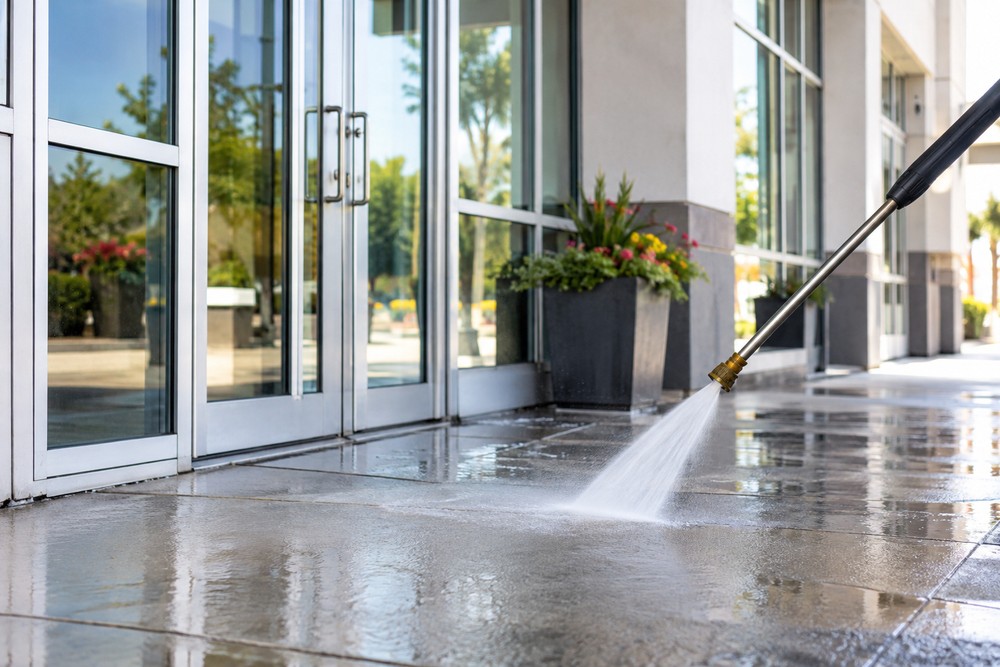
Commercial building exteriors face a different set of cleaning challenges from open parking areas and roadways. Entrances collect tracked dirt, walls develop visible grime, and hard surfaces near loading or service areas can show residue from frequent activity. Because these conditions vary by location and material, a single cleaning method is rarely appropriate for every exterior surface.
Property managers can make better maintenance decisions by separating loose debris from material that has become attached to a surface. Sweeping or routine collection may handle leaves, litter, and dry particles, while other buildup can remain behind. Identifying that difference helps prevent unnecessary cleaning and directs attention toward surfaces that actually need additional care.
Pressure Washing can play a specific role within this broader maintenance approach when surfaces and surrounding conditions are suitable. Cleaner Streets can help commercial property managers evaluate exterior cleaning needs according to surface condition, site activity, and access. A planned approach keeps the focus on appropriate cleaning rather than treating every visible mark the same way.
Building Entrances Often Develop Concentrated Surface Buildup
Entrances experience constant movement from customers, employees, delivery personnel, and visitors. Foot traffic can carry dirt onto exterior walking surfaces, while nearby vehicle activity may introduce additional dust and residue.
Covered entrances can develop different conditions from fully exposed walkways. Rain may naturally rinse some open surfaces, while protected sections can retain grime because they receive less direct weather exposure.
Managers should compare the entrance with surrounding areas rather than judging it in isolation. Differences in color or appearance can reveal where repeated traffic or limited weather exposure contributes to visible buildup.
Surface Material Should Guide Every Cleaning Decision
Commercial exteriors may include concrete, masonry, coated materials, painted components, and other finishes. These materials do not necessarily tolerate the same cleaning approach.
Before work begins, managers should consider the material, age, visible condition, joints, coatings, and nearby features. A method appropriate for one hard surface may be unsuitable for another that appears similar from a distance.
Pressure Washing should therefore be selected according to the specific surface rather than used automatically wherever dirt is visible. Existing deterioration or uncertain materials may require further evaluation before cleaning proceeds.
Older Surfaces May Need Additional Evaluation
Age alone does not determine whether an exterior surface can be cleaned appropriately. Previous repairs, coatings, weather exposure, and physical wear can all influence present conditions.
Property managers should look for loose material, damaged finishes, cracks, or other visible concerns. Cleaning should not be expected to correct physical defects that require separate maintenance.
Walkways Can Show Patterns Created by Daily Traffic
Pedestrian routes can reveal how people move around a commercial property. Main approaches may develop more visible grime than secondary paths simply because hundreds of footsteps repeatedly follow the same route.
Food service areas, outdoor seating, and building transitions can create additional localized conditions. Dirt may also collect where people move between landscaped sections and paved walkways.
Cleaner Streets can address appropriate exterior surfaces while managers consider why particular areas become dirty faster. Recognizing the source of recurring buildup can help determine whether cleaning frequency should vary across the property.
Loading Zones Have Different Cleaning Priorities
Loading and service areas are working spaces rather than customer-focused entrances. Trucks, carts, pallets, containers, and routine material handling can create surface conditions that differ substantially from those found near the front of a building.
Managers should inspect these locations when equipment or vehicles are not blocking the view. Residue may become noticeable around stopping points, doorways, or areas where materials are transferred.
Cleaning schedules should account for delivery activity whenever possible. Performing work immediately before a busy receiving period may reduce access and allow new dirt to appear soon after maintenance.
Waste Collection Areas Require Careful Planning
Areas around waste and recycling containers can develop visible residue alongside ordinary loose debris. Because these locations often sit near service routes, they may receive less routine attention than public-facing sections.
Managers should evaluate both the surface and its surroundings before cleaning. Nearby walls, drains, landscaping, stored items, and containers can affect how the work should be organized.
The objective is not simply to move unwanted material somewhere else. A thoughtful process considers where loosened dirt and cleaning water may travel so surrounding areas are not unnecessarily affected.
Drainage Should Be Considered Before Work Starts
Water movement is an important part of exterior cleaning planning. Commercial properties can contain slopes, curbs, drains, landscaped areas, and low points that influence where water travels.
Managers should understand these pathways before cleaning begins. Moving residue from one surface into another problem area does not create an effective maintenance result.
Observing the property after ordinary rainfall can provide useful clues. Managers may notice where water naturally collects or which routes connect building surfaces with nearby pavement and drainage features.
Outdoor Furniture and Fixtures Can Limit Access
Commercial entrances and gathering spaces often contain benches, planters, signs, waste containers, bicycle racks, or movable furniture. These features can hide surface buildup and make portions of the pavement difficult to reach.
Where appropriate, movable items can be coordinated before scheduled cleaning. Permanent fixtures should instead be incorporated into the work plan so nearby surfaces receive suitable attention without unnecessary interference.
Access planning can also reduce repeated work. Cleaning an open section first and discovering hidden buildup later beneath movable objects can make the process less efficient.
Recurring Stains Deserve More Than a Quick Reaction
A mark that repeatedly appears in the same location can provide information about property activity. It may relate to pedestrian movement, deliveries, landscaping, water movement, or another recurring condition.
Managers can record where persistent buildup develops and how quickly it returns after cleaning. This creates a clearer maintenance history than responding to each occurrence as an isolated event.
Pressure Washing may address suitable attached surface grime, but repeated discoloration can still justify investigating its source. Cleaning manages the visible condition without necessarily eliminating whatever continues creating it.
Cleaning Frequency Should Reflect Actual Conditions
Not every exterior area needs attention at identical intervals. A busy entrance may change quickly, while a protected side walkway experiences much slower buildup.
Seasonal conditions can alter those patterns. Rain, dry weather, landscaping activity, increased customer traffic, and scheduled events may temporarily change the amount or type of grime around a building.
Cleaner Streets can help managers organize exterior care around observed conditions rather than relying exclusively on a rigid calendar. Periodic inspections make it easier to identify where cleaning is useful and where it can reasonably wait.
A Surface-Specific Plan Supports Better Exterior Care
Commercial exterior cleaning works best when each area is evaluated according to its purpose, material, condition, and exposure. Entrances, walkways, loading zones, waste areas, and building-facing surfaces can develop different forms of buildup even within one property.
Managers can improve planning by identifying attached grime, considering drainage, coordinating access, and observing recurring patterns. These steps help determine where focused cleaning belongs within a broader maintenance routine.
A practical exterior plan does not depend on applying one method everywhere. Matching cleaning to individual surfaces and operational conditions allows property managers to address visible buildup while respecting materials, surrounding features, and the everyday activities that continually shape commercial spaces.