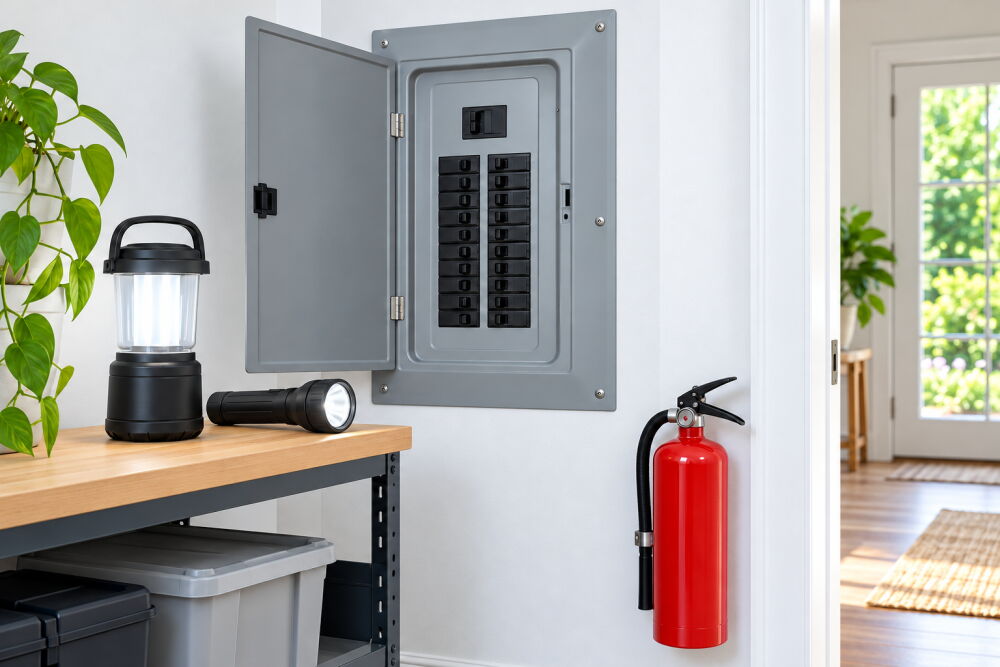
Electrical trouble rarely announces itself politely. A breaker that trips and won’t reset, an outlet faceplate that feels hot, lights that dim when a space heater kicks on, or the sharp smell of melting plastic can all signal a serious hazard. The first hour matters most. Your goal isn’t to diagnose the fault, but to make the space safe, limit damage, and give a professional clear information. This guide explains how to recognize red flags, shut power down safely, protect people and property, and capture helpful details while you wait for urgent service.
1. Cut Power Fast When You See These Red Flags
Sizzling or crackling sounds, an acrid burning odor, charred outlet covers, visible arcing, smoke from a panel or device, a breaker that immediately trips again, water dripping onto electrical equipment, or a tingling shock from an appliance all demand one move: kill the power. If you can do so safely, switch off the affected circuit breaker. If the source is unclear, the panel is humming, or water is present, switch off the main service disconnect. Use dry hands, stand on a dry surface, and use a flashlight for visibility. Then call a qualified emergency electrician, such as Reliant Electric, for a prompt response.
2. Make the Area Safe While You Wait
Keep people and pets away from the trouble spot. Do not touch a warm or scorched device until you are certain the circuit is de-energized. Move combustibles away from any appliance or cord that felt hot. Have a Class C-rated fire extinguisher ready, and never use water on an electrical fire. If smoke intensifies or flames appear, call the fire department immediately. If you see or suspect water near energized equipment, do not step into the wet area to reach a panel; shut the main disconnect from a dry location or wait for help. Avoid using extension cords or power strips to “work around” a failed receptacle.
3. Document Symptoms Without Poking Around
Good notes help the repair go faster and safer. Record which rooms or outlets lost power, which appliances were running (space heater, microwave, hair dryer, dishwasher), whether lights flickered or dimmed, and where you first noticed any odor. Photograph scorched receptacles, a half-thrown breaker handle, or a tripped GFCI or AFCI indicator. Do not repeatedly reset a breaker that trips immediately; that often points to a short or ground fault and can worsen arcing at a loose connection. Two quick examples: After a dishwasher cycle, you smell burning and see a browned outlet under the sink; switch off the kitchen circuit and avoid using that load. After a storm, you notice water stains near the load center and some rooms are dark; turn off the main and stay clear of the area.
4. Choose Between Isolating a Circuit and Killing the Main
When only one branch circuit shows trouble, isolating it can protect the rest of the home so the furnace, refrigerator, and sump pump continue running. That might be the right call for a single overheated receptacle or a tripping bathroom GFCI. When symptoms involve the panel itself, multiple circuits at once, burning at the service equipment, or water intrusion around the meter base or load center, shut the main disconnect and leave it off. The tradeoff is losing heat, lighting, refrigeration, and network gear. If that happens, keep refrigerator and freezer doors shut, use battery lanterns rather than candles, and consider relocating occupants who rely on powered medical devices until an electrician clears the hazard.
Give the Electrician the Right Details on Arrival
Clear, specific information speeds up troubleshooting. Share whether you shut off the main or a specific breaker, how many times a breaker tripped, what you smelled and where, and which outlets or lights are dead. Note whether a GFCI or AFCI device won’t reset, whether any cords or power strips overheated, or whether water reached outlets, a junction box, or the panel. Ensure safe, well-lit access to the load center and the affected rooms. Move pets to another area, move stored items away from the panel, and keep appliance manuals handy. If the electrician may arrive after dark, turn on exterior lights or mark the entrance.
Electrical emergencies leave little room for guesswork. Focus on three priorities: de-energize hazards, create a safe buffer around the issue, and capture accurate observations for the professional. Avoid common pitfalls like repeatedly resetting a breaker, running space heaters from power strips, or using a portable generator without a transfer switch. After the immediate fix, consider a follow-up safety check to label circuits clearly, verify GFCI and AFCI protection in kitchens, baths, garages, and bedrooms, and discuss ways to reduce overloading. Thoughtful steps in the first hour help protect people, property, and the electrician who is coming to make it right.



