October’s Q4 2026 Australian children’s furniture market makes the chest of drawers decision more practically motivated than at most other times of year. The combination of Christmas gift planning — when grandparents and extended family seek meaningful, durable nursery and bedroom furniture gifts — the Term 4 bedroom organisation pressure that the most academically demanding school term creates, and the summer preparation that requires the wardrobe rotation and clothing storage assessment that October prompts, creates a convergence of chest of drawers purchase motivations unique to Q4. This guide addresses all three October motivations with the most current 2026 Australian framework.
The Changing Dresser in the Q4 2026 Australian Nursery
Why is the changing dresser the dominant Q4 2026 Australian nursery chest of drawers choice?
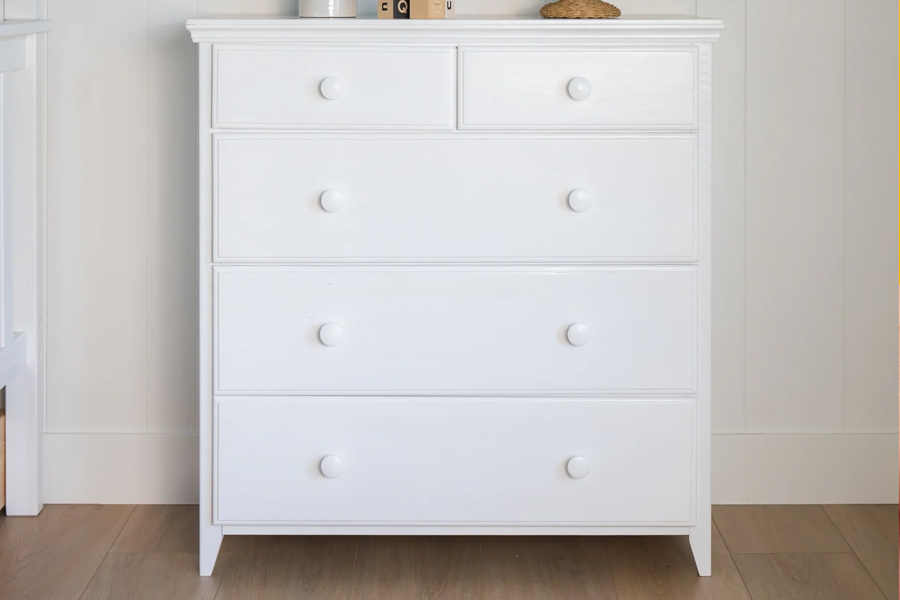
The changing dresser — a quality chest of drawers at 80 to 90 cm height providing both the ergonomic change surface and long-term clothing storage — has become the overwhelmingly preferred Q4 2026 Australian nursery furniture choice for families expecting spring and early summer babies. The Q4 timing that makes October the peak Australian nursery setup month also makes the changing dresser’s long-service value calculation most compelling: a changing dresser at AUD 450 to 650 that serves two to three years as a change surface and ten to fifteen subsequent years as the child’s bedroom chest of drawers represents approximately AUD 30 to 50 per year of service — the most financially efficient single Australian nursery furniture investment across the full infant-to-secondary-school service period.
The Summer Clothing Rotation: October’s Chest of Drawers Moment
How does the Australian summer wardrobe rotation make October the right chest of drawers assessment month?
October marks the Australian summer clothing transition — the shift from winter clothing in the upper drawers to summer clothing in the accessible front-drawer positions. This annual transition is the natural moment to assess whether the existing chest of drawers is serving the Australian child’s current clothing volume and school stage requirements. Three assessment questions determine whether a Q4 2026 upgrade is warranted: Can the child independently access and return their clothing without adult assistance — is the lowest drawer within comfortable independent reach? Does each drawer hold one clear category of clothing without the overcrowding that makes items difficult to locate and return correctly? And does the total drawer count match the specific child’s current clothing categories — school uniforms, casual clothing, sportswear, underwear/socks, and pyjamas each warrantying a dedicated drawer from approximately Year 1 onward?
| AU Child Age Stage | Optimal Drawer Count | Primary Clothing Categories | Most Important Drawer Feature |
| Nursery (0-2 years) | 3-4 drawers | Sleeping items, daytime, accessories, extras | Change mat compatible top (80-90cm height) |
| Toddler (2-4 years) | 4 drawers | Daytime, pyjamas, underwear, outerwear | Low drawer for independent toddler access |
| Early primary (5-8 years) | 4-5 drawers | Uniform, casual, sport, underwear/socks, pyjamas | Full independent access height; picture labels |
| Mid primary (9-11 years) | 5 drawers | As above plus growing category separation | Text labels; self-managed organisation |
| Secondary (12+ years) | 5-6 drawers | Full adult category range; hobby materials | Full-depth drawers; quality ball-bearing slides |
The Christmas Chest of Drawers: October Planning
Is a chest of drawers an appropriate Christmas gift for an Australian child in Q4 2026?
A quality solid timber chest of drawers — particularly a changing dresser for an expecting Australian family — is one of the most practically valuable and durably appropriate Christmas gifts available in the Q4 2026 Australian children’s furniture market. The chest of drawers carries the same quality verification requirements for Christmas gift purchases as any other Australian children’s furniture purchase: solid timber species named, drawer slide specification confirmed (ball-bearing metal slides for durability), non-toxic surface certification named. For grandparents and extended family planning a chest of drawers Christmas gift, the most reliable approach is to provide a specific model recommendation to the expecting Australian parents and purchase a gift card or the specific named model from a specialist Australian children’s furniture brand — not to select independently from a marketplace channel where the quality verification steps are most likely to be bypassed under gift-buying enthusiasm.
Wall Anchoring: The October Safety Reminder
Why is October the right time for an Australian chest of drawers anti-tip audit?
October is the natural annual timing for an Australian chest of drawers anti-tip strap security audit — coinciding with the summer wardrobe rotation that brings Australian families to interact closely with the chest, and preceding the December-January holiday period when additional children in the household (cousins, family visitors) may be unfamiliar with the specific piece and more likely to interact with it in unexpected ways. All Australian children’s bedroom chests of drawers over 60 cm in height — which encompasses virtually all standard configurations — must be wall-anchored with anti-tip straps before the bedroom is occupied. The annual October audit should confirm that the anti-tip strap attachment point on the wall remains secure, that the strap itself has not degraded, and that the connection between the strap and the chest is intact after a year of drawer opening, closing, and the vibration that active children’s bedroom use produces.
Frequently Asked Questions
What drawer slide quality should Australian parents specify in a chest of drawers?
Ball-bearing metal drawer slides are the quality standard for an Australian children’s chest of drawers intended to serve 10 to 15 years of active bedroom use. Ball-bearing slides operate smoothly and quietly at all speeds — from a toddler’s enthusiastic pull to a teenager’s distracted one-handed push — without binding, rattling, or deteriorating under the thousands of open-close cycles that a child’s daily clothing access accumulates across the service years. Plastic runner slides deteriorate within two to three years of active Australian children’s bedroom drawer use, producing the binding and noise that make the chest increasingly frustrating to use and less likely to be maintained in an organised state by the child.
What is the correct changing dresser height for an Australian nursery in October?
The correct changing dresser height for an Australian nursery positions the change mat surface at 80 to 90 cm from the Australian floor — elbow height for most standing Australian adults. Measure the specific height from the Australian floor to the top of the change mat (not just the unit top surface) before purchasing, as the change mat depth of 3 to 5 cm adds to the unit surface height and can place the change surface above the ergonomic range if the unit height is already at 87 to 90 cm.
Is a chest of drawers or a wardrobe more important for an Australian child’s bedroom?
For Australian children from birth through approximately age five, a chest of drawers (or changing dresser) is more immediately important than a wardrobe — the majority of infant and toddler clothing is folded rather than hung, making drawer storage the primary clothing organisation tool. From age five to six onward, the balance shifts as school uniforms and more formal clothing introduce hanging requirements that a wardrobe serves better than drawers alone. Most Australian families benefit from both pieces from the early primary school stage, with the chest of drawers prioritised first for the nursery and the wardrobe added as the clothing volume and hanging requirements grow through the primary school years.
Can an Australian chest of drawers be safely moved between rooms as the child grows?
Yes — a quality solid timber Australian chest of drawers maintains its structural integrity through multiple room changes across the service years, provided it is disassembled into its major components (removing drawers and any attached mirror or hutch) before transport and reassembled in the new position. Re-anchor the chest with new anti-tip straps at the new position before the room is used by the Australian child — the anchor position changes with each room change and must be re-established in the new wall at the new location.
Final Thoughts
The October 2026 Australian chest of drawers decision — for Q4 nursery setups, summer clothing rotation assessment, or Christmas gift planning — rewards families who confirm the specific height for their nursery context, the drawer slide quality for their service period, and the non-toxic certification for their child’s safety. Australian families can browse current chest of drawers options at boori.com.au/collections/chest-of-drawers