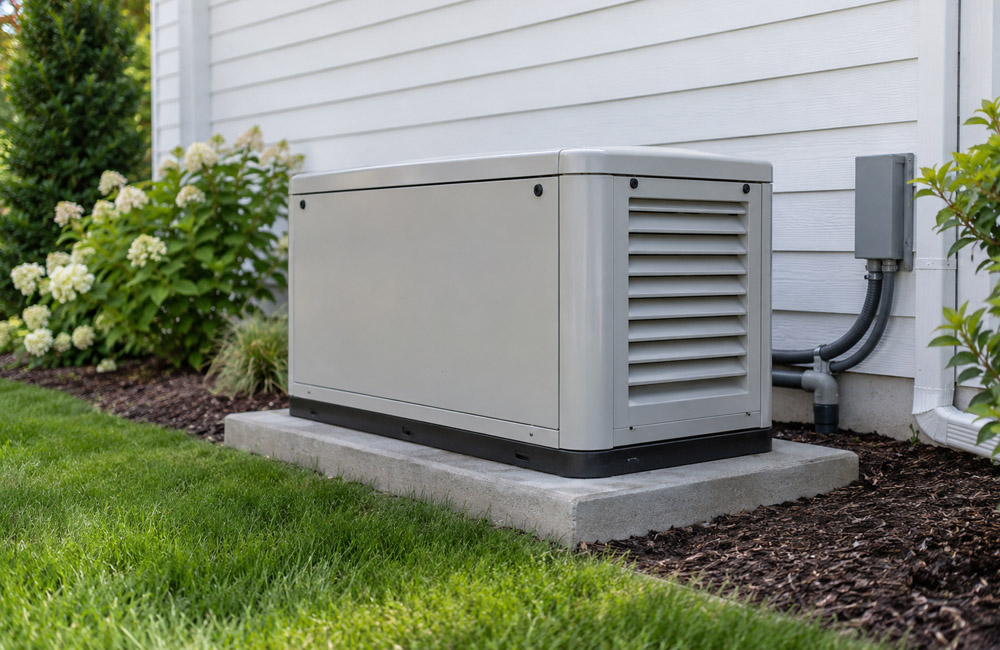
When the power goes out, a home standby generator can keep heat, cooling, refrigeration, and pumps running without dragging out cords or refueling a portable unit. The hard part is choosing the right size. Bigger is not always better: oversizing can strain your fuel supply and budget, while undersizing can cause nuisance shutdowns when major loads start. A sound plan looks at three things in sequence: which circuits you truly need, what those circuits draw at startup and while running, and whether your natural gas or propane system can supply that load. The transfer switch strategy and unit placement round out the decision.
Decide What Must Run During an Outage, Not What Would Be Nice
Start by listing critical circuits, not rooms. Typical essentials include the refrigerator and freezer, a gas furnace and blower, a sump or well pump, select lighting circuits, the garage door opener, network gear, and at least one receptacle circuit for chargers. High-demand 240-volt loads like a central air conditioner, an electric range, a dryer, or a tank-style electric water heater deserve a second look; each can dominate your total demand. Some homeowners choose “essential circuits” in a dedicated subpanel, while others plan for whole-house coverage that allows normal operation but still benefits from load management.
As you sketch that list, match it against realistic generator capacities and transfer equipment. For a neutral overview of model families and switch pairings, resources such as Forrest Jordan and Associates Generac standby generators can show how kW ratings align with common home setups. Keep the list honest: if a 50-amp electric range is rarely used, plan to leave it off or accept that it may be temporarily unavailable when the air conditioner runs.
Turn Critical Loads Into Watts: Running vs Starting and 120/240 Volts
Convert your list into real numbers. Running watts reflect steady draw; starting watts capture the short surge when motors spin up. A 3-ton air conditioner may draw 3,500 to 4,500 running watts but needs two to three times that briefly when the compressor starts. A 1/2-hp sump pump might run at 700 watts but spike to 1,400 watts. Add lighting (for example, 300 to 500 watts of LED circuits), a refrigerator (150 to 700 watts running), and your gas furnace blower (400 to 800 watts), and you can see how a modest set of essentials climbs quickly. Soft-start kits on air conditioners can tame inrush, but they should be selected and installed by HVAC pros.
Consider two realistic scenarios. In a 2,000-square-foot, mostly gas home with one 3-ton AC, a gas furnace, a refrigerator, a sump pump, and lighting, a 14 to 18 kW air-cooled unit can be reasonable, especially with a smart transfer switch that sheds the water heater. In a rural home with a well pump, an electric range, a dryer, and two AC compressors, a 22 to 26 kW unit may still need load-shedding to prevent both ACs and the range from starting together. Staggering big loads in software or manually with breakers often lets you choose a smaller, more fuel-efficient generator without sacrificing comfort.
Check Natural Gas or Propane Capacity Before Picking a kW Rating.g
A common mistake is choosing a generator by house size instead of fuel capacity. Natural gas meters are rated in cubic feet per hour, which translates to BTU per hour; every connected appliance draws from that “TU budget.”” standby generator’s demand can be substantial at full load, and long pipe runs, small diameters, and multiple tees cause pressure drop. Many residential systems operate at 7 to 11 inches of water column; some homes use a 2 psi service with a point-of-use regulator. If the line is undersized or the meter is marginal, you may see surging, shutdowns, or fault codes when heavy loads engage.
Propane introduces different constraints. Tank size and temperature govern vaporization; in cold weather, a small tank can frost and starve the engine. Long runs need appropriately sized copper or iron pipe and correctly staged regulators. Before you settle on a kW rating, ask your utility or fuel provider to confirm meter capacity, regulator sizing, and available BTU after accounting for the furnace, water heater, range, and fireplaces. A quick pre-install review often avoids costly change orders for upsized piping or upgraded meters.
Choose the Transfer Strategy: 200-Amp Whole-House, Essential-Circuit, or Load-Shedding.
Your automatic transfer switch (ATS) determines what the generator actually feeds. A 200-amp service-entrance-rated ATS powers the entire panel and is convenient, but it may require a larger generator to handle coincident loads. An essential-circuit setup moves selected breakers to a subpanel, which keeps the generator smaller and fuel use lower. Modern smart switches and modules add a third path: load-shedding. They temporarily drop noncritical loads (often an electric water heater or a second AC) when the generator approaches capacity, then restore them automatically as headroom returns. The trade-off is occasional cycling in exchange for lower fuel consumption and a smaller, quieter unit.
Pay attention to HVAC and pump controls. Lockout relays can prevent both condensers from running at the same time. Some AC systems support soft-start devices that cut compressor inrush, helping an 18 kW unit ride through starts that would otherwise demand 22 kW. Coordinate neutral switching and grounding per code: the ATS must be compatible with your service equipment so the generator’s neutral is handled correctly. These details are invisible day to day but determine whether a transfer feels seamless during the first outage.
Site Placement Affects Performance, Noise, and Code Clearances
Placement is more than finding an open spot. Set the generator on a level, permanent base such as a composite pad or poured concrete, with clearances specified by the manufacturer for intake and exhaust. Keep it away from doors, windows, and vents, and observe setbacks from property lines. Consider prevailing winds, snow drifting, and flood risk; a unit tucked into a low side yard may ingest leaves or accumulate snow that restricts airflow. Leave room for oil changes, battery access, and service. Sound matters too: distances and barriers change perceived noise for bedrooms and neighbors.
In a narrow side yard, you might rotate the unit for service access and place the ATS on the nearest exterior wall to shorten conductors, then route a larger-diameter gas line the long way around to reduce pressure drop. Avoid building solid fences or storing items tight to the cabinet, which can trap heat and recirculate exhaust. Thoughtful placement keeps the unit reliable during heat waves and winter storms and simplifies routine maintenance.
After the Install: Exercise, Maintenance, and Re-evaluating Loads
Right-sizing does not end on install day. Set the controller to exercise weekly so the engine circulates oil and tests the starter. Check oil and coolant levels seasonally, replace air and oil filters per the manual, and load-test the battery before winter. Keep intake and exhaust areas clear of brush and snow, and for propane, monitor tank levels so vaporization stays adequate in cold snaps. Once a year, perform a live transfer and verify that load-shedding priorities still match your home. If you add a hot tub, EV charger, or second heat pump, revisit the ATS settings or consider HVAC soft-starts so the generator’s reserve remains healthy.
Getting the size right comes from a disciplined sequence: define the circuits you cannot live without, translate them into running and starting watts, verify that your gas meter or tank can feed that demand, and then select the transfer approach that matches your habits. Site the unit where it can breathe and be serviced, and track maintenance so the numbers you planned for still hold a year later. With that framework, a Generac home standby setup can be sized to perform under pressure without overspending on capacity you will rarely use.



