Buying organic berry plants is exciting, but long-term success depends on more than a tempting variety name. Berries respond directly to climate patterns and soil chemistry. A blueberry that thrives in a cool, acidic site can languish in alkaline clay; a strawberry that needs short days and winter chill may never set well in a warm Zone 9 yard. Before you order bundles of bare root canes or a trio of potted shrubs, match cultivar traits to your USDA hardiness zone, frost dates, and soil profile. A good fit reduces inputs, curbs disease pressure, and rewards you with reliable harvests for seasons to come.
Start With Your Climate: USDA Zone, Frost Dates, and Chill Hours
Look up your USDA hardiness zone and average last spring frost date, then check typical winter “chill hours” (hours between about 32–45°F). Chill strongly influences flowering in many fruiting plants. For example, northern highbush blueberries often need higher chill and perform best in cooler zones, while southern highbush types have lower chill requirements and suit warmer winters. Likewise, strawberries that rely on short days to set flower buds can struggle where nights stay warm, and day length is less of a cue. These numbers narrow your shortlist before you even consider a cultivar’s flavor or berry size.
Once you know your zone and chill profile, review variety descriptions for their stated chill range and bloom time so spring frosts do not wipe out unopened buds. Once you have a preliminary list, compare stock forms and planting windows across reputable sources, including guides that show where to purchase premium organic berry plants, along with notes on shipping season and plant form (bare root, plugs, or potted). That step helps you align local weather, delivery timing, and transplant stress.
Match Variety Types to Heat, Cold, and Day Length
Strawberries come in June-bearing (short day) and day-neutral types. June-bearing plants set a large, concentrated crop after adequate winter chill and short days, which suits jam making and freezing. Day neutral plants ignore day length and trickle fruit from late spring through fall, especially with steady irrigation and regular feeding. The trade-off is quantity versus cadence: a single heavy June harvest with larger berries versus smaller, steady handfuls over months. In hot summer climates, day-neutral selections often outperform short-day types that never get the chill they expect.
Raspberries and blackberries hinge on cane age. Primocane raspberries fruit on current-year canes, letting you mow the patch to the ground each winter for simple pruning and a late summer to fall harvest. Floricane varieties fruit on second-year canes, rewarding you with an earlier summer crop but requiring selective winter pruning and some cold protection in harsher zones. Blueberries add another layer: northern highbush favor cooler zones, southern highbush tolerate heat and lower chill, and rabbiteye thrive in long, hot summers but usually need a compatible pollination partner to set heavy crops.
Let Soil Drive the Shortlist: pH, Texture, and Drainage
Test your soil pH and texture before buying. Blueberries demand acidic soil, typically around pH 4.5–5.5, to take up iron efficiently; plant them in neutral or alkaline soil and you will see chlorosis (yellowing leaves with green veins) and weak growth. Strawberries, raspberries, and blackberries prefer slightly acidic conditions (roughly pH 5.5–6.5) and good drainage. Heavy clay plus frequent irrigation invites Phytophthora root rot in caneberries. If a quick jar test or a shovel shows you have slow-draining clay, plan for raised beds, broadfork loosening, or coarse organic amendments like pine bark fines to open the profile.
Amendments take time to work. Elemental sulfur needs months to lower pH, so start the adjustment well before planting blueberries. Compost is valuable, but avoid fresh manure with strawberries; high nitrogen can push lush foliage and soft berries that invite botrytis (gray mold). One realistic scenario: a gardener with alkaline, calcareous soil at pH 7.8 still grows blueberries by using large containers filled with an acidic mix of pine bark, coir, and composted leaf mold, then maintaining pH with small sulfur top dressings and rainwater or acidified irrigation.
Plan for Space and Training: Beds, Containers, and Trellises
Space dictates what you can grow and how you should train it. Blackberries can stretch 8–12 feet per row section and benefit from a two-wire trellis; trailing types absolutely need support, while erect thornless selections still yield better with canes tied at 3 and 5 feet. Raspberries prefer rows about 2 feet wide with a simple T post and twine corral to keep canes upright and berries clean. Strawberries pack tightly in raised rows mulched with clean straw to suppress weeds and keep fruit off wet soil.
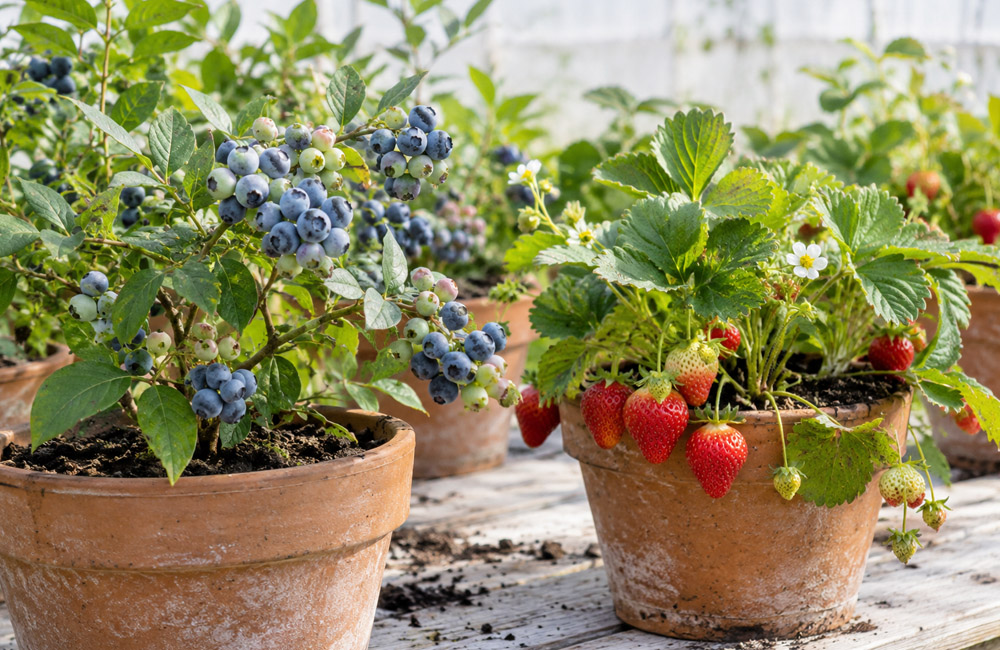
Containers expand options when ground is limited, or soil is unsuitable. A 5-gallon pot can hold a compact strawberry tower or day-neutral planter, while blueberries are happier in 15–25-gallon containers that buffer roots from heat and moisture swings. Use a peat-free, well-aerated, acidic blend for blueberries, and install drip irrigation with 0.5–1 gallon-per-hour emitters to provide slow, even moisture. In a small patio scenario, two compatible rabbiteye blueberries in 20-gallon tubs can cross-pollinate. At the same time, a narrow trellis with primocane raspberries along a fence yields a late-summer flush without sprawling.
Choose Plant Form and Timing: Bare Root, Plugs, or Potted
Plant form sets your calendar. Bare-root strawberries and caneberries ship dormant and plant best in late winter or early spring, when the soil is workable. They are cost-efficient and establish quickly, but the window is short, and roots must not dry out. Plugs (young starts) and potted plants extend the season; they cost more but are forgiving to schedule. In hot regions, late spring planting of potted blueberries under temporary shade cloth reduces transplant shock compared with bare root planting as temperatures climb.
Inspect quality regardless of form. Healthy bare-root raspberries should have stout, pencil-thick canes with firm, light roots and obvious buds; strawberries should have firm, medium crowns, not mushy or oversized ones that rot. Potted blueberries should show fibrous roots that hold the media without circling into a tight knot. One common mistake is planting caneberries in summer into unmulched, hot soil; canes desiccate quickly. Mulch with straw or chipped wood immediately, and water to fully moisten the root zone, not just the surface.
When your short list aligns with your zone, chill hours, and soil, the rest becomes routine. Remove the first flush of strawberry blossoms for a few weeks to push root and runner growth. For primocane raspberries, mow or cut all canes to ground level in late winter to simplify pruning. Keep blueberries mulched with pine needles or shredded bark to conserve moisture and maintain acidity; check pH annually and adjust with small doses of sulfur if it drifts upward. Lightweight bird netting over hoops protects ripening clusters without chemical deterrents.
If you garden in Zone 9b with mild winters, pair southern highbush or rabbiteye blueberries that meet your low-chill reality, choose day-neutral strawberries for steady summer fruit, and irrigate with drip to keep foliage dry and botrytis at bay. In a colder Zone 5 yard with heavy clay, set raspberries in raised rows for drainage, train erect thornless blackberries on a simple trellis, and choose June bearing strawberries for a strong early crop under straw mulch. In both cases, matching cultivar genetics to site conditions is what turns organic plants into dependable harvests.
The best purchases happen before you buy: confirm your climate numbers, read variety notes on chill and flowering habit, test and amend soil on a calendar, and pick a plant form that fits your planting window. Then set yourself up for the next stage with mulch, drip lines, clean pruning tools, and a plan for pollination partners where needed. With that groundwork, your organic berry patch will be easier to keep healthy and generous with fruit, year after year.



