Key Takeaways
- Dethatching removes excessive organic buildup above the soil, while aeration relieves compaction below the surface.
- A small turf and soil inspection can help prevent unnecessary, damaging work.
- Timing should match the grass type, its active growth period, and local weather conditions.
- Preparation, careful equipment settings, and follow-up care all affect recovery.
- Overseeding is most successful when the seed can make reliable contact with the soil.
Why Turf Care Needs a Clear Plan
A lawn, athletic field, or managed green space can struggle even when it is mowed and watered regularly. Thin turf, poor color, puddling after rain, soft footing, bare areas, and slow recovery from foot traffic can all point to underlying problems. The right response depends on what is happening at the surface and in the root zone.
For properties that need purpose-built equipment, ThatchMaster’s Unmatched Dethatchers for Sale can be part of a maintenance strategy, but equipment should follow diagnosis rather than replace it. A thick thatch layer, compacted soil, weak grass density, drainage trouble, and heat stress may create similar symptoms while requiring very different solutions.
Dethatching and Aerating Are Not the Same
Dethatching, sometimes called power raking or vertical mowing, removes excess thatch. Thatch is the brown layer of living and dead stems, roots, and other organic material that sits between green grass blades and the soil surface. A modest layer can be normal, but excessive buildup can interfere with water movement, nutrient access, and seed-to-soil contact.
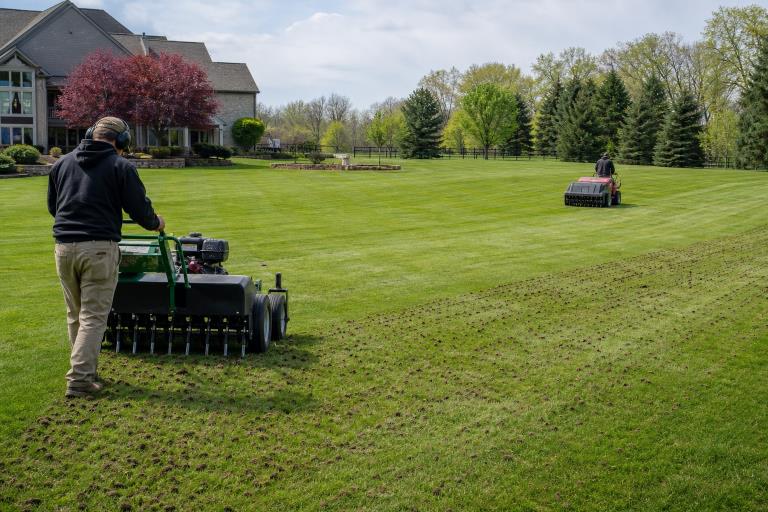
A core aerator removes small plugs of soil, creating openings that can improve air exchange, water infiltration, and root-zone conditions in compacted areas. Aeration does not automatically remove a serious thatch problem, and dethatching does not automatically correct compacted soil.
Core aeration addresses the soil beneath the turf. An aerator removes small plugs of soil, creating openings that can improve air exchange, water infiltration, and root-zone conditions in compacted areas. Aeration does not automatically remove a serious thatch problem, and dethatching does not automatically correct compacted soil.
Choose the Practice That Matches the Problem
- Dethatching: Best considered when turf feels unusually spongy or a visible organic layer has built up above the soil.
- Core aeration: Often useful where soil feels hard, water sits on the surface, or traffic has limited rooting.
- Overseeding: Helpful for thin turf and bare spots once the surface has been prepared to give seed access to the soil.
How to Check for Excess Thatch
Do not assume that loose clippings are thatch. Instead, cut a small sample about three inches deep from several areas of the lawn. Measure the brown layer between the grass blades and the soil surface. This is the part that should guide the decision.
Inspect both strong and weak sections because shade, traffic, irrigation patterns, and soil texture can produce different conditions across one property. University of California guidance uses more than one-half inch as a general point for considering dethatching. If overseeding is planned, even a lighter thatch layer may reduce seed-to-soil contact and deserve attention first.
Signs That Aeration May Be the Better Choice
Compaction can look like a thatch issue because both can leave the grass thin and slow to recover. Check for water pooling after rainfall or irrigation, especially in pathways, play areas, gates, and places where equipment turns. A screwdriver or soil probe that meets strong resistance in multiple spots can also suggest that the soil is densely packed.
Core aeration can be a practical choice when the main issue is firm soil rather than a heavy layer of organic material. Pulling cores creates channels into the root zone, but it should be done when the turf has an opportunity to recover. Avoid treating drought-stressed, dormant, or saturated turf unless local professional guidance indicates otherwise.
Choosing the Right Season
Major turf work is generally safest during active growth because the grass has time to heal after surface disruption. Cool-season lawns are commonly renovated in early fall when summer stress begins to ease. Warm-season grasses are usually better treated during their active growing period, often after they have fully greened up in spring and before growth slows later in the year.
Local conditions should set the final date. For cool-season turf, mowing grass short and removing clippings before overseeding can improve light exposure and seed-to-soil contact. Check the short-term forecast as well, since extreme heat, heavy rain, or an extended dry period can make recovery harder.
A Practical Turf Inspection Checklist
- Identify whether the turf is cool-season or warm-season grass.
- Confirm that the grass is actively growing and not under major heat or drought stress.
- Inspect several plugs for thatch depth.
- Test soil firmness and observe drainage after watering or rainfall.
- Look for weeds, pest damage, disease symptoms, and exposed soil.
- Review upcoming weather and the time available for recovery.
- Select the treatment that addresses the main problem, not every possible problem at once.
Prepare the turf before treatment
Preparation protects the turf and the equipment. Remove branches, stones, toys, and surface debris. Mark irrigation heads, shallow utility locations, and other obstacles. Mow at an appropriate height for the task, but avoid scalping healthy grass. Soil should be workable, not muddy, and a light watering beforehand may help an aerator penetrate dry ground.
Before using a dethatcher or aerator, make one test pass in an inconspicuous area. Inspect the result, then adjust depth gradually. Aggressive settings can tear crowns, pull plants from the ground, or create more stress than the lawn can quickly recover from.
What to Do After Dethatching or Aerating
After dethatching, remove heavy debris that would smother the turf. After aeration, soil cores can usually remain on the surface to break down naturally. If overseeding is part of the plan, use a grass variety suited to the climate, sunlight, expected traffic, and maintenance level of the site.
Keep newly seeded areas consistently moist without creating runoff or standing water. Limit foot traffic during germination, and delay aggressive mowing until seedlings are established. Fertilizer should be based on soil needs and product directions rather than being applied automatically after every turf treatment.
Common Mistakes to Avoid
- Dethatching every year without measuring the thatch layer.
- Treating loose clippings as though they were thatch.
- Working during extreme heat, drought, dormancy, or saturated soil conditions.
- Starting with the deepest or most aggressive equipment setting.
- Overwatering seeded turf and washing seed away.
- Ignoring drainage, mowing, fertility, or traffic problems after renovation.
When to Call a Turf Professional
Professional assessment can be worthwhile when drainage problems are severe, bare areas are extensive, disease or pests may be involved, or the grass type is unknown. Sports fields and other high-use sites also require planning around recovery time, surface firmness, and safe play conditions.
Conclusion: Treat the Cause, Not Just the Surface
Dethatching and aerating are valuable turf-care tools, but neither should be used on autopilot. Start with a close inspection of the thatch layer, soil condition, grass health, and seasonal weather. When the treatment matches the actual cause of decline, turf has a better chance to recover, fill in, and remain resilient through future use.