Hail in Billings doesn’t ask for permission. It shows up in June, bounces off your driveway, and takes a hard look at whatever is up on your roof. If you’ve been eyeing a cedar roof for the ranch-style house you just bought off Poly Drive, that hail is the first thing you should think about, not the last.
Here’s the honest version of this decision: cedar is beautiful, it’s lighter than asphalt, and in the right conditions it can look better twenty years from now than the day it went on. It’s also more expensive to install, it demands a specific kind of care, and it does not shrug off the same weather your neighbor’s shingles do. Cedar shake roofing in Billings, MT is a genuinely great fit for a lot of homes here, provided you understand what you’re signing up for.
This guide walks you through the choices that actually matter: which cedar product to pick, how the region’s weather treats it, what a fair estimate looks like, and the maintenance habits that separate a 20-year cedar roof from a 12-year one. If you make it to the end, you’ll know whether cedar belongs on your house or whether you should look at metal or composite instead.
Shake or Shingle? The Answer Depends on Your House, Not Your Pinterest Board
Most homeowners use “shake” and “shingle” as if they’re the same thing. They aren’t, and the gap between them changes how your roof looks from the street.
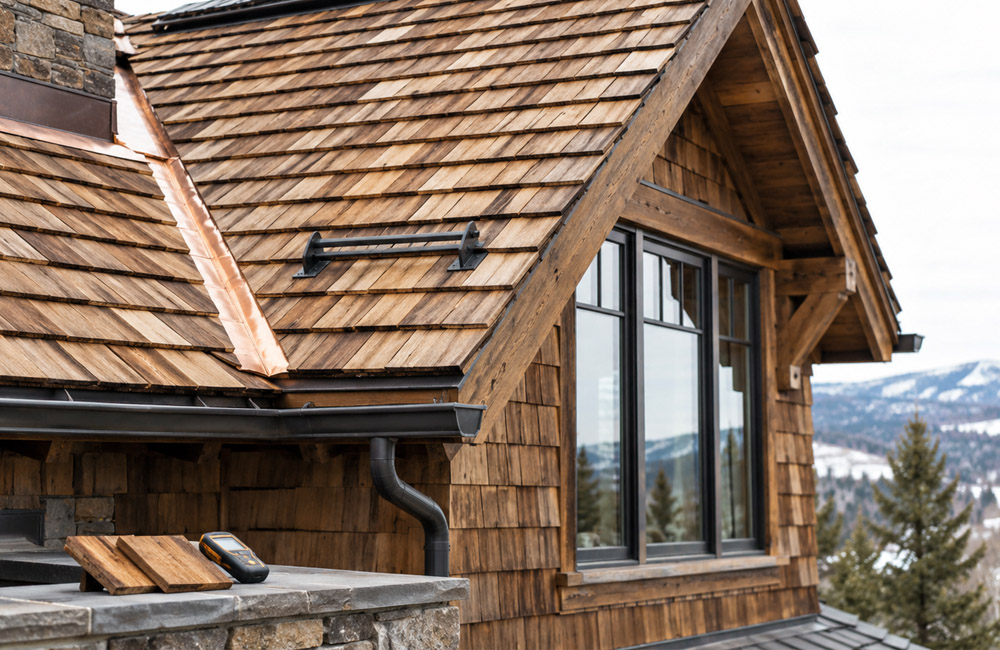
Cedar shingles are cut in a factory, so every piece comes out nearly identical in width and thickness. The result is a clean, even, orderly roofline. Cedar shakes are split by hand, which means no two pieces match exactly. A shake roof has texture and shadow, a rough, rustic quality that factory cutting can’t replicate.
Which one should you pick? I’d lean shake for a house with stone, timber, or gabled architecture that can carry the irregularity, and shingle for a cleaner, more modern home where even lines matter more. There’s no universal right answer, and anyone who tells you otherwise is selling something.
There’s a second variable almost nobody mentions until it shows up on the estimate: thickness. A thicker cut of wood holds up longer, and cedar taken from the denser part of the tree lasts longer still. Both of those raise the price. They also raise the lifespan, so the cheapest bundle on the quote isn’t automatically the smart buy.
How Billings Weather Actually Treats a Cedar Roof
You already know the local pattern. Snow sits on your roof for weeks. Wind comes through hard in the spring. Hail arrives in the summer, sometimes in the same week as a 90-degree afternoon. Cedar handles some of that better than asphalt and some of it worse, and the difference is worth understanding before you spend the money.
The upside is thermal. Because of how it’s cut and installed, a cedar roof moves heat and vapor differently than a shingled one, which helps with attic temperature and, in some homes, cooling costs. If your upstairs bedrooms run hot every July, that’s a real point in cedar’s favor.
The downside is surface hardness. Hail dents wood. It dents asphalt too, but wood shows impact marks more readily, and repeat strikes to the same area can crack or split the material. Meanwhile, the freeze and thaw cycles this region gets each winter work at your roof from below, opening gaps and lifting fasteners over time, which is the single biggest reason a cedar roof needs occasional attention rather than total neglect. The National Weather Service tracks the local hail and freeze patterns that matter most here if you want to see how often your area gets hit.
The key point: a cedar roof isn’t fragile. It’s just specific. Give it the right slope, the right ventilation, and a roofer who understands wood, and it earns its keep.
What a Fair Cedar Estimate Looks Like
Yes, cedar costs more than asphalt. It’s a premium material installed by hand, and hand labor is the expensive part. The Bureau of Labor Statistics tracks the labor market behind that work, and the trades that install specialty roofing are consistently among the ones where skilled hands don’t come cheap.
When you compare quotes, don’t compare line items. Compare what’s included. Here’s the checklist worth running against every bid:
- Tear-off and disposal. Is removal of the old roof in the price, or added at the end?
- Underlayment and ventilation. Cedar needs to breathe. If the quote skips ventilation details, that’s a warning sign.
- Flashing and valleys. These are where water gets in first, and where shortcuts hide.
- Fastener type. Corrosion matters more here than most homeowners expect.
- Warranty scope. Material warranty and workmanship warranty are two different documents, and you want both in writing.
Get three bids and ask each contractor what they’d change about the other two. You’ll learn more in ten minutes than in an hour of sales talk.
The Maintenance Habits That Decide How Long It Lasts
Cedar doesn’t fail because it’s a bad material. It fails because nobody looks at it for ten years. A quick walk-around in spring and fall catches most problems early:
- Look for cracked, split, or lifted shakes after any significant hail event.
- Clear debris from valleys and behind chimneys. Cedar and wet leaf litter don’t mix.
- Check for moss on shaded north-facing slopes. Moss holds moisture against wood.
- Have a professional inspect the fasteners and flashing every few years.
- Keep gutters flowing. Water backing up under the edges does damage you won’t see until it’s expensive.
If you’d rather not climb a ladder in a Billings wind, that’s fine too. The important part is that somebody does it. A roof that gets inspected regularly outlasts one that doesn’t, and it’s not close.
Is Cedar the Right Roof for Your House?
Here’s the straightforward test I’d use: cedar makes sense if you plan to stay in the home long enough to enjoy the look you’re paying for. It’s a design decision as much as a durability one. If you’re flipping the house in two years, the math doesn’t favor it. If it’s the house your kids will visit in twenty years, cedar is a reasonable bet.
The material itself is one of the oldest roofing options in the country, and its properties are well documented by organizations like the National Park Service, which has studied wood roofing in detail for historic preservation work.
If you’re ready to talk numbers, get a written estimate from a contractor who has installed cedar specifically, not just shingles. Not every roofer is comfortable with wood, and you want one who is.
So, one question worth sitting with: when you picture the house in fifteen years, what’s up top? If the answer is wood, start getting quotes this season instead of next.