Safe highway driving begins before your tires reach the entrance ramp. It started through regular checks of tire pressure, checking the tread depth, checking fluid levels, checking all of the lights work and ensure that the windscreen has full visibility and no chips or cracks. If you are replacing tires or checking whether your current set suits sustained highway travel, consult a tire speed rating guide and follow the vehicle manufacturer’s recommendations.
A quick mental check matters too. It is an important factor that drivers need to check whether they are too exhausted to drive, feel impaired, are emotionally distracted, or have taken medication that can alter their alertness. If so, it’s best to avoid driving until these issues are resolved to avoid any possible accidents.
For longer journeys drivers should plan out their fuel stops in advance, either plan food stops or stock up before setting off and alongside these plans should be rest stops. Ensure that every passenger within the car is buckled in and if you usually need something when driving ensure that It is in an easily reachable place so that you do not have to search for anything when driving.
Enter the Highway Smoothly
Use the entrance ramp to build speed and match the flow of traffic. Check your mirrors, activate your turn signal early, and look over your shoulder for vehicles in the blind spot. Choose a safe opening, then merge decisively without forcing other drivers to brake.
Avoid stopping at the end of the ramp unless traffic conditions leave no alternative. Once you have merged, cancel your signal and establish a steady position. Drivers already on the highway generally have limited room to react, so predictable movement helps everyone share the road safely.
Maintain Space and Control
Following distance is one of your strongest defenses. Leave at least three seconds between your vehicle and the one ahead in good weather conditions. Increase that gap in rain, fog, darkness, heavy traffic, construction zones, or whenever visibility and traction are reduced.
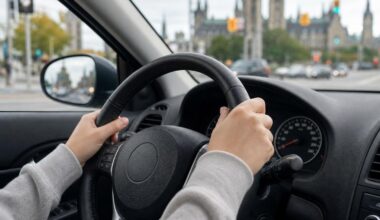
Keep both hands ready to control the wheel and scan well beyond the vehicle directly ahead. Looking farther forward gives you more time to notice brake lights, debris, merging traffic, or changing road conditions.
Drive at a speed that is legal and appropriate for conditions. Cruise control can reduce fatigue on clear, dry roads, but avoid using it when pavement is slippery or traffic is unpredictable. Smooth acceleration, braking, and steering preserve traction and make your intentions easier for others to understand.
Change Lanes With Care
Before changing lanes, it is important to check your mirrors, signal in advance and it is incredibly important to check your blind spot while also confirming that there is a big enough gap large enough for your vehicle. Move gradually while maintaining speed. Do not weave through traffic, linger beside large trucks, or remain in another driver’s blind spot.
Use the left lane primarily for passing where required or customary, then return to the appropriate travel lane when it is safe. Never assume another driver will make space. Signals communicate with intent, but they do not create the right of way.
Manage Distractions and Fatigue
It is best not to let yourself get distracted by your phone so many prompt drivers to place their phone on do not disturb or store it out of reach. This is becoming easier for drivers with modern connectivity in cars. Eating, adjusting controls, and reaching for objects can also pull attention away from the road. Complete these tasks while stopped whenever possible.
Fatigue can slow reactions as seriously as other impairments. Warning signs include frequent yawning, drifting within the lane, missing exits, and difficulty remembering the last few miles. If these occur, leave the highway safely and rest. Open windows, loud music, and caffeine are not reliable substitutes for sleep.
Respond Calmly to Hazards
If traffic suddenly slows, brake firmly but smoothly and watch for an escape path. Turn on hazard lights when appropriate to warn vehicles behind you. If a tire fails, hold the steering wheel securely, ease off the accelerator, avoid abrupt braking, and guide the vehicle toward a safe location.
When rain becomes intense, reduce speed and increase following distance. If the vehicle begins to hydroplane, ease off the accelerator and steer gently without sudden inputs. In fog, use low beams rather than high beams, which can reflect glare back toward you.
Share the Road Responsibly
Give trucks extra space because they have larger blind spots and need more distance to stop. Watch carefully for motorcycles, which can be harder to judge at a glance. Move over or slow down for stopped emergency and service vehicles as local law requires.
There are types of driving that increase risk when on the road. From aggressive driving, to tailgating, or even racing can increase driving risk by a substantial amount. A safer driver stays alert and creates space with clear communication when driving. One that stays calm when making decisions when driving, which will turn everyday highway travel into a safer experience for everyone each day.