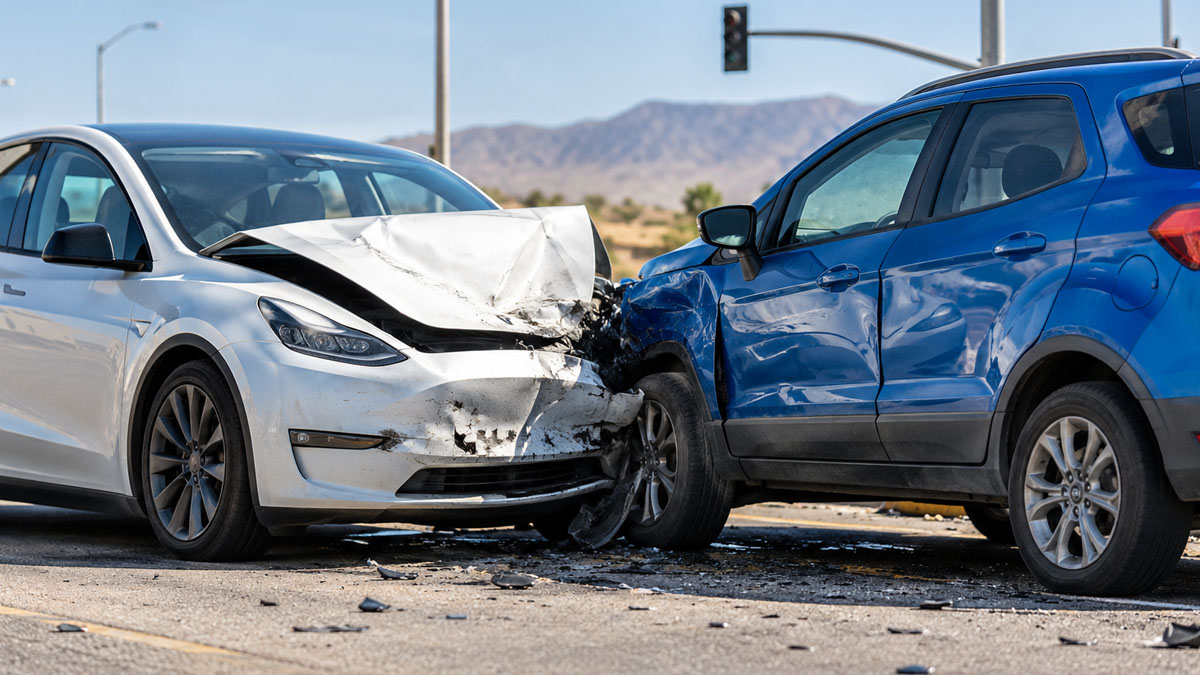
A recent crash serves as a stark reminder of how quickly things can go wrong on the road. When a Tesla and a Ford EcoSport collided in Victorville, the aftermath often left the drivers dealing with vehicle damage, injuries, and a long list of unanswered questions.
Two-vehicle collisions involving an electric sedan and a compact SUV can result in significant impact forces on both vehicles. Understanding how these crashes happen and what steps to take afterward can make a real difference in protecting your health and your legal rights.
How This Type of Crash Unfolds
Collisions between passenger vehicles of different sizes and designs often produce uneven damage patterns. In many reported incidents, one vehicle sustains heavy front-end damage while the other suffers serious side-impact damage.
These crashes frequently happen at intersections, where crossing traffic patterns create opportunities for miscommunication between drivers. A driver misjudging a gap, failing to yield, or reacting late to a changing signal can set off a chain reaction in seconds.
Emergency responders arriving at the scene of a two-vehicle wreck typically assess whether any occupants are trapped. In less severe cases, drivers and passengers are able to exit their vehicles on their own before crews arrive, though this does not mean injuries are minor.
Common Causes of Tesla and SUV Collisions
Collisions involving newer electric vehicles and traditional SUVs can stem from several overlapping factors. No two crashes are identical, but a few patterns show up often.
Autopilot and Driver-Assist Technology
Vehicles equipped with autopilot or advanced driver-assistance systems are becoming more common on the road. While these systems are designed to reduce human error, they are not foolproof.
Sensor limitations, software glitches, and driver overreliance on automated features have all been cited in past collision investigations. When a crash involves a vehicle using autopilot or similar technology, determining fault can require a closer look at both driver behavior and the vehicle’s systems.
Intersection Hazards
Intersections remain one of the most common locations for serious vehicle collisions. Limited visibility, confusing signage, and drivers rushing through changing signals all contribute to the risk.
A driver traveling through an intersection has only a split second to react if another vehicle unexpectedly enters their path. That narrow window often determines whether a near miss becomes a serious crash.
Injuries Common in These Collisions
Two-vehicle crashes at moderate to high speeds can cause a wide range of injuries, even when vehicles appear to have survivable damage.
Common injuries include:
Whiplash and other soft tissue neck injuries. Head and facial trauma from airbag deployment or window impact. Chest and rib injuries from seatbelt restraint forces. Fractures in the arms, legs, or hands.
Some injuries are not immediately obvious. Adrenaline from the crash can mask pain, which is one reason medical evaluation after any collision is strongly recommended, even when someone feels fine at the scene.
Investigating Fault After a Collision
After a serious crash, law enforcement typically opens an investigation to determine what happened. This process can include reviewing vehicle data, interviewing witnesses, and examining the scene for physical evidence like skid marks or debris patterns.
For crashes involving electric vehicles, investigators may also pull data logs recorded by the vehicle itself. This information can reveal speed, braking patterns, and whether any driver-assist features were active at the time of impact.
Fault determinations are not always straightforward. More than one driver can share responsibility, and insurance companies often dispute liability to reduce what they pay out.
Steps to Take After a Serious Car Accident
What happens in the hours and days after a crash can significantly affect both a person’s recovery and their ability to pursue compensation later.
Immediate Safety and Medical Care
The first priority after any collision is safety. If it is possible to do so safely, move to a secure location away from traffic and check on other occupants.
Seeking medical attention should never be delayed, even for injuries that seem minor. A prompt medical evaluation creates a documented record that can matter later if a claim is filed.
Documenting the Scene
When it is safe to do so, take photos of both vehicles, the surrounding area, and any visible injuries. Note the time, weather conditions, and any details about how the crash occurred.
Gathering contact information from witnesses can also prove valuable. Memories fade quickly, and independent accounts often carry significant weight during an investigation.
How an Experienced Attorney Can Help
Recovering from a serious car accident involves more than physical healing. Medical bills, lost wages, and vehicle repairs can add up quickly, and insurance companies do not always offer a fair settlement on their own.
An experienced car accident attorney can help by reviewing the details of the crash, gathering evidence, and communicating with insurance adjusters on a client’s behalf. This support allows injured individuals to focus on recovery rather than navigating a complicated claims process alone.
If you or someone you know has been injured in a two-vehicle collision, speaking with a local personal injury law firm as soon as possible can help protect your rights. A knowledgeable legal advocate can evaluate the circumstances of the crash and outline the options available for pursuing fair compensation.