When the Mojave sun pushes temperatures into the triple digits, a stalled air conditioner is more than an inconvenience. A little preparation before an HVAC appointment can speed up diagnosis, improve safety, and reduce the chance of repeat visits. This checklist focuses on Henderson’s desert conditions, where high attic temperatures, long afternoon cooling loads, and dust can all affect system performance. By gathering the right information and preparing access to your condenser, air handler, and key controls, you can give a technician useful clues about refrigerant performance, airflow problems, and electrical faults. The result can be a faster path from hot rooms and short cycling to steady, comfortable cooling.
Describe the Symptoms That Matter Most
Note what the system is doing, when the problem occurs, and where you notice it. Report whether supply vents are blowing warm air, whether airflow has weakened in certain rooms, or whether the outdoor condenser remains silent while the indoor blower continues running. Look for ice on the refrigerant lines near the service valve or frost around the evaporator coil access panel. Record the thermostat setting and actual room temperature, and note whether the unit short-cycles during late-afternoon heat. These details can help a technician prioritize checks of the capacitor, contactor, blower motor, refrigerant controls, and other system components.
Two scenarios are especially useful to describe. First, a two-story home where west-facing bedrooms become uncomfortable around 4 p.m. while the downstairs remains comfortable may point to duct design limitations, high static pressure, or attic heat affecting the supply plenum. Second, a home that cools properly in the morning but struggles by late afternoon may indicate that the outdoor unit is having difficulty rejecting heat under extreme conditions. If you plan to schedule through a local contractor’s Henderson office, have the time-of-day pattern and list of affected rooms ready so the dispatcher can record the symptoms accurately.
Collect System Details Before You Book
Write down equipment information from both the outdoor condenser and the indoor air handler or furnace cabinet. The equipment nameplate usually lists model and serial numbers and may also show efficiency information such as the SEER2 rating. Check the size and MERV rating of your air filter, along with the date you last changed it. Higher MERV filters can capture smaller particles, but they may also increase airflow resistance as they become loaded with dust. Note the thermostat brand and whether it uses batteries. If you have a heat pump, mention that as well, along with any auxiliary heat used during colder winter mornings.
Photos can also be helpful. Take a picture of the area around the air handler to show available clearance, the return grille location, and any difficult attic access. Photograph the condensate drain line and any float switch near the drain pan. If water has collected under the air handler or a safety switch has activated, this may point to a blocked drain line, drainage problem, or another issue that needs inspection. Having this information ready when you call can help the service provider understand the situation before arriving and prepare for the most likely diagnostic needs.
Clear Safe Access to the Condenser and Air Handler
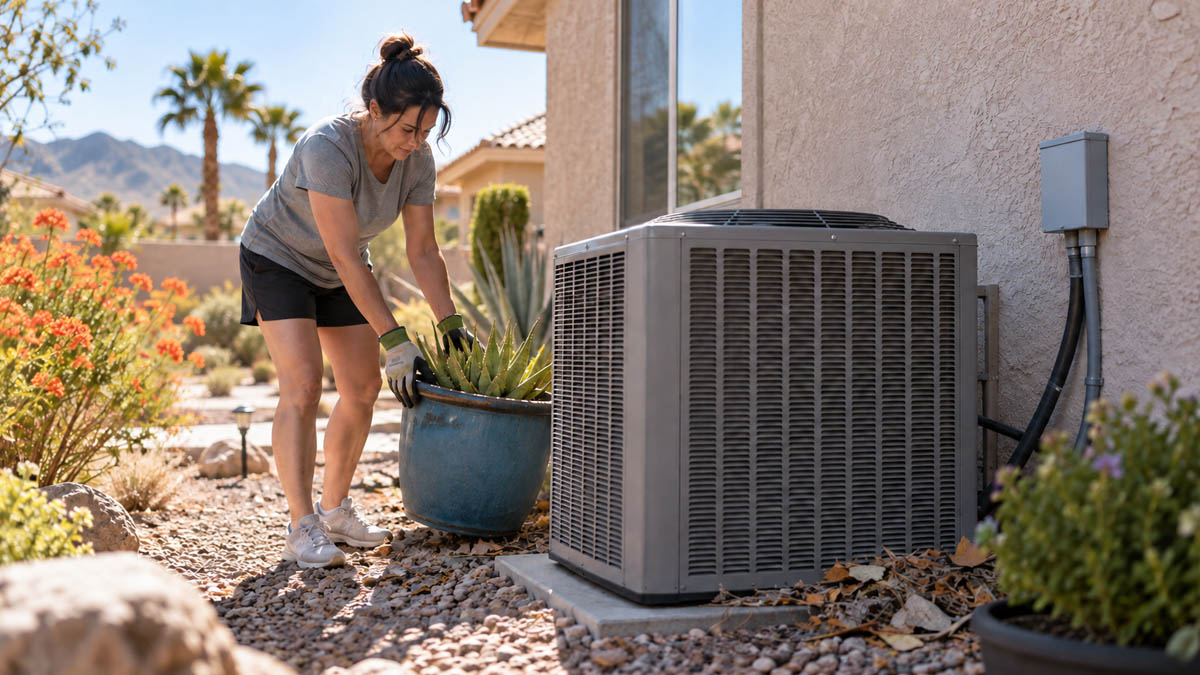
Technicians need clear access around the outdoor condenser for airflow checks, coil inspection, and electrical testing at the disconnect. Trim shrubs that are growing too close to the equipment, move storage bins or bicycles, and make sure gates leading to the side yard can be opened when the crew arrives. Indoors, clear a safe path to the air handler or furnace, and make sure any attic ladder can open fully. Move stored items away from the return plenum and filter slot so the equipment panels can be accessed safely.
Henderson’s extreme summer heat also affects working conditions. Attic temperatures can become dangerously high in the afternoon, making service work more difficult and limiting how long a technician can safely stay in the space. If your air handler is located in the attic, a morning appointment may provide more manageable conditions when scheduling allows. Secure pets, provide any necessary gate or alarm information, and locate the electrical panel before the visit. When the technician can reach the condenser, evaporator coil, and electrical components without unnecessary delays, they can spend more time diagnosing the actual HVAC problem.
Simple Checks You Can Do Without Tools
Check the air filter before the appointment and replace it if it is heavily clogged. A dirty filter can restrict airflow, increase static pressure, and contribute to evaporator coil icing. Verify that the thermostat is set to cooling mode and that the fan is set to Auto rather than On. If the thermostat uses batteries and the display appears weak or unreliable, replace them. If an AC breaker has tripped, you may reset it once. If it trips again immediately, leave it off and report the problem to the technician rather than repeatedly resetting it.
Avoid closing multiple supply registers in unused rooms to force more air elsewhere. Restricting airflow can increase duct pressure, worsen leakage at weak joints, and reduce overall system airflow. This may make comfort problems worse and can contribute to short cycling or coil icing. Filter selection also involves a balance. Higher MERV filters can capture smaller particles, which may help in dusty desert environments. Still, a very restrictive filter can reduce airflow if the return system is undersized or the blower cannot handle the added resistance. Ask the technician whether your current filter is appropriate for the system and whether return airflow improvements would help.
Make the Most of the Technician’s Time
Before the crew arrives, set the thermostat to a normal target temperature and avoid making a large temperature adjustment shortly before the appointment. On a 110-degree day, a major setback can create a long recovery period that makes it harder to evaluate normal system performance. Point out rooms with chronic comfort issues, mention any whistling at return grilles that could indicate high static pressure, and share previous invoices or known repairs, such as a replaced blower motor or recent refrigerant service. If the condensate line has overflowed before, show the technician where the line exits so they can inspect drainage.
Be prepared to discuss the home itself. In a common Henderson situation, a second-floor loft with limited shade and minimal attic insulation may stay much warmer than the area near the downstairs thermostat. That problem may involve heat gain and airflow distribution rather than refrigerant alone. A technician can measure the temperature difference across the evaporator coil, inspect for duct leakage near the plenum, and evaluate possible improvements such as balancing dampers or additional return airflow. Identifying whether the problem is mechanical, airflow-related, or caused by building load can help you choose a more appropriate solution instead of repeating seasonal service calls.
Know What to Expect After the Visit
If you have been away for a weekend and left the thermostat at 80 degrees, the system may run for an extended period when you return and lower the setting. In extreme heat, sun-heated attic materials, walls, furniture, and flooring can hold significant heat that the air conditioner must remove. A long recovery period under those conditions does not automatically indicate equipment failure.
After service, keep debris away from the condenser, replace filters as needed, and watch for early warning signs such as unusual fan noises, weak airflow, frequent cycling, or water near the air handler. Accurate symptom notes, clear equipment access, and a few safe homeowner checks can make your next HVAC visit more efficient and help prepare the system for Henderson’s hottest afternoons.