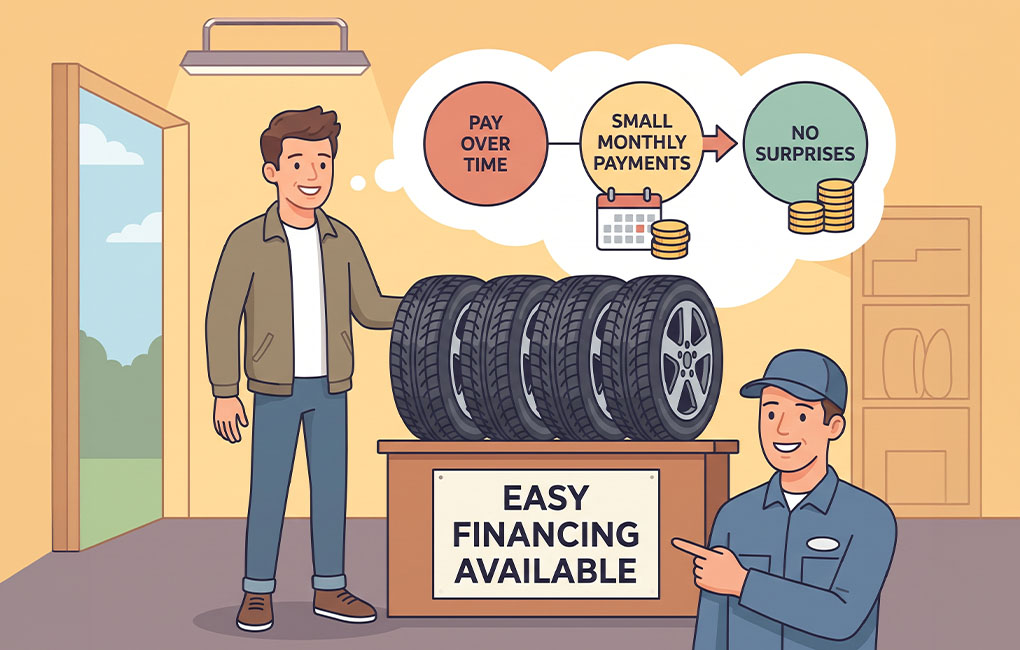
Tire replacement is rarely an expense that you plan for. You casually do a routine tire check, and suddenly the mechanic recommends buying new tires. At that point, you end up facing a bill you weren’t ready for. The cost of four new tires, installation, and other services add up quickly. And you don’t know what to do.
That’s the part when tire financing comes up as a great plan. It offers a practical way to spread the cost of new tires into manageable payments, rather than delaying an essential replacement because of the upfront cost. This way, you can get the tires you need and ensure safe driving without the financial strain.
What Is Tire Financing?
But what is tire financing? You end up looking for the best solution, but there are many options to choose from. How to choose the right one? What to look for?
This payment option allows you to purchase the new tires you need without paying the full cost upfront. So, instead of making one large purchase, you can easily repay the financed balance over a set period under the terms of the financing agreement.
But you need to be careful, because not all financing options are the same. Some financing options are true buy now, pay later options, while others function like lease-style agreements. The tire purchase can be divided into smaller amounts and spread over several weeks or months.
It is crucial to do your research and review all the terms before agreeing to a financing option. The payment terms vary based on the payment period, amount, interest, fees, and other terms. Also, don’t forget to look at the full cost, because the payment can look fine until you add up fees and interest.
How Does Tire Financing Work?
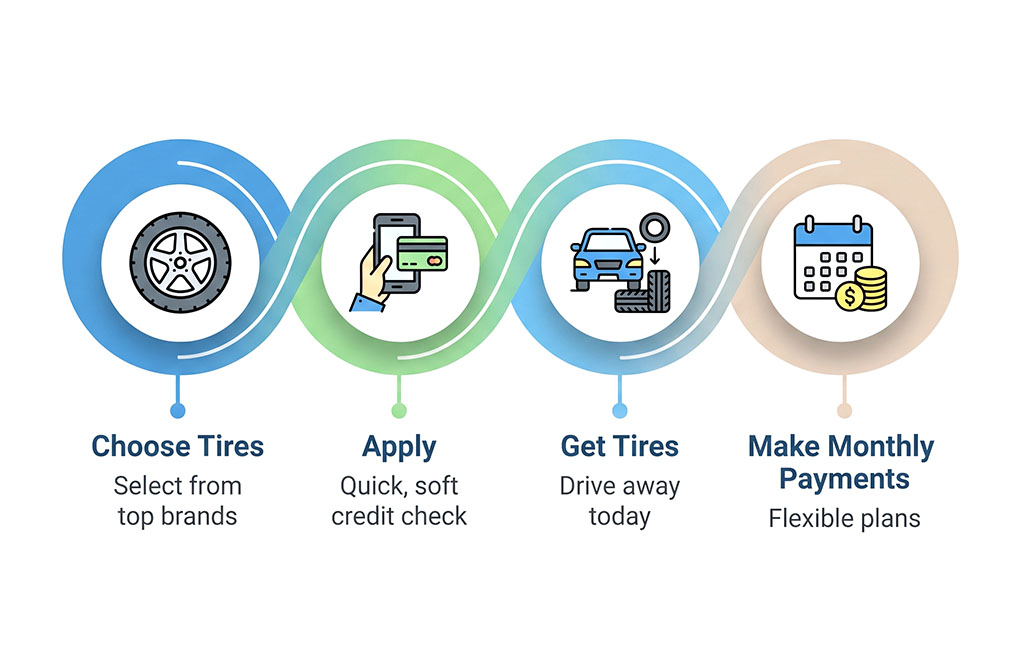
Most tire financing options follow the same basic flow, and it’s not complicated. Once you’ve found the right tires for your vehicle, you will go through a few basic steps before completing your purchase.
Choose the Tires You Need
The first step is, of course, to choose the right tire for your vehicle, driving habits, road conditions, seasonal demands, and budget to keep your car running smoothly year-round. Always consider factors such as tire size, tread life, performance, and warranty coverage.
See Your Available Financing Options
Once you know which tires you want, check whether the retailer offers financing and what payment plans may be available. Options vary depending on the retailer, purchase amount, and credit profile.
Apply or Qualify For Financing
Depending on the financing program, you may need to complete an application or go through a qualification process. Some providers allow you to check whether you qualify before completing your purchase.
Review The Payment Terms
Always look at the details carefully before accepting any offer. Check the interest rates or promotional terms, the payment amount, the repayment period, and any applicable fees to understand the total cost.
Get Your Tires Installed
After your financing is approved and your purchase is complete, the tires can be installed on your vehicle. The retailer may also provide related services such as balancing and alignment.
Make Your Scheduled Payments
Your financing agreement will specify when payments are due and how much you’ll owe. The payment schedule will help you stay on track with the agreement and avoid potential fees.
Why Finance Your New Tires?
With tire financing, you can keep your savings intact. A new set of tires can take a noticeable bite out of your savings, especially when all four tires need to be replaced at once. It will help you cover the purchase while keeping some cash available for emergencies, bills, or other vehicle expenses that may come up.
When it’s important to get your tires sooner, financing will make that happen. It can be dangerous to drive on worn and damaged tires while you save up. In this way, you can get your tires sooner and address the issue without waiting until you cover the entire purchase.
Financing will help you to break a large expense into smaller payments as part of setting financial boundaries that protect the rest of your budget. It will make a large tire purchase easier to manage. Rather than paying the full cost and adding it to other expenses. You can account for the payments as part of your regular financing plan.
Last but not least, financing makes unexpected car expenses more predictable. This will give you a way to manage the cost without using a large amount of your available cash all at once, making an unplanned replacement easier to handle.
What to Look for in a Tire Financing Plan
If you ever had to replace a set of tires unexpectedly, you would know that the cost of four new tires is high, and it would be easier to break it into monthly payments. Before choosing a financing plan, always look at the bigger picture.
How much do you need to pay every month? How long will it take you to pay it back? Do monthly payments always require some extra fees or interest charges that could change the final cost?
A financing plan should make your tire purchase more manageable, not more confusing. Always look for clear terms, an affordable payment that works with your budget, and a reasonable repayment period.
The application process should be easy and straightforward, and you should not have to worry about unexpected fees or other interest appearing later. All this important information will help you to know whether the plan is actually a good fit for you.
Is Tire Financing Right for You?
Tire financing is right for you if your safety is on the line. It makes sense when you need tires now and paying for everything upfront would put too much pressure on your budget. Sometimes, tires are simply an expense you can’t put off.
If your current tires are worn out or damaged, you still need a safe and reliable way to travel from one place to another. Financing can help spread that cost out instead of requiring you to come up with the full amount at once.
It can also be helpful if you prefer knowing exactly what you’ll be paying each month. The important thing is to ensure you have a reliable way to make those payments and that the financing terms fit your budget.
A manageable monthly payment can be helpful, but it is important to consider the interest, fees, repayment period, and total cost before signing up.
Conclusion
Tire replacement rarely happens at a convenient time, and it can catch you off guard. That’s where tire financing offers a practical solution. Instead of choosing between your driving safety and your savings, you can get the right tires and pay for them in the way that best fits your budget.
Before you choose from different options, take time to compare them. Look closely at the interest rate, repayment period, and any extra fees. Most monthly payments look affordable, but they can cost more once you pay those extra charges.
The right payment plan will give you clear terms from the start, a payment schedule, and no surprise fees. When you find the perfect plan for your budget, tire financing will stop being a way to cover unexpected expenses and become a smart, manageable way to stay safe on the road without unnecessary pressure on your finances.