A roof replacement is easy to picture from the street: old shingles come off, new materials go on, and the property gradually takes on a cleaner finished appearance.
Much of the work that determines whether the project runs smoothly happens before that visible transformation.
Materials have to arrive in the right quantities. The crew needs safe access. Landscaping and exterior features may require protection. Debris has to move off the roof without damaging the property below. Weather conditions need to be watched closely, and the old roof may have to be removed in a sequence that prevents too much of the building from being exposed at once.
A finished roof may look simple. The process behind it is closer to a carefully managed jobsite.
Material Planning Begins Before Tear-Off
A replacement project needs more than bundles of shingles.
Depending on the roof, the material list may also include underlayment, ridge components, flashing materials, ventilation products, fasteners, membranes, edge components, and other accessories.
The quantities have to reflect the actual roof geometry.
Valleys, hips, ridges, dormers, waste from cuts, and complex sections can affect how much material is needed beyond a basic square-foot calculation.
Shortages can interrupt the workflow, while significant over-ordering creates unnecessary handling and returns.
Good preparation aims to have the right system ready before the old one starts coming apart.
Delivery Location Can Affect the Whole Jobsite
Roofing materials are bulky.
Where they arrive influences how people, vehicles, debris, and tools move around the property.
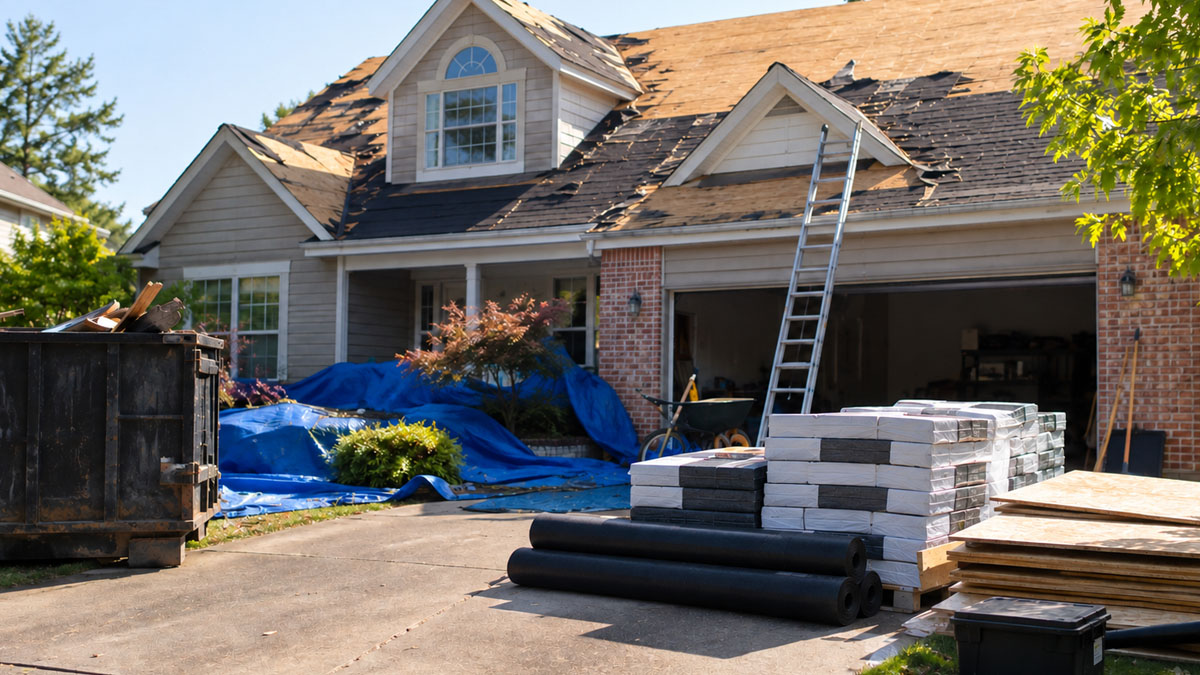
A delivery placed too close to a garage may block access. One positioned beside delicate landscaping can create another problem. Narrow driveways, gates, overhead lines, and limited street access may also affect where products can be staged.
This is where coordination with a roofing supplier becomes part of the project’s backstage work. Product availability, accessory coordination, delivery timing, and practical staging all need to line up before installation begins.
The roofing material may eventually end up overhead, but the logistics begin on the ground.
Property Protection Should Happen Before Debris Starts Falling
Tear-off creates movement in both directions.
Old roofing comes down while new material moves up.
Before that begins, the areas around the house should be reviewed.
Patios, decks, air-conditioning equipment, windows, driveways, shrubs, garden beds, and other vulnerable features may need protection or clear working space.
Homeowners can help by moving furniture, vehicles, toys, grills, and other movable items away from the work zone.
This creates safer access and reduces the number of objects the crew has to work around.
Protection is most useful when planned before the first shingle is removed, not after debris has already started reaching the ground.
Tear-Off Creates a Temporary Roof Condition
Homeowners normally see a roof only in its finished state.
During replacement, that changes.
As old materials are removed, underlayment, decking, flashing, and previous repairs may become visible. Sections of the roof temporarily exist without their normal finished covering.
This is one of the most important stages of the project.
The crew may discover deteriorated decking, unusual old repairs, multiple material layers, or flashing details that could not be evaluated fully beforehand.
Those findings can affect what happens next.
The installation plan needs enough flexibility to respond to actual conditions rather than assuming every concealed layer will look exactly as expected.
Weather Matters Most While the Roof Is Open
Rain matters to every roof, but it matters differently during tear-off.
A completed roofing system is designed to handle weather. A partially opened roof is temporarily more vulnerable.
That makes scheduling and sequencing important.
Crews may avoid opening more areas than can be safely managed within the available weather window. Materials for temporary protection may also need to be ready if conditions change unexpectedly.
The point is not that roof replacement requires perfect weather for the entire project.
It is that exposure has to be controlled deliberately while the old covering is removed and the new system is being built.
Different Roof Sections May Be Handled in Stages
A large or complex roof does not always need to be stripped all at once.
Working in sections can make the project easier to control.
One roof plane may be opened, inspected, repaired where necessary, and rebuilt before work moves to another section.
The exact sequence depends on roof shape, access, weather, and the installation plan.
This staged approach can also make hidden-condition decisions easier because the crew deals with each exposed area before opening another.
Roof replacement is not simply demolition followed by installation.
The two activities often overlap in a controlled sequence.
Decking Decisions Happen After the Surface Is Gone
The condition of roof decking cannot always be confirmed fully from above while old material remains in place.
Tear-off provides the clearest opportunity to inspect it.
If sections are soft, damaged, or otherwise unsuitable for the new system, they may need attention before underlayment and roofing materials cover them again.
This can affect both schedule and cost.
Homeowners should understand beforehand how unexpected decking repairs will be handled so a concealed condition does not become a completely unplanned conversation in the middle of the project.
The goal is to correct problems while they are accessible rather than hide them beneath new material.
Material Organization Matters Once Installation Begins
A roof project can involve several product types that look similar when stacked around a busy jobsite.
Clear organization helps prevent mistakes.
Ridge products should not be confused with field shingles. Flashing materials, membranes, vents, and other accessories need to be available when the installation reaches the area where they are required.
A missing small component can delay a section even when hundreds of square feet of roofing material are already onsite.
This is why material coordination is part of the installation process rather than a separate purchasing task.
Every component has a moment when it needs to be ready.
Professional Sequencing Holds the Project Together
The most visible stage is installation, but the sequence leading into it determines how controlled the project feels.
Old material has to be removed without opening too much roof at once. Exposed decking needs inspection. Necessary repairs must happen before the next layers are installed. Weather protection has to remain part of the plan, and materials need to arrive at the right stage.
This is where professional roofing services become relevant: tear-off, inspection, temporary protection, repairs, and installation need to operate as one coordinated process rather than as disconnected tasks.
The finished shingles may be what homeowners see, but the hidden sequence underneath is what gets them there.
Cleanup Is Part of Production, Not Just the Final Hour
Roofing debris should be managed throughout the project.
Waiting until the very end to deal with everything creates unnecessary clutter and can make movement around the property harder.
Regular cleanup keeps access routes clearer and helps prevent loose material from spreading across driveways, lawns, or neighboring areas.
Final cleanup still matters.
The property should be reviewed for remaining debris, packaging, fasteners, and materials before the job is considered complete.
A well-managed site usually looks organized during the project, not only after the crew leaves.
Homeowners Can Prepare the Inside Too
Roof work happens outside, but vibration and noise can affect the interior.
Pictures, fragile decorations, or loosely placed objects on upper floors may be worth securing before work begins.
Attic contents may also need protection from dust or small debris depending on the condition of the space and the work being performed.
Pets and household schedules deserve planning as well.
Roof replacement can be loud, and normal driveway or yard access may be disrupted temporarily.
A little preparation can make the construction period less frustrating even though the work itself remains outdoors.
The Finished Roof Is the Last Chapter of a Longer Process
The final roof is only the visible result.
Before that point, someone had to coordinate products, delivery, access, protection, weather, tear-off, decking inspection, hidden repairs, installation sequence, and cleanup.
Those backstage steps rarely appear in the final photograph.
They still matter.
A roof replacement runs more smoothly when the project is treated as a controlled sequence rather than simply removing one material and putting another in its place.
The new shingles may be the part everyone notices, but much of the quality of the experience is decided before the first new one is ever installed.