A backyard can look peaceful and still feel surprisingly noisy.
Traffic may be audible from one corner. An air-conditioning unit may cycle beside the patio. Pool equipment might be barely noticeable near the house but distracting from a favorite chair. Even ordinary household sounds—doors opening, outdoor cooking, children playing, or equipment starting—can change how different parts of the yard feel.
Landscape planning usually begins with what people will see. Yet sound also affects where they choose to sit, talk, dine, or spend quiet time.
Creating a simple sound map before redesigning the yard can help place outdoor features where they work with the property’s acoustic character instead of fighting it.
Listen Before Moving Anything
Start by walking through the yard without trying to solve a problem.
Stand in several locations for a few minutes.
Listen for continuous sounds such as roads, mechanical equipment, or nearby commercial activity. Then notice intermittent sounds: a neighbor’s gate, deliveries, lawn equipment, children playing, or an air conditioner switching on.
Mark those sounds according to direction and intensity.
The quietest spot may not be where expected. A corner farther from the house could receive more road noise, while an area beside a wall may feel calmer because the building changes how sound reaches it.
This simple observation provides a better starting point than placing furniture wherever there happens to be empty space.
Create Zones Based on What People Want to Hear
Different outdoor activities tolerate different sound levels.
A play area does not need the same acoustic character as a reading corner. An outdoor kitchen is already an active space, so nearby household noise may feel less disruptive there. A dining area works best where conversation does not compete constantly with equipment or traffic.
Instead of asking only, “Where does the patio fit?” ask what kind of experience each part of the yard should support.
Quiet zones, activity zones, and transition areas can then be arranged more deliberately.
This does not require absolute silence.
The goal is to prevent the loudest recurring sounds from dominating the places meant for conversation or rest.
Use the Landscape to Shape Perception
Plants cannot be expected to soundproof a yard, especially against strong low-frequency noise.
They can still influence how a space feels.
Dense planting can soften visual exposure to a road or neighboring property, making unwanted sound feel less visually connected to the seating area. Trees and layered planting can also create movement and natural rustling that changes the character of the space.
Homeowners planning landscaping in Ottawa can use planting, pathways, pergolas, water features, and seating areas to organize the yard around quieter and more active zones instead of treating every outdoor feature as an independent object.
The design works better when sound is considered alongside sunlight, privacy, circulation, and views.
Pay Attention to Mechanical Equipment
Outdoor equipment is often placed according to technical needs, not comfort.
Air-conditioning condensers, pool pumps, heat pumps, generators, and similar equipment can create predictable sound zones around the property.
If equipment already exists, locate the areas where it is most noticeable.
A conversation area placed directly beside a frequently cycling unit may be frustrating even if the patio itself is beautiful.
Sometimes moving the seating area is more practical than trying to conceal the equipment completely.
Where new equipment is being planned, consider its relationship to bedrooms, patios, dining spaces, and neighboring properties before the final position is chosen.
Water Features Can Add Intentional Sound
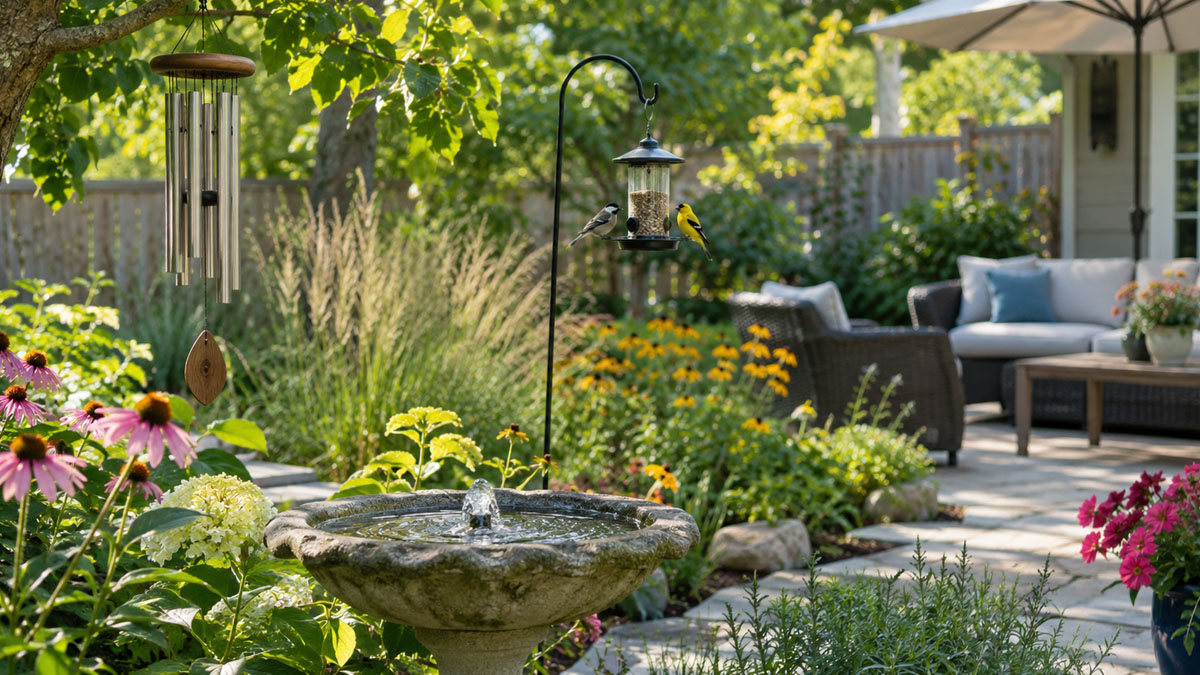
A fountain or moving-water feature can change the acoustic character of a garden.
The sound may make a seating area feel more private or provide a pleasant focal point, but location matters.
Too far away, and the feature may have little effect. Too close to a dining table, and the sound may become more prominent than expected.
The volume and character of moving water also vary by design.
A gentle trickle creates a different atmosphere from water falling over a larger drop.
It is better to choose a water feature because its sound suits the setting rather than assuming any moving water will automatically make the yard more relaxing.
Outdoor Kitchens Belong in Active Sound Zones
Cooking creates its own set of sounds.
Grills, exhaust equipment, refrigerators, ice makers, conversation, dishes, and movement between the house and patio make an outdoor kitchen an active area.
That can help determine where it belongs.
A cooking zone next to a quiet reading space may create conflict, while placing it near dining and entertaining areas can group similar activities together.
The same applies to doors.
If people will constantly move between the indoor kitchen and outdoor cooking area, the route should not cross directly through the yard’s quietest seating zone.
A sound map can therefore influence circulation as well as feature placement.
Consider Sound at Different Times of Day
A yard does not sound the same all day.
Morning traffic may be louder than evening traffic. Air-conditioning equipment may run more frequently during hot afternoons. Neighbors may use outdoor spaces mostly after work.
Visit the yard at several times before making major design decisions.
Morning, mid-afternoon, and evening observations can reveal patterns that one short visit misses.
Weekdays and weekends may differ too.
This matters because the intended use of the yard may happen at a very specific time. A patio designed for evening dinners should be evaluated during the evening, not only on a quiet weekday morning.
Powered Features Need More Than a Visual Location
Outdoor electrical planning can influence where sound-producing equipment eventually sits.
Hot tubs, pool systems, powered outdoor kitchens, lighting controls, pumps, and other equipment may require circuits, disconnects, controls, or service access depending on the installation.
Before permanent hardscape or structures fix the layout, homeowners comparing electrician companies can discuss where likely powered features will be located and what electrical infrastructure they may require.
This can prevent a visually ideal location from becoming impractical once power, controls, and equipment access are considered.
Electrical work should be planned by qualified professionals, particularly around outdoor and wet environments.
Think About Sound From Inside the House Too
Outdoor noise does not stop at the patio door.
Stand inside the rooms closest to the backyard and listen.
Mechanical equipment near a bedroom window may be more noticeable indoors than outside. A water feature that sounds gentle on the patio could become distracting through an open window at night.
The reverse can also happen.
Television sound, kitchen activity, or frequently used doors may carry into a quiet seating area outside.
A strong landscape plan accounts for both directions.
The yard affects the house, and the house affects the yard.
Structures Can Redirect Sound in Unexpected Ways
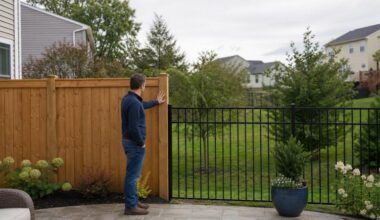
Walls, fences, pergolas, covered patios, and other structures influence how sound is perceived.
They may block a direct line of sight to a noise source, but they can also reflect sound depending on their shape and materials.
This is another reason not to assume a privacy screen will solve every acoustic problem.
Test likely seating positions before committing to a large permanent structure.
If possible, observe how existing walls and fences already affect the yard.
One corner may feel noticeably louder because sound reflects between hard surfaces, while another may feel more comfortable despite being physically closer to the source.
Design for the Sound You Want to Notice
A good backyard sound plan is not only about reducing unwanted noise.
It is also about choosing what should be heard.
That might be conversation, birds, leaves moving in the wind, a modest water feature, or simply a quieter background.
The layout can support those sounds by keeping mechanical equipment and high-activity areas away from quieter zones where practical.
There is no perfectly silent yard.
The better goal is an outdoor space where sound supports the activity happening there instead of competing with it.
Before choosing the final location for a patio, garden, cooking area, or quiet corner, spend time listening.
What you hear may change the plan as much as what you see.