Upgrading home windows in Miami is rarely just a style refresh. The city’s high sun load, salt-laden air, and hurricane exposure make window selection a safety and performance decision. Materials, glazing, and installation details all carry more weight here than in milder regions, and local rules shape what you can install. This article offers a clear decision framework for Miami homeowners: define goals within the High-Velocity Hurricane Zone, choose durable frame and glass assemblies suited to the climate, select operating styles that perform in wind and rain, and prepare for permitting and installation to ensure the upgrade delivers long-term value.
Define Your Goal Within Miami’s HVHZ Requirements
Start by listing your top outcomes: hurricane protection, cooling-load reduction, noise control near busy routes, security, or all of the above. In Miami’s High-Velocity Hurricane Zone, impact-rated windows with Miami-Dade Notice of Acceptance are the baseline. Look for assemblies tested for design pressure, water infiltration, and large-missile impact. Bedrooms must maintain emergency egress, so size and operating style cannot be chosen on appearance alone. For energy performance, note your home’s sun exposures; west and south elevations typically drive the biggest heat gain.
If you are researching home window upgrades in Miami, confirm that any product shortlists meet HVHZ standards before comparing aesthetics or add-ons. That single filter narrows choices to laminated glass systems with reinforced frames and specific anchoring schedules. From there, match your goals to measurable attributes: sound dampening relates to laminated interlayer thickness and air leakage ratings; cooling relates more to solar heat gain coefficient than to U-factor in this climate; storm resilience relates to impact certification and design pressure ratings verified on the product label.
Frame Materials and Coastal Durability: Aluminum, Vinyl, or Fiberglass
Along the coast, salt air accelerates corrosion, and UV exposure puts finishes to the test. Aluminum frames are common in South Florida because they are rigid, slim, and available with marine-grade powder coats; thermally broken versions reduce heat transfer through the frame. The trade-off is potential corrosion at hardware and fasteners if components are not stainless steel or properly isolated. Vinyl (uPVC) resists corrosion well and insulates better, but it expands more with heat and can be bulkier; color stability on dark finishes requires careful selection. Fiberglass offers high rigidity and low thermal expansion, but local availability and color options may be more limited.
Ask how the frame is reinforced at hinge or lock points and what metal is used for screws and strike plates. In hurricanes, weak hardware fails before a certified glass unit does. Also consider maintenance: aluminum benefits from periodic rinsing in salt zones; vinyl needs less corrosion care but still relies on sealed corners and quality weatherstripping; fiberglass tolerates heat swings well. If your home is within a few blocks of Biscayne Bay, prioritize frames with documented salt-spray testing, stainless-steel hinges and fasteners, and robust finish warranties suited to coastal exposure.
Glass and Coatings: Balancing Impact Safety, Heat, and Light
Impact-rated windows rely on laminated glass: two sheets of glass bonded to a clear interlayer that keeps shards in place if the window breaks. Some units add a spacer and a second pane to form an insulated glass unit. Heavier laminates can improve sound control and resist repeated impacts, but they add weight, which affects hardware selection and sash size. For heat control, a low-emissivity coating paired with a solar control tint reduces solar heat gain; in Miami, selecting a low solar heat gain coefficient often saves more energy than chasing the lowest U-factor typical of colder climates.
Expect trade-offs. Dark tints reduce glare but also cut daylight and exterior visibility at dusk. Highly reflective coatings lower heat gain but may conflict with HOA rules. Near beaches, wildlife lighting ordinances can restrict certain light colors facing the water. If your living room faces west and overheats each afternoon, prioritize a lower SHGC with a neutral tint. If your home is shaded by mature trees in Coconut Grove, you may prefer a slightly higher visible transmittance to keep interiors bright while still using laminated glass for storm and noise protection.
Operating Styles That Perform in Wind and Rain
Operating style influences both weather performance and daily use. Casement windows use a compression seal and multiple locking points, creating a tight shut that resists air and water under pressure. They also open wide for ventilation and emergency egress, but they rely on corrosion-resistant hinges and cranks. Awning windows shed rain well when cracked open, a plus in summer squalls, yet they can protrude into walkways. Single-hung windows are familiar and simple, with fewer moving parts than sliders, while horizontal rollers provide wide views but typically have higher air infiltration than well-built casements.
In practice, mix styles by elevation and room. For a second-story bedroom facing the prevailing winds, a casement window can seal tightly during storms and meet egress requirements. For a covered patio wall, horizontal rollers may suit wide openings and traffic patterns. Fewer mullions improve strength and views, but very large panes increase weight and may limit the hardware that can support the sash. Screens, sash stops, and child-safety latches all interact with operability and should be reviewed before finalizing sizes.
Installation, Permitting, and HOA Coordination Shape the Outcome
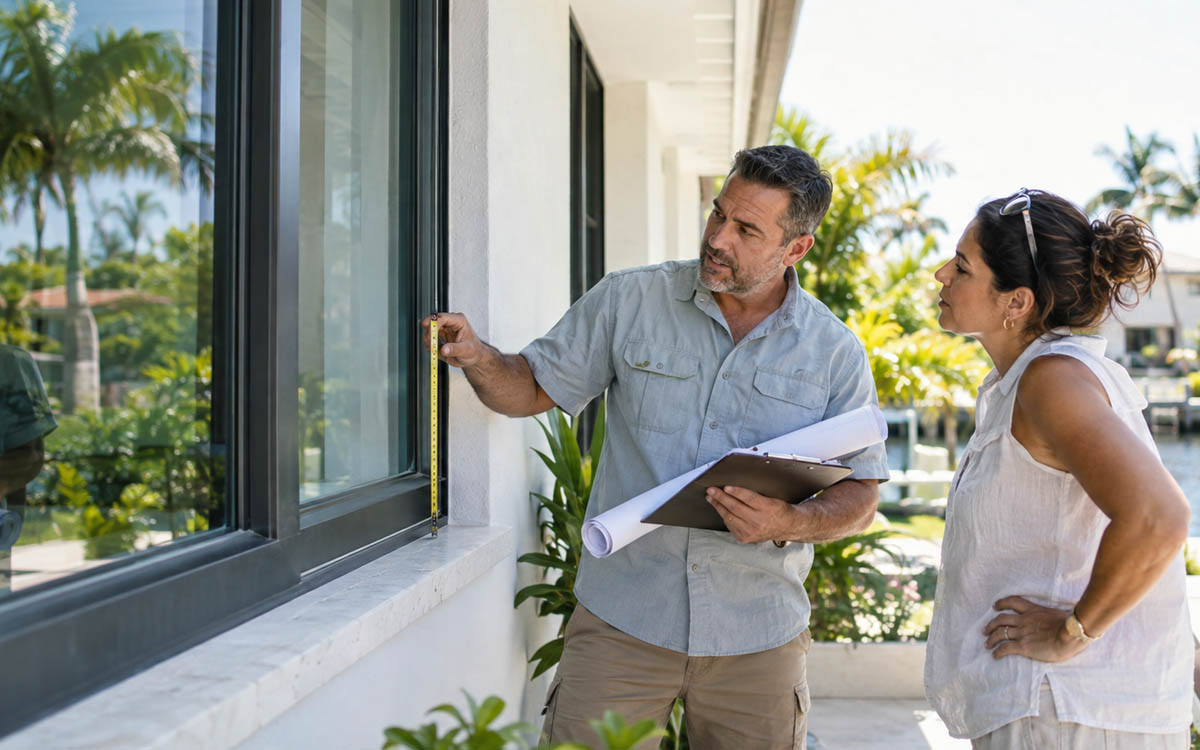
Strong products underperform if water management and anchoring are weak. Quality installation in Miami typically includes a pre-formed or site-built sill pan to direct any incidental water out, corrosion-resistant fasteners embedded to specified depths, backer rod and compatible sealants at perimeters, and clean weep paths on frames. Substrates vary: many homes are concrete block (CMU) with stucco; others are wood-framed with sheathing. Each requires a different anchoring schedule, so field measurements must capture wall construction, reveal conditions, and any out-of-square openings before ordering.
Permitting usually requires product approvals, drawings showing fastening and placement, and sometimes engineering sign-off for larger openings. Condos add logistics: reserve a freight elevator, coordinate balcony access, and follow HOA tint and grid rules to avoid denied inspections. A common mistake is choosing insert replacements that leave old frames in place when the existing sill pan is compromised. Another is skipping a sill pan or sealing over weep holes, which can trap water and lead to leaks months later. Agree on whether the job is full-frame removal or retrofit, how stucco or drywall will be patched, and how inspections will be sequenced to limit disruption.
Two quick scenarios show how constraints drive choices. A Brickell high-rise unit needs impact casements with stainless steel hardware, neutral low-e to satisfy HOA appearance, and careful balcony staging for safe removal. A 1920s bungalow in Shenandoah may require custom sizes to fit irregular masonry openings, full-frame removal to address rot at sills, and awnings high on the wall to allow summer ventilation without inviting rain. In each case, permitting, access, and wall construction steer the plan as much as style.
After installation, a simple care routine protects your investment in Miami’s salt air. Rinse exterior frames and hardware periodically, especially within coastal zones. Keep weep holes clear, wipe weatherstripping with mild soap, and lubricate locks and hinges with a silicone-safe product recommended by the manufacturer. Inspect sealant joints annually for UV cracking and touch up damaged finishes before corrosion spreads. When a storm approaches, confirm latches are fully engaged and remove decorative items that could strike the glass. Well-chosen windows, correctly installed and maintained, improve safety, cut radiant heat, and make everyday life more comfortable in Miami’s demanding climate.