A swimming pool is a major investment that can provide years of recreation, exercise, relaxation, and entertainment, but keeping it in dependable condition requires more than routine cleaning and chemical treatment. Pumps, filters, heaters, plumbing lines, drains, skimmers, pool surfaces, lights, and other components all work together to keep the water circulating and the pool functioning properly. Over time, normal wear, weather exposure, improper water chemistry, aging equipment, structural movement, and accidental damage can create problems that affect both performance and appearance. Professional pool repair can help address these concerns before they become more serious, allowing property owners to protect their investment and maintain a comfortable swimming environment.
Pool problems should not always be judged by their visible appearance because the source of an issue may be located somewhere completely different from where the symptom appears. For example, cloudy water may be caused by a filtration or circulation problem rather than simply poor chemical balance, while unexplained water loss may indicate a plumbing or structural leak. Similarly, weak water flow may be connected to a clogged filter, damaged pump, blocked plumbing, or another circulation issue. A professional repair process focuses on finding the underlying cause instead of applying a temporary solution, helping restore the complete system and reduce the possibility of recurring problems.
Recognizing the Warning Signs of Pool Problems
Swimming pool problems often provide warning signs before they become complete failures. Property owners should pay attention to unexplained water loss, unusual pump noises, weak water circulation, frequent equipment shutdowns, cloudy water, recurring algae, inconsistent heater performance, visible cracks, damaged tiles, leaking connections, and unusual changes in water pressure. These symptoms may seem minor at first, but they can indicate problems that require professional inspection. Ignoring these signs can allow a small mechanical, plumbing, or structural concern to develop into a much larger repair project.Regular observation is especially valuable because property owners are often the first people to notice changes in the pool. If a pump sounds different from normal, the water level continues to drop, or the heater takes longer to warm the pool, these changes should be documented and evaluated. Professional technicians can compare the current condition with normal system operation and determine whether a repair is necessary. Early diagnosis can reduce downtime and may help prevent additional damage to connected components.
Repairing Pool Surface Cracks and Damage
Pool surfaces are continuously exposed to water, chemicals, sunlight, temperature changes, and regular activity. Over time, surfaces can develop cracks, chips, rough areas, stains, discoloration, or other forms of deterioration. The appropriate repair depends on the type of surface and the severity of the damage. A small surface defect may require a localized repair, while widespread deterioration may require more extensive restoration or resurfacing.It is important to have cracks evaluated rather than assuming that every crack is purely cosmetic. Some cracks may be superficial, while others can indicate movement or structural concerns that require more detailed inspection. Professional evaluation helps determine the cause and severity of the damage before the appropriate repair method is selected. Addressing surface problems early can help prevent water from reaching areas where it could create additional deterioration.
Finding and Repairing Pool Leaks
Leaks are among the most important swimming pool problems because they can result in continuous water loss and may affect other parts of the system. While evaporation and normal splashing are expected, a pool that repeatedly loses an unusual amount of water may have a leak in the plumbing, equipment, fittings, valves, shell, or another area.Some leaks are easy to identify because water may be visible around equipment or connections, but others can be hidden underground or within difficult-to-access sections of the system. Professional leak detection can help narrow down the source without unnecessarily disturbing surrounding areas. Once the cause is identified, the appropriate repair can be performed to restore the system and reduce continued water loss.
Repairing Pool Plumbing and Circulation Issues
The plumbing system is responsible for moving water between the pool and important components such as pumps, filters, heaters, drains, and skimmers. When a pipe, valve, fitting, or connection becomes damaged, the problem can affect circulation and equipment performance. Weak water flow, unusual pressure, air bubbles, visible leaks, and unexplained water loss may all indicate a plumbing concern that requires further inspection.Professional plumbing repair begins with identifying where the circulation problem originates. A technician may need to examine visible connections, valves, equipment, and other components before determining whether the problem is localized or involves a hidden section of the plumbing system. Properly repairing the source can restore efficient water movement and help protect pumps and other equipment from unnecessary stress.
Repairing Pool Pumps and Circulation Equipment
The pool pump is one of the most important components because it moves water through the filtration and circulation system. If the pump stops working or operates inefficiently, the pool may experience poor circulation, reduced filtration, chemical distribution problems, and declining water quality. Pump problems can develop gradually and may appear as unusual noises, vibration, overheating, weak flow, leaks, or difficulty starting.
A professional technician can inspect the pump and determine whether the issue involves seals, electrical components, mechanical parts, blockages, or another condition. Repairing a worn component may restore proper operation without requiring complete replacement, depending on the age and condition of the equipment. Prompt attention is important because continued operation of a malfunctioning pump can sometimes cause additional damage and increase the eventual repair cost.
Addressing Pool Filter Problems
The filtration system plays a central role in maintaining clear water because it removes suspended particles and contaminants as water circulates. A damaged, clogged, or poorly maintained filter can reduce water flow and contribute to cloudy or dirty water. If the filter is not functioning correctly, the pump may also have to work harder to circulate the water.Filter problems should be evaluated according to the type of filtration system installed. Cartridge filters, sand filters, and other systems have different components and maintenance requirements. Sometimes a thorough cleaning is enough to restore performance, while damaged internal parts or an aging filter may require replacement. Professional inspection can determine which solution makes the most sense and help prevent unnecessary equipment expenses.
Resolving Pool Heater Problems
A pool heater can make swimming more comfortable, but heating equipment can develop problems due to age, mechanical wear, electrical issues, water flow restrictions, or component failure. Warning signs may include inconsistent water temperatures, unexpected shutdowns, unusual sounds, error conditions, or difficulty reaching the desired temperature.A heater should be evaluated when these symptoms appear rather than being repeatedly restarted without identifying the underlying cause. Professional inspection can determine whether the problem is related to the heater itself, circulation, controls, sensors, or another component. Depending on the equipment’s age and condition, repairing an individual part may be practical, while older equipment with extensive deterioration may be better suited for replacement.
Repairing Pool Electrical Components
Electrical components require special attention around swimming pools because water and electricity create serious safety concerns. Pool lights, pumps, heaters, timers, automation systems, and other electrical equipment can develop faults over time. Flickering lights, repeated breaker trips, damaged wiring, unexpected shutdowns, or unusual electrical behavior should be evaluated by a qualified professional.Property owners should avoid attempting complex electrical repairs without the appropriate expertise and safety procedures. A professional can inspect the affected equipment, identify the source of the electrical problem, and determine whether a component can be repaired or needs replacement. Maintaining electrical equipment properly supports reliable operation and helps protect the overall safety of the swimming environment.
Repairing Pool Tiles and Coping
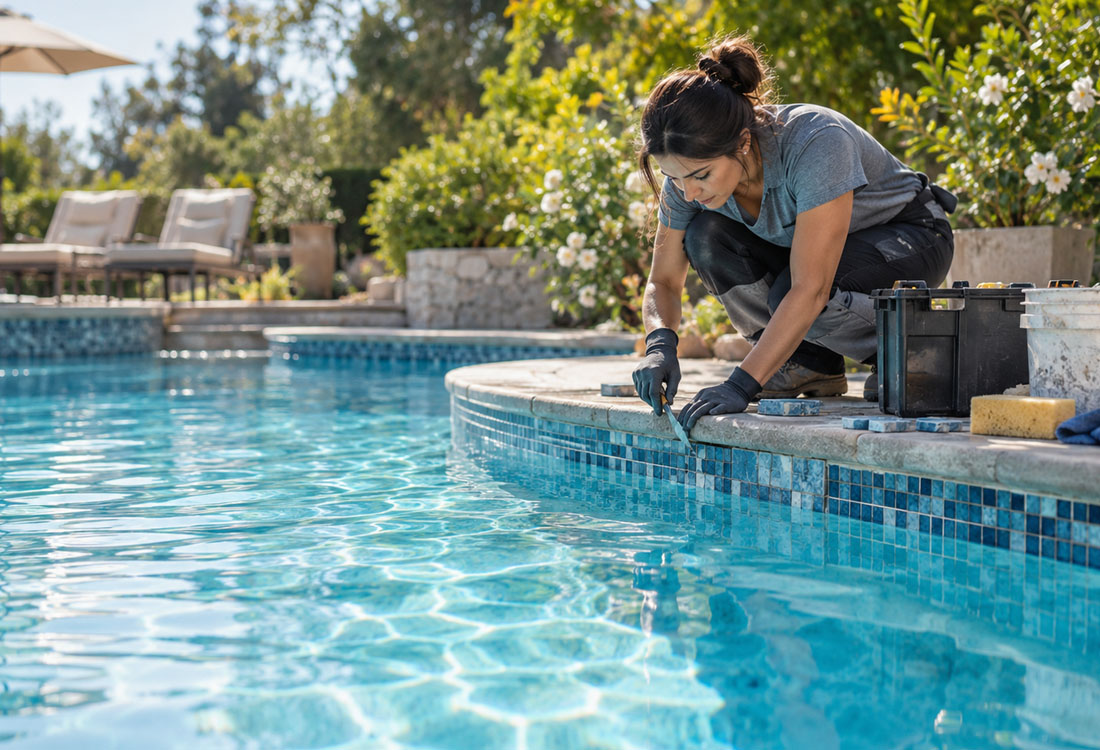
Pool tiles and coping contribute to the appearance, function, and condition of the pool structure. Tiles can become cracked, loose, stained, or detached, while coping may develop cracks or movement due to age, weather, or structural changes. Damaged materials should be inspected rather than left unattended because deterioration can spread to surrounding areas.Professional repair methods depend on the material and extent of the damage. Replacing individual damaged tiles may be sufficient in some situations, while extensive coping deterioration may require more substantial work. Prompt repairs can help maintain the appearance of the pool while reducing the possibility of additional damage.
Repairing Steps, Ladders, and Handrails
Pool access features such as steps, ladders, and handrails receive frequent use and should remain secure and stable. Over time, anchors can loosen, hardware can deteriorate, and surfaces can become damaged. These problems can affect both convenience and safety.During routine inspections, these components should be checked for movement, corrosion, cracks, loose connections, or other signs of deterioration. A professional can determine whether the problem can be corrected through adjustment or hardware replacement or whether the component needs to be replaced. Keeping access features in good condition is an important part of comprehensive pool care.
Fixing Skimmer and Drain Problems
Skimmers and drains play an important role in water circulation and debris removal. A clogged line, damaged basket, broken skimmer component, or circulation restriction can affect how efficiently the pool system operates. When these components are not working properly, debris may remain in the water and circulation may become weaker.Professional inspection can determine whether cleaning, component repair, or plumbing work is required. Keeping skimmers and drains functioning correctly supports better water movement and allows the filtration system to operate more effectively. These components should be included in regular inspections rather than checked only after a circulation problem develops.
Addressing Recurring Water Quality Problems
Water quality problems are not always caused by incorrect chemical treatment. Persistent cloudiness, recurring algae, unusual odors, or difficulty maintaining balanced water may indicate that another part of the system is not functioning properly. A filter that is not removing contaminants effectively or a pump that is not circulating water adequately can contribute to these conditions.When water problems continue despite regular chemical treatment, the complete system should be evaluated. Professional technicians can examine filtration, circulation, water chemistry, and cleaning practices to determine what is causing the recurring issue. Repairing the underlying equipment problem can provide a more lasting solution than repeatedly treating the water without addressing the source.
Why Professional Diagnosis Is Important
Accurate diagnosis is one of the most important parts of effective pool repair. A visible symptom does not always reveal the actual cause of a problem, and replacing parts without proper inspection can result in unnecessary expenses. Weak water flow, for example, can be caused by a clogged filter, damaged pump, blocked plumbing, low water level, or another circulation issue.Professional technicians evaluate the complete system before recommending a repair. This allows them to identify relationships between different components and determine what is actually causing the problem. A proper diagnosis can help property owners avoid unnecessary repairs while ensuring that important issues receive the attention they require.
Preventive Inspections Can Reduce Major Repairs
Routine inspections can identify developing problems before they become emergencies. Seals can deteriorate, fittings can loosen, surfaces can develop small cracks, and mechanical components can wear gradually. When these changes are detected early, repairs may be simpler and less disruptive.Preventive inspections are particularly useful before periods of heavy pool use. Checking equipment and structural components before the swimming season gives property owners an opportunity to complete necessary repairs before the pool becomes busy. Regular inspections can also help identify aging equipment so that future replacement can be planned instead of being forced by an unexpected failure.
Preparing for Repairs During Seasonal Pool Opening
Seasonal opening is an ideal time to inspect the entire pool system because equipment is being returned to regular operation after a period of inactivity. The pool should be cleaned, water chemistry should be evaluated, and circulation equipment should be tested carefully. Pumps, filters, heaters, plumbing, drains, and other components should all be checked for proper operation.Problems discovered during opening should be addressed before regular swimming begins whenever possible. Repairing a leak, replacing a damaged filter component, correcting a pump issue, or fixing a plumbing problem early can reduce interruptions later in the season. A thorough opening inspection provides a valuable opportunity to identify conditions that may have developed while the pool was closed.
Choosing a Reliable Pool Repair Professional
Selecting the right repair provider can make a major difference in the quality and longevity of the repair. A dependable professional should understand different pool systems, equipment, surfaces, plumbing arrangements, and common causes of pool problems. They should also be willing to explain the problem clearly rather than recommending unnecessary work.Clear communication helps property owners understand which repairs are urgent and which improvements can be planned for later. A professional should evaluate the condition of the equipment and consider factors such as age, wear, repair cost, and expected future performance when discussing repair or replacement options. A comprehensive approach helps ensure that the repair addresses the real problem rather than only its most visible symptom.
Repair Versus Complete Equipment Replacement
Not every malfunctioning component needs to be replaced completely. Depending on the age, condition, and availability of parts, a pump, heater, filter, valve, or other component may be repairable. In other situations, extensive deterioration may make replacement more practical than continued repair.The decision should consider the cost of the repair, the expected remaining life of the equipment, the frequency of previous failures, and the availability of replacement parts. Professional evaluation can help property owners compare these factors before making a decision. Choosing the appropriate solution can prevent unnecessary spending while helping maintain reliable pool operation.
Maintaining the Pool After Repairs
Completing a repair does not eliminate the need for ongoing maintenance. Once the problem has been corrected, regular cleaning, water testing, filter care, equipment inspection, and preventive service remain important. Proper maintenance helps protect the repaired component and reduces the possibility of similar problems developing again.Maintaining balanced water is particularly important because chemical conditions can affect pool surfaces and equipment over time. Keeping filters and baskets clean also supports efficient circulation and reduces unnecessary strain on pumps. Regular inspections after repairs can confirm that the affected component continues to operate as expected.
Benefits of Addressing Repairs Promptly
Timely repairs can provide several long-term benefits. Fixing a leak can reduce ongoing water loss, repairing a pump can restore proper circulation, and correcting a filtration problem can improve water clarity. Addressing surface damage early can also help prevent deterioration from spreading. pool repair can help property owners address these concerns professionally and keep the pool system operating more reliably. Prompt repairs can protect connected equipment as well. When one component operates incorrectly, other parts of the system may have to compensate, increasing wear and potentially creating additional failures. Correcting the original problem can help restore normal operation and reduce unnecessary stress throughout the system.
Conclusion
A swimming pool depends on many interconnected components, and problems involving pumps, filters, plumbing, heaters, electrical systems, surfaces, drains, skimmers, and water quality should not be ignored. Warning signs such as unexplained water loss, weak circulation, unusual equipment sounds, cloudy water, recurring algae, damaged tiles, cracks, or inconsistent heating can indicate that professional attention is needed. Early diagnosis and proper repairs can help prevent small problems from becoming major failures.Professional pool repair provides a reliable way to identify the underlying cause of pool problems and restore the system to proper working condition. Experienced technicians can evaluate equipment, plumbing, surfaces, circulation, and water conditions before recommending the most appropriate repair or replacement solution. With timely repairs, regular inspections, and consistent preventive maintenance, property owners can protect their pool investment, extend equipment life, maintain better water quality, and enjoy a safer, cleaner, and more dependable swimming environment for years to come.