The exterior of a property is one of the most visible parts of the entire building, and its condition can strongly influence how the property is perceived. Faded colors, peeling paint, cracked trim, stained siding, weathered doors, and worn architectural details can make an otherwise attractive property appear older and less maintained. A professionally planned exterior painting project can provide a dramatic visual transformation while also helping suitable exterior surfaces remain better protected against ordinary environmental exposure. Rather than treating painting as nothing more than a cosmetic update, property owners can view it as an important part of property maintenance, curb appeal, and long-term appearance.
Exterior surfaces experience conditions that interior walls generally do not encounter. Sunlight can gradually fade colors and weaken coatings, while rain and humidity can contribute to moisture-related deterioration. Wind can carry dirt and debris against painted surfaces, and seasonal temperature changes can cause certain materials to expand and contract. Over time, these repeated conditions can cause even a previously attractive finish to lose its original appearance. Timely painting, combined with appropriate preparation and repairs, can help restore the property’s appearance before deterioration becomes more extensive.A successful exterior painting project requires careful planning from the beginning. Choosing a color is only one part of the process. The condition of the existing surface, the type of exterior material, cleaning requirements, repairs, primer, paint compatibility, weather conditions, application methods, and final inspection all have an effect on the result. When each stage is handled properly, a new exterior finish can provide a cleaner appearance and contribute to the continued maintenance of the property.
Understanding the Importance of a Well-Maintained Exterior
A property’s exterior creates an immediate impression for homeowners, guests, customers, visitors, and potential buyers. Even before someone enters the building, the condition of the siding, trim, doors, railings, and other visible surfaces can influence how they perceive the property. A clean and consistent exterior often communicates care and maintenance, while deteriorated paint can create the opposite impression. This makes exterior painting particularly valuable for property owners who want to improve appearance without making major structural changes.A fresh color scheme can also highlight architectural characteristics that may have become less noticeable over time. Window trim, doors, shutters, columns, fascia, porch details, and other features can be emphasized through carefully selected colors. Rather than allowing every exterior component to blend together, contrasting or complementary shades can create visual structure and make the property appear more balanced.Exterior painting can also complement other improvements. New landscaping, updated lighting, replacement doors, exterior renovations, and other upgrades can look more complete when surrounding painted surfaces are fresh and consistent. A well-planned paint project can therefore serve as a finishing element that brings several property improvements together.
Signs That an Exterior Needs Repainting
Knowing when to repaint can help property owners address exterior deterioration before it becomes a larger concern. Fading is one of the most common signs that an existing coating is losing its original appearance. Although faded paint may initially seem to be only a visual issue, significant fading can indicate that the coating has experienced prolonged exposure to sunlight and environmental conditions.Peeling and cracking are more noticeable warning signs because they indicate that the coating is no longer remaining securely attached to the surface. When these areas are ignored, the exposed material underneath may become increasingly vulnerable to moisture and weather. Bubbling or blistering may also require attention because these conditions can sometimes be associated with moisture or adhesion problems.Other signs include chalky residue, stains, discoloration, exposed material, and inconsistent patches of color. These conditions do not automatically mean the entire property needs immediate repainting, but they should be evaluated. A professional assessment can help determine whether the surface requires cleaning, localized repair, preparation, or a complete repainting project.
Preparation Creates the Foundation for a Better Finish
One of the most important parts of exterior painting takes place before the paint is applied. New paint cannot reliably correct a surface that is dirty, loose, damaged, or unstable. If contaminants and deteriorated coatings remain underneath the new finish, the result may look acceptable initially but could experience premature peeling or uneven coverage.Exterior preparation often begins with thorough cleaning. Dirt, dust, pollen, biological growth, and other buildup can accumulate on siding and trim over the years. Removing these contaminants helps create a cleaner surface for subsequent preparation and painting. Loose or peeling paint may need to be scraped away, while rough areas can be sanded to create smoother transitions.Cracks, gaps, damaged trim, and deteriorated sections may require repairs before painting begins. Primer can also be necessary on certain surfaces, especially where bare material has been exposed or repairs have been completed. The goal is to create a stable and suitable foundation for the new coating rather than simply covering existing problems.Taking time with preparation can make the painting process more involved, but it can have a major effect on the quality and durability of the finished result. Proper preparation helps the coating adhere more effectively and can make the final appearance smoother and more consistent.
Selecting Exterior Colors That Complement the Property
Color selection is one of the most noticeable decisions in an exterior painting project because exterior walls and siding often cover large areas. A color that looks subtle on a small sample can appear much stronger once it is applied across an entire elevation. This is why color should be considered carefully before the project begins.The existing roof, windows, doors, masonry, landscaping, walkways, and other permanent features should all be considered when developing an exterior palette. Neutral colors can provide a timeless appearance and work with a wide variety of architectural styles, while stronger shades can add personality and create visual contrast.Trim colors can be used to highlight architectural features without overwhelming the overall design. A contrasting shade around windows or doors can make these areas stand out, while a closely related color can create a more understated appearance. Exterior doors can also serve as focal points when a property owner wants to introduce a distinctive accent.It is useful to test paint samples on the actual exterior because natural light can change throughout the day. A shade may appear different in direct sunlight, partial shade, and evening light. Viewing samples in different conditions can help property owners make a more confident decision.
Professional Exterior Painting for Better Results
Working with an experienced exterior painting service can make the entire process more organized and efficient. Professional painters understand that exterior work requires more than simply applying a coating to a wall. They evaluate surface conditions, identify areas requiring preparation, select appropriate products, and use application methods suited to the material.Professionals can also recognize problems that may need to be addressed before painting. Peeling coatings, damaged wood, deteriorated trim, cracks, moisture staining, and other conditions may affect the performance of the new finish. Addressing these concerns before painting can reduce the likelihood of problems developing beneath the new coating.Application technique is another important consideration. Large exterior surfaces need consistent coverage, while corners, edges, windows, doors, trim, and decorative features require careful attention. Professional experience can help maintain clean lines and even finish across the entire property.
Painting Different Exterior Materials
Exterior properties may contain several different materials, and each can have its own painting requirements. Wood, fiber cement, vinyl, metal, masonry, and previously painted surfaces may require different preparation methods and compatible coatings.Wood surfaces may require special attention to areas where moisture or weather has caused deterioration. Fiber cement and other manufactured materials may have specific coating requirements. Metal surfaces can require preparation to address corrosion or old coatings, while masonry may need products designed specifically for porous surfaces.Using the same process for every material can create unnecessary problems. A professional painting approach considers the characteristics of each surface and selects preparation and application methods accordingly.This attention to material compatibility can help improve adhesion, appearance, and long-term performance. It also allows different exterior components to receive the appropriate treatment while still producing a cohesive overall appearance.
Giving Siding a Fresh and Consistent Appearance
Siding often represents the largest visible portion of an exterior, so its condition can have a significant effect on curb appeal. Years of sunlight and weather can cause siding colors to fade, while dirt and environmental buildup can make surfaces look dull or uneven.Before painting siding, the surface should be inspected carefully. Loose sections, cracks, damage, and other problems may need to be addressed before painting. Cleaning is equally important because dirt and residue can interfere with adhesion.The selected coating should be appropriate for the type of siding being painted. Application should provide consistent coverage without excessive buildup or visible unevenness. When completed properly, repainting can give siding a renewed appearance and help suitable materials continue to perform under normal exterior conditions.
Refreshing Trim, Fascia, and Architectural Details
Small exterior details can have a surprisingly large impact on the overall appearance of a property. Window trim, fascia, shutters, railings, columns, porch details, and decorative elements often frame larger surfaces and help define the architecture.These features may deteriorate at a different rate than siding because they can have different levels of exposure. Their smaller size also means imperfections can be especially noticeable. Peeling paint, rough areas, and poorly repaired sections should therefore be addressed before applying a new finish.A carefully selected trim color can create contrast and emphasize the structure of the property. Painting these details professionally can make the entire exterior look more finished and intentional rather than simply newly coated.
Exterior Doors Can Become Strong Design Features
Doors are among the most noticeable individual elements of a property. An entrance door can act as a focal point and provide an opportunity to introduce a distinctive color without changing the entire exterior palette.Before painting a door, the existing finish should be cleaned and prepared appropriately. Scratches, peeling areas, and surface imperfections may need attention. The selected coating should also be suitable for the material and level of exposure.A coordinated door color can complement siding and trim while creating enough contrast to make the entrance visually appealing. For homeowners updating the exterior, repainting the door can be a relatively simple change that contributes significantly to the overall design.
Weather Conditions Affect Exterior Painting
Weather is an important consideration during any exterior painting project. Rain, excessive humidity, strong winds, and unsuitable temperatures can interfere with application and curing. Paint requires appropriate environmental conditions to perform as intended, so scheduling should take current and expected weather into account.Rain can introduce moisture to the surface and affect adhesion, while high humidity may slow drying. Strong winds can carry dust and debris onto wet paint and make controlled application more difficult. Extreme temperatures may also affect how the coating cures.Professional painters understand these challenges and can plan the project around suitable conditions. Careful scheduling can help reduce the likelihood of weather-related problems and support a more consistent finished surface.
Protecting Landscaping and Surrounding Features
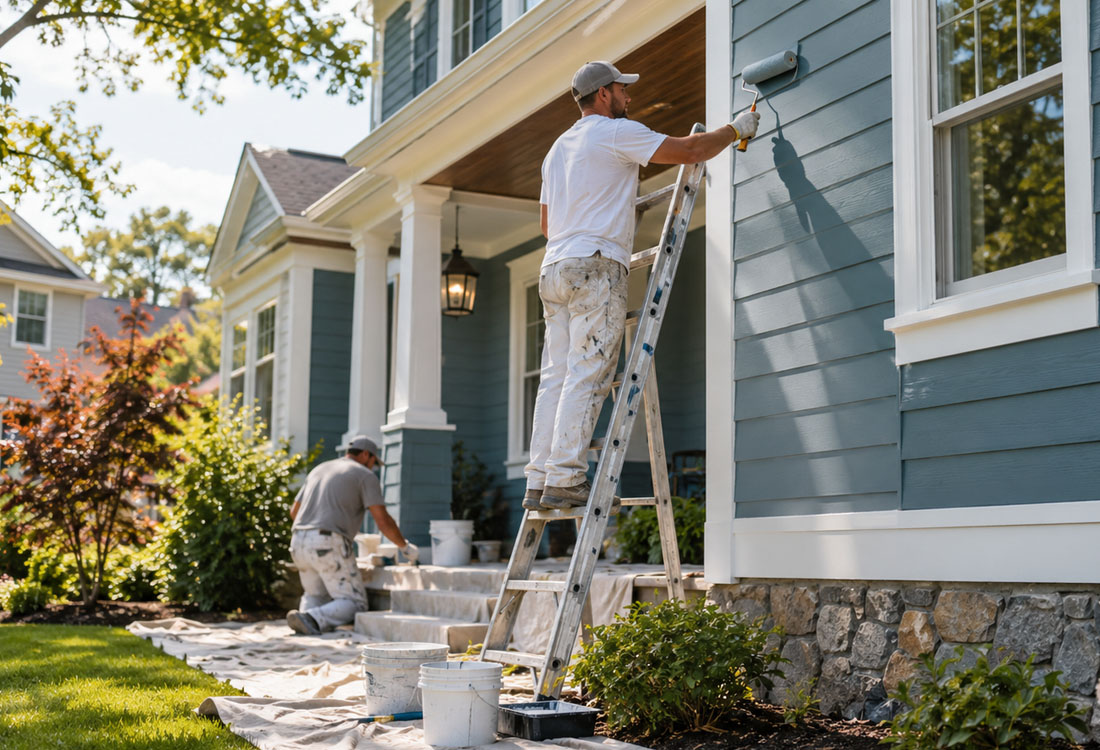
Exterior painting should protect the property as a whole, not just the areas receiving paint. Landscaping, windows, walkways, decks, outdoor furniture, lighting fixtures, doors, and other nearby features may require protection during the project.Plants and landscaping can be covered where appropriate, while movable items can be relocated away from the work area. Windows and fixtures should be masked carefully to create clean edges and reduce the possibility of accidental paint contact.Keeping tools, ladders, paint containers, and protective materials organized also contributes to safety and efficiency. Once painting is completed, protective coverings should be removed carefully and the surrounding property should be inspected and cleaned.
Residential Exterior Painting Can Transform a Home
For homeowners, exterior painting can provide a significant improvement without requiring extensive structural renovation. A new color scheme can modernize an older property, complement landscaping improvements, or restore the appearance of weathered surfaces.Residential exterior painting may involve siding, trim, doors, shutters, fascia, railings, porch features, and other components. Some homeowners may choose a complete repaint, while others may focus on the areas showing the greatest signs of wear.The overall color plan should work with the home’s existing architecture and permanent features. A thoughtful combination can make the property appear more balanced and visually appealing while reflecting the homeowner’s personal preferences.
Commercial Properties Benefit From Exterior Painting
Commercial properties also benefit from professionally maintained exterior surfaces. Customers, clients, employees, and visitors often form an impression of a business based partly on its physical environment. A faded or deteriorated exterior can unintentionally suggest that the property is not being properly maintained.A fresh exterior finish can create a cleaner and more professional appearance. Commercial painting may include large walls, siding, metal surfaces, trim, doors, and other exterior features. Businesses may also want colors that coordinate with existing branding, signage, and architectural elements.Scheduling can be particularly important for commercial projects. Work may need to be organized around customers, employees, operating hours, equipment, and access requirements. A professional team can help structure the project to reduce unnecessary disruption.
Repairing Exterior Problems Before Applying Paint
Painting should not be used to hide problems that require actual repair. If exterior wood has deteriorated, siding is damaged, or water is entering through a defective area, those issues should be addressed before painting whenever appropriate.Moisture problems deserve particular attention. Water may enter through damaged trim, roof-related issues, leaking gutters, failed seals, or other sources. If the cause is not corrected, stains, peeling, and other problems may return after the new paint has been applied.Identifying and correcting these conditions before painting can help protect the new finish and reduce the possibility of repeated repairs. A careful inspection is therefore an important part of a successful exterior painting project.
Selecting Quality Exterior Coatings
The type of paint used can influence coverage, appearance, durability, and maintenance requirements. Exterior products are formulated for environmental exposure, but the correct choice still depends on the specific surface and project conditions.The selected coating should be compatible with the existing material and any primer that is used. Different areas may require different products depending on whether they are wood, metal, siding, masonry, or another surface.Quality materials are important, but product quality alone does not guarantee a successful project. Proper preparation and application are equally important. Even a premium coating can fail prematurely if it is applied over an unstable or contaminated surface.
Maintaining the Property After Painting
A newly painted exterior should still receive routine maintenance. Periodic inspections can help identify fading, cracking, peeling, stains, or other changes before they become extensive.Cleaning can remove dirt, pollen, and environmental buildup, helping the property maintain its fresh appearance. Cleaning methods should always be appropriate for the particular surface and coating to avoid unnecessary damage.Gutters and downspouts should remain clear and functional so that water is directed away from painted surfaces. Landscaping should also be managed so that branches, vines, and other vegetation do not remain in constant contact with exterior walls.Early attention to small issues can help preserve the finish and reduce the likelihood of needing extensive repairs later.
Exterior Painting and Property Value
Although paint alone does not determine a property’s value, exterior condition can influence how the property is perceived. A clean, coordinated, and well-maintained exterior can make a stronger impression on prospective buyers, tenants, customers, and visitors.For homeowners preparing to sell, repainting can help address faded colors and visible wear. For commercial property owners, a professional exterior can support a more polished business environment. In both cases, painting can complement other maintenance and improvement projects.The strongest results come when painting is combined with necessary repairs, cleaning, landscaping maintenance, and other improvements that contribute to the overall condition of the property.
Why Professional Workmanship Is Worth the Investment
The finished appearance of a cabinet painting project depends heavily on the quality of the workmanship. Uneven coverage, drips, visible brush marks, overspray, poor preparation, and inconsistent edges can reduce the impact of an otherwise good color choice.Professional painters bring experience to the entire process. They know how to prepare different materials, work around architectural details, protect surrounding areas, and apply coatings consistently. They can also identify potential problems before they become hidden beneath new paint.A professional approach can save property owners from having to repeat the project prematurely. While every exterior finish will eventually require maintenance, careful preparation and application can support better long-term performance.
Conclusion
Exterior painting is an effective way to improve the appearance, character, and maintenance of a property. A fresh finish can restore faded surfaces, highlight architectural features, modernize an outdated color scheme, and help suitable exterior materials withstand everyday exposure. However, achieving a lasting result requires much more than simply selecting a new color.Thorough cleaning, surface repairs, scraping, sanding, priming, product selection, weather planning, careful application, and final inspection all contribute to a successful project. Each stage helps create a foundation for a finish that looks consistent and performs appropriately.Working with an experienced exterior painting service can make the process more efficient while helping property owners avoid common preparation and application problems. Professionals can evaluate exterior surfaces, recommend appropriate products, protect surrounding features, and provide careful workmanship across both large surfaces and detailed architectural elements.Whether the goal is to improve curb appeal, refresh a residential property, maintain a commercial building, prepare a property for sale, or support a larger renovation, exterior painting can provide substantial benefits. With appropriate care after completion, a professionally painted exterior can continue to enhance the property’s appearance and support its ongoing maintenance for years to come.