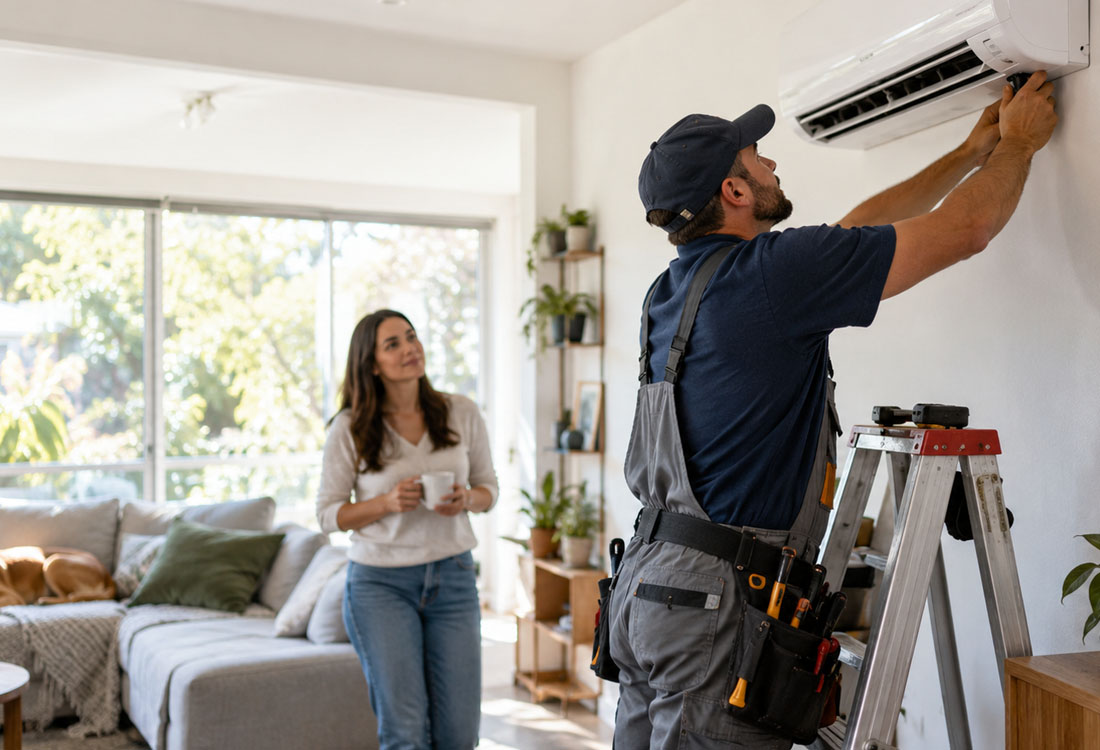
A reliable air conditioning system can make a significant difference in indoor comfort during warm weather, observes Helios Property Management, a trusted provider of Peoria property management. Modern cooling equipment is designed to regulate temperature, manage humidity, circulate conditioned air, and create a more pleasant environment throughout a home or property. However, the performance of an air conditioner depends on more than the quality of the equipment itself. Correct sizing, careful planning, proper installation, appropriate airflow, electrical connections, refrigerant setup, and ongoing maintenance all influence how well the system performs. Professional installation provides an opportunity to establish a strong foundation for dependable cooling and efficient operation.
When an existing air conditioner becomes outdated, unreliable, or increasingly expensive to operate, replacement may provide an opportunity to improve overall comfort. New construction and major remodeling projects may also require a complete cooling system designed around the property’s specific needs. A professional air conditioning installation considers the entire cooling system rather than focusing only on placing a new outdoor unit and indoor equipment. Proper planning can help reduce common problems associated with incorrect sizing, restricted airflow, poor drainage, and improper system configuration.
Understanding Air Conditioning Installation
Installing a central air conditioning system involves multiple components that must operate together. Depending on the property’s configuration, the installation may include an outdoor condenser, indoor evaporator coil or air handler, refrigerant lines, electrical connections, condensate drainage, ductwork, thermostat controls, filtration equipment, and other accessories.Before installation begins, the property’s cooling requirements should be evaluated. Factors such as building size, insulation, windows, ceiling height, occupancy, layout, and existing ductwork can affect the amount of cooling capacity needed. Choosing equipment based solely on the size of an existing unit may not provide the best result, particularly if the home has been renovated or its insulation and windows have changed.A professional HVAC contractor can evaluate these factors and recommend equipment appropriate for the property’s actual cooling requirements. Careful planning helps ensure that the selected system has enough capacity to provide comfort without being unnecessarily oversized.
When a New Air Conditioner May Be Necessary
Several circumstances can lead homeowners to consider installing a new air conditioning system. An aging unit with frequent breakdowns is one common reason. As equipment gets older, major components may begin to wear out, and repair costs can increase.An air conditioner that struggles to maintain comfortable indoor temperatures may also be a candidate for replacement. Persistent cooling problems can result from equipment deterioration, poor sizing, ductwork concerns, or other conditions. If an older system has several underlying issues, replacing it may provide better long-term value than continuing to repair individual components.High operating costs can also influence replacement decisions. Older equipment may not provide the efficiency available from newer systems. However, homeowners should consider the entire system, because poor ductwork, restricted airflow, insulation problems, and incorrect settings can also contribute to high energy use.
Proper System Sizing
Correct sizing is one of the most important aspects of air conditioning installation. A system that is too large may cool the space rapidly but cycle on and off more frequently than necessary. Frequent cycling can affect comfort and may prevent the system from running long enough to provide effective humidity control.An undersized system can have the opposite problem. It may run for extended periods while struggling to reach the desired indoor temperature, especially during periods of high cooling demand. Long operating cycles can place additional stress on equipment and may increase energy consumption.Professional load calculations help determine the appropriate cooling capacity. Rather than relying only on square footage, a proper evaluation can consider insulation, windows, orientation, occupancy, building materials, and other factors that affect cooling demand.
Selecting the Right Cooling Equipment
Air conditioners are available in different capacities, efficiency levels, configurations, and feature sets. Homeowners should consider more than the initial purchase price when selecting equipment.System efficiency can influence long-term operating costs, while equipment capacity affects comfort and performance. Homeowners should also consider compatibility with existing ductwork, thermostat controls, electrical infrastructure, and other components.An experienced HVAC professional can explain available options and help homeowners understand the differences between systems. The goal is to select equipment that provides an appropriate balance of comfort, efficiency, reliability, and long-term value.
Evaluating Existing Ductwork
Ductwork is a major part of a central air conditioning system. It transports conditioned air from the indoor equipment to different rooms and returns indoor air to the system for further conditioning.If ducts are leaking, damaged, poorly insulated, restricted, or improperly sized, the new air conditioner may not perform as expected. Installing a more efficient unit does not automatically correct ductwork problems.Before installation, existing ducts should be inspected where practical. Sealing leaks, correcting damaged sections, improving insulation, or modifying restrictive areas may help the new cooling system distribute conditioned air more effectively.
Importance of Airflow
Adequate airflow is essential for air conditioning performance. The system needs appropriate supply and return airflow to transfer conditioned air throughout the property.Restricted airflow can result from dirty filters, blocked registers, undersized ducts, blower problems, or other conditions. The symptoms may include weak airflow, uneven temperatures, longer cooling cycles, and reduced comfort.During installation, HVAC professionals can evaluate the system’s airflow requirements and ensure that the equipment is properly matched to the distribution system. Addressing airflow concerns early can help prevent performance problems after installation.
Thermostat Placement and Controls
The thermostat determines when the air conditioning system starts and stops based on temperature readings and programmed settings. Its location can therefore influence system operation.A thermostat positioned near direct sunlight, drafts, doors, windows, or heat-producing appliances may detect a temperature that does not accurately represent the rest of the home. Careful placement can help provide more reliable temperature control.Homeowners may also choose programmable or smart thermostats depending on equipment compatibility and personal preferences. These controls can provide scheduling features and more convenient temperature management, but they should be correctly configured for the installed HVAC system.
Electrical Requirements
Air conditioning equipment depends on properly configured electrical connections. The electrical requirements vary according to the equipment type and capacity.Before installation, the existing electrical system should be evaluated to ensure that it can safely support the new air conditioner. Appropriate disconnects, wiring, protection, and connections are important for safe and dependable operation.Electrical work should be performed by qualified professionals. Incorrect wiring or improperly sized electrical components can damage equipment and create safety hazards.
Refrigerant Lines and System Setup
Central air conditioners rely on refrigerant to transfer heat from the indoor environment to the outdoor unit. Refrigerant lines connect important parts of the system and must be installed correctly.Line routing, insulation, connections, and system charging all require careful attention. Improper installation can reduce cooling performance and potentially contribute to future service problems.Professional air conditioning installation ensures that the refrigerant-related components are set up according to equipment requirements. Technicians can also verify system operation after installation to identify potential issues before normal use begins.
Condensate Drainage
Air conditioning naturally produces condensation as warm indoor air passes over the cooling coil. This moisture must be removed through an appropriate drainage system.A poorly configured drain can cause water to collect around the indoor equipment. Over time, water accumulation can potentially damage flooring, walls, insulation, or other surrounding materials.Proper drainage installation and testing are therefore important parts of the cooling system setup. Technicians should verify that condensate flows correctly and that the drainage system is appropriately configured for the property.
Indoor Air Quality Considerations
A new air conditioning system can also provide an opportunity to evaluate indoor air quality. Filters play an important role in capturing airborne particles, while appropriate airflow helps distribute conditioned air throughout the property.Homeowners may also consider upgraded filtration or other indoor air quality equipment. However, filtration should be selected carefully because overly restrictive filters can reduce airflow and affect HVAC performance.A professional can help determine whether additional air quality equipment is appropriate and how it should be integrated with the air conditioning system.
Energy Efficiency and Installation Quality
New air conditioning equipment may offer improved efficiency, but the installation itself has a significant influence on actual performance. Incorrect sizing, poor airflow, improper refrigerant setup, duct leakage, and inadequate controls can prevent equipment from operating as intended.A high-efficiency air conditioner cannot compensate for every installation problem. The entire system should be considered when evaluating energy performance.Homeowners can also support efficiency through proper thermostat settings, regular filter replacement, clear outdoor airflow, and professional maintenance. Combining efficient equipment with quality installation and ongoing care can provide better long-term results.
Preparing for the Installation
Homeowners can help prepare for an air conditioning installation by clearing access to indoor and outdoor equipment areas. Items near the work area may need to be moved so technicians can safely perform the installation.It is also helpful to communicate existing comfort problems. If certain rooms have historically been warmer than others, that information may indicate airflow or ductwork concerns that should be evaluated.Homeowners should also gather information about the existing system, including its age, maintenance history, and previous repairs. This can help the contractor understand what problems may need to be addressed during replacement.
What Happens During Installation
The exact installation process varies depending on the equipment and property, but a typical project may involve removing old equipment, preparing the installation area, positioning the new indoor and outdoor components, connecting refrigerant lines, completing electrical connections, configuring drainage, and connecting the thermostat.Ductwork may need to be modified or sealed to match the new equipment. The technician may also verify that the outdoor unit has sufficient clearance for proper airflow and future maintenance.Once all components are connected, the system should be tested thoroughly. Temperature operation, airflow, electrical performance, controls, drainage, and other relevant functions should be evaluated before the installation is considered complete.
Post-Installation Testing
Testing is an important part of professional HVAC installation. A newly installed air conditioner should be evaluated under operating conditions to confirm that the system is functioning correctly.The technician can verify that the system responds properly to thermostat commands, produces appropriate airflow, and operates without unusual sounds or other warning signs. Drainage should also be checked to ensure that condensation is being removed correctly.If any irregularities are identified during testing, they can be addressed before the system enters normal long-term service. This final verification helps protect the homeowner’s investment and supports dependable operation.
Maintaining a Newly Installed Air Conditioner
Regular maintenance should begin soon after installation. Homeowners should replace or clean filters according to the manufacturer’s recommendations and household conditions. Dirty filters can restrict airflow and reduce system performance.The outdoor unit should also remain clear of leaves, vegetation, dirt, and other debris. Adequate space around the equipment allows air to move freely and makes future maintenance easier.Professional maintenance can provide a more detailed inspection. Technicians can evaluate electrical connections, airflow, coils, drainage, controls, and other components. Regular service can help identify developing issues before they cause significant problems.
Repair and Replacement Planning
Even a newly installed air conditioner will eventually require maintenance and repairs. Homeowners should keep equipment information, installation documents, warranty details, and service records organized.As the system ages, homeowners can monitor changes in performance and operating costs. Increasing repair frequency, unusual noises, inconsistent temperatures, or reduced cooling capacity may indicate that professional service is needed.Keeping track of the system’s condition can also help homeowners plan for eventual replacement rather than waiting until an emergency breakdown occurs.
Choosing a Professional HVAC Installer
Selecting a qualified HVAC contractor is an important part of the installation process. Homeowners should look for professionals with experience in the type of equipment being installed and a clear understanding of system sizing, airflow, electrical requirements, ductwork, refrigerant setup, and controls.Communication is also important. A reputable professional should explain equipment options, installation requirements, and maintenance expectations clearly. Homeowners should understand what is being installed and why particular components or modifications are necessary.Quality workmanship can have a lasting impact on system performance. Proper installation can help the equipment operate more consistently and may reduce the likelihood of problems caused by incorrect setup.
Long-Term Benefits of Proper Installation
A professionally completed air conditioning installation can provide several long-term benefits for homeowners who want dependable comfort and efficient cooling throughout the year. Correct system sizing can support more consistent temperature control and help prevent excessive cycling, while proper airflow can distribute conditioned air more evenly across different rooms and living spaces. During installation, careful attention to refrigerant connections, electrical components, condensate drainage, thermostat controls, and system configuration can help support reliable and efficient equipment operation. Evaluating existing ductwork is also important because damaged, poorly sealed, or restricted ducts can reduce airflow and increase energy losses even when the air conditioner itself is functioning properly. By addressing these factors during installation, homeowners can create a stronger foundation for consistent indoor comfort and dependable system performance. The benefits of professional installation extend well beyond the first day of operation, as a properly selected and correctly installed system can be easier to maintain, diagnose, and repair throughout its service life. With appropriate maintenance and timely professional service, a well-installed air conditioning system can continue providing reliable cooling while helping homeowners protect their investment over the long term.
Conclusion
A successful air conditioning project requires more than purchasing a new cooling unit. Equipment sizing, system selection, ductwork, airflow, thermostat controls, electrical connections, refrigerant lines, drainage, and installation quality all influence how effectively the system will perform.Professional air conditioning installation provides an opportunity to evaluate these factors and create a cooling system designed around the property’s actual needs. Proper installation can help reduce common problems associated with incorrect sizing, poor airflow, refrigerant issues, drainage failures, and inadequate system configuration.Homeowners should also remember that installation is only the beginning of the equipment’s service life. Regular filter changes, clear outdoor airflow, professional maintenance, and prompt attention to unusual system behavior can help protect the investment and support reliable cooliWhen planning air conditioning installation, homeowners should focus on long-term performance rather than simply choosing the least expensive equipment or installation option. A properly selected and professionally installed system can provide dependable comfort, efficient operation, and greater peace of mind for years to come.



