Key Takeaways
- Effective cleanroom surface care is a controlled process, not a last-minute housekeeping task.
- Each Massachusetts facility should set cleaning goals that reflect its room classification, process risks, surfaces, and equipment.
- Consistent tools, motions, contact times, and records help reduce variation between operators and shifts.
- Residue, damaged tools, missed touchpoints, and poorly stored supplies can undermine otherwise careful work.
- Trend reviews can reveal process drift before it becomes a larger quality or compliance issue.
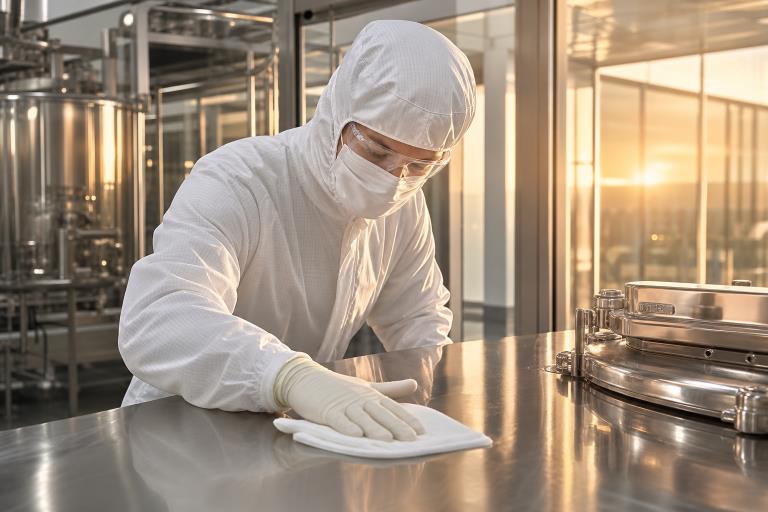
From life sciences laboratories to medical-device workspaces, Massachusetts organizations rely on controlled spaces to protect sensitive processes. A dependable approach to controlled environment cleaning provides teams with a repeatable way to remove debris, manage residues, and reduce the risk that routine activities compromise a prepared area.
Surface care should support the full contamination-control program. It works alongside airflow management, gowning, material transfer, equipment maintenance, and disciplined operator behavior. A surface can look clean while still carrying particles, chemical films, fibers, or microbiological concerns that require attention under the facility’s approved procedures.
Why a Clear Cleaning Plan Matters
In a busy Massachusetts operation, cleaning can be affected by production schedules, staffing changes, equipment moves, and seasonal shifts in building use. A written plan helps ensure that these operational pressures do not change the expected result. It should identify what is cleaned, who performs the task, which materials are approved, how often work occurs, and what checks confirm completion.
The 2026 edition of ISO guidance for cleaning surfaces to defined particle and chemical cleanliness levels emphasizes selecting and assessing methods based on the required cleanliness level. That is a useful reminder that a single cleaning method is not automatically suitable for every room, product, or surface.
Set Cleaning Goals Before Choosing a Method
Start with the room’s intended condition rather than a familiar product or tool. Consider the room classification, process risk, traffic pattern, surface finish, chemical residue concerns, equipment sensitivity, and the recovery time required before operations resume.
A pharmaceutical filling area, for example, may require tightly defined cleaning and disinfection practices for equipment contact points and surrounding surfaces. A laboratory support room may have different priorities centered on orderly material flow and routine surface care. A semiconductor work zone may place particular emphasis on controlling particles and chemical residues. The site procedure should translate those needs into clear instructions.
Build the Workflow Around Risk
- Review the area:Check surfaces, equipment, visible soil, and any unusual conditions before beginning.
- Gather approved materials:Confirm that wipes, mop heads, solutions, containers, and protective equipment match the procedure.
- Prepare the work zone:Remove unnecessary items and protect supplies from avoidable exposure.
- Follow a planned direction:Work from cleaner areas toward less clean areas, and use an overlapping path that limits backtracking.
- Allow required contact time:Do not remove a cleaning agent or disinfectant before the approved exposure time has elapsed.
- Inspect the result:Look for streaks, residue, missed edges, damaged finishes, or recontamination.
- Document the task:Record the area, time, operator, materials used, and unusual findings.
Choose Tools and Agents That Fit the Surface
Tools should be selected for the surface and the contamination concern, not simply because they are convenient. Low-shedding materials may be appropriate where particle control is important. Separate tools for floors, walls, ceilings, equipment, and difficult-to-reach locations can help prevent cross-use when required by the procedure. Clean tools need protected storage, while worn, overloaded, or incorrectly stored tools should be removed from service.
Cleaning removes soil and residues. Disinfection is intended to reduce the number of microorganisms when an appropriate product is applied correctly. Soil can interfere with contact between a disinfectant and the surface, which is why cleaning steps may need to occur first. Teams should control dilution, labeling, expiration dates, storage conditions, and contact times. They should also review safety information and material compatibility before introducing a new product or changing a process.
A May 28, 2026, FDA warning letter describing deficiencies in cleaning, disinfection, training, and contamination control illustrates how these areas can become interconnected quality-system concerns. The lesson for any facility is to investigate recurring problems thoroughly instead of treating every failure as an isolated cleaning event.
Train Operators for Consistent Results
A strong procedure is only effective when personnel can perform it correctly. Training should include hands-on demonstrations of wiping motions, mop paths, tool handling, solution use and disposal, and responses to spills or unexpected contamination. Operators should understand when to change wipes, gloves, mop heads, and solution containers, as well as how to avoid cross-contamination between clean and used materials.
Practical observation is more useful than relying only on signed training attendance. Supervisors can watch for risky movements, skipped contact times, unclear access around equipment, and differences between shifts. Retraining should follow procedure changes, repeated errors, deviations, or investigation findings.
Use Records to Find Process Drift
Cleaning records should do more than prove that a task was completed. Review missed tasks, repeated residue reports, unexpected environmental-monitoring results, damaged tools, expired solutions, extended recovery times, and areas requiring corrective recleaning. These patterns may point to a training gap, an unsuitable product, poor equipment placement, weak scheduling, or a room-design issue.
A Simple Review Checklist
- Are cleaning goals defined for every controlled room and critical surface?
- Are tools and solutions approved for the relevant materials and process needs?
- Do procedures clearly state work direction, contact time, replacement rules, and disposal steps?
- Are hard-to-reach locations and equipment touchpoints included in the schedule?
- Can personnel explain what to do after a spill, damaged surface, or failed task?
- Are records reviewed for trends after changes to room, equipment, product, or workflow?
Common Questions About Cleanroom Surface Cleaning
How Often Should Cleanroom Surfaces Be Cleaned?
Frequency should reflect room classification, process risk, traffic, material flow, environmental data, and internal requirements. One universal schedule is not appropriate for every Massachusetts facility.
Should Cleaning and Disinfection Be Treated as the Same Task?
No. Cleaning focuses on removing soil and residue, while disinfection addresses microorganisms. The approved procedure should define how the activities work together and whether rinsing or drying steps are needed.
What Should Happen When a Cleaning Task Fails?
Protect the area, notify the responsible team, document the event, and follow the facility’s deviation or corrective-action process. Repeating the task may be necessary, but the underlying cause also needs to be reviewed.
Conclusion
Reliable cleanroom surface cleaning depends on clear goals, appropriate materials, trained operators, controlled methods, and useful records. By treating surface care as a measurable process, Massachusetts facilities can improve consistency, protect sensitive work, and keep controlled areas ready for their intended use.



