That quote in your inbox says $60,000, and you are already picturing summer. But every experienced homeowner will tell you the same thing: the number on the proposal is where the conversation starts, not where it ends. Backyard pools come with a second layer of costs that rarely show up in the glossy brochure, and ignoring them turns a dream project into a financial headache. The good news is that with a little foresight, you can plan for every single one of them.
This guide breaks down the real price of a pool, from the dirt work to the first electric bill, so you can walk into negotiations with your eyes wide open.
The Sticker Price Is Only Half the Story
Builders quote based on the shell, the basic equipment, and the standard finishes. That much is straightforward. What surprises most people is how quickly upgrades multiply. A nicer plaster finish adds thousands. A heater is another chunk. Add a spa spillover, some LED lights, and a basic water feature, and you have quietly tacked 20 to 30 percent onto the base number.
Here is the moment where most budgets derail. You tell yourself you will skip the extras, then you see the neighbor’s backyard and suddenly a tanning ledge feels essential. Set your hard ceiling before you tour the design studio, not after. And when you do look at add-ons, ask which ones genuinely improve resale value versus which ones just improve your Instagram feed.
Excavation and Soil: The Costs Nobody Warns You About
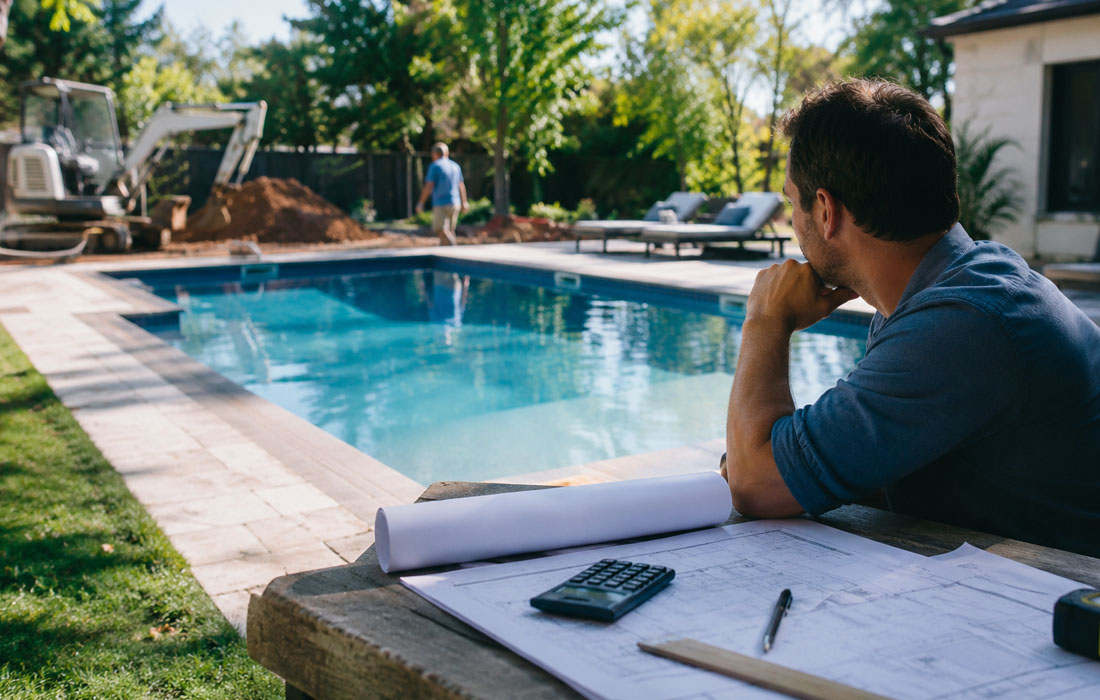
Your yard might look flat and friendly. What sits underneath it is a different story. Builders routinely hit buried concrete, old tree roots, or rock shelves that require specialized equipment and extra hours. Some homeowners in certain regions also need to account for groundwater management during the dig.
The federal government tracks broader construction employment trends, and the takeaway is simple: labor rates in construction have risen steadily over the past decade according to baseline data from the Bureau of Labor Statistics, which means every extra day of excavation work costs you more than it would have a few years ago.
You can reduce surprises here with one move: pay for a private soil test before you sign. A few hundred dollars spent early can save you from a change order that runs into five figures.
Permits, Inspections, and the Waiting Game
Nobody budgets for bureaucracy, but you should. Most municipalities require a building permit for a permanent pool, and the fees vary wildly depending on where you live. Beyond the permit itself, you are paying for inspections at multiple stages of the build, each one a potential delay if something does not pass.
Time is money here in a sneaky way. Many contractors price their work based on a smooth schedule. Every week the permit office takes to process your application, every inspection that fails and needs a redo, it all extends the project timeline. Some contracts include escalation clauses for extended delays, so read the fine print before you sign.
Here is a pro move: ask your builder how many permits they pulled in your city last year. A contractor with local experience moves through this process twice as fast as one who has to learn your municipality’s rules from scratch.
Water, Electricity, and the Ongoing Utility Reality
Once the pool is in, it starts costing you every single month. Filling an average-sized pool takes tens of thousands of gallons of water, and depending on your local rates and drought restrictions, that first fill can sting. Then comes the pump, which runs for hours each day during swimming season, plus the heater if you want to extend your months of use.
Here is where regional rules matter. The Environmental Protection Agency tracks water usage and conservation guidelines across the country, and some areas have strict limits on when and how you can fill a new pool. Check your local restrictions before you commit, because a pool you cannot legally fill is a very expensive hole in the ground.
To keep ongoing costs sane, look at variable-speed pumps. They cost more upfront but use a fraction of the electricity of older single-speed models. Similarly, a solar cover keeps heat in the water overnight, which means your heater runs less and your utility bill stays friendlier.
Maintenance: The Monthly Bill You Will Forget to Plan For
The chemicals alone run a regular monthly tab. Chlorine, pH adjusters, algaecides, filter cleaners, they all add up. Then there is the equipment that wears out: pump seals, filter cartridges, and the eventual replacement of the liner or interior finish. A typical plaster finish lasts a decade or two before it needs refinishing, a project that costs thousands on its own.
You have two paths forward. You maintain it yourself, which means learning water chemistry and spending part of every weekend skimming and testing, or you hire a service, which adds a predictable monthly fee. Most owners I know start with the do-it-yourself approach and switch to a service within two summers. Just be honest with yourself about which type you actually are before the build starts.
A Realistic Look at Financing and Timeline Decisions
Let me walk you through a scenario that plays out constantly. A family picks a base pool package, schedules the build for spring, and plans to pay cash. Two weeks before construction starts, they visit a friend’s backyard and see a beautiful beach entry. Suddenly the base package feels inadequate.
They upgrade. The build gets pushed back because the new design needs more engineering. Their contractor gets booked out further. They end up borrowing money at a rate they never planned for, and the entire summer they wanted to enjoy the pool is spent watching it get built.
I have watched this exact story repeat with alarming frequency. The fix is to decide on your ideal pool and your absolute maximum budget, then work backward to find the design that satisfies both. If expanding your scope means financing, calculate what that monthly payment does to your household budget before you romanticize the waterfall feature.
Long-Term Value: When a Pool Makes Sense
In warm climates with long swimming seasons, a well-built pool can be a genuine lifestyle upgrade. It changes how your family spends summer weekends, how often your kids invite friends over, and how you host gatherings. For many households in Southern California, the math works because the pool gets used nearly year-round.
That said, it is not an investment in the financial sense. Real estate appraisers generally agree that a pool recovers only a portion of its cost at resale, and the recovery rate depends heavily on your neighborhood. In a community where pools are the norm, it helps your home compete. In a neighborhood where nobody has one, it could actually narrow your buyer pool.
If you live in a region with a genuine swimming culture, this is the one major home improvement where you should let lifestyle lead the decision. Mortgage lenders and appraisers will do their thing. Your family will do theirs, which is to actually use the thing.
Comparing Builders Without Getting Blinded by the Lowest Bid
The cheapest quote is rarely the best deal, and the most expensive one is rarely justified. When you compare proposals, look past the total and examine what each builder includes. One might quote a standard pump while another includes the variable-speed upgrade. One includes debris removal and another leaves that as an add-on.
Ask every builder the same five questions: How many pools have you built in my specific area? What does your warranty actually cover? Who handles the permit process? What happens if you hit rock during excavation? And can I talk to two past clients whose pools completed in the last year?
Take the answers and compare them side by side. You want the builder who has seen your type of soil, knows your city’s permit office by name, and treats the excavation risk as a normal conversation rather than a scary hypothetical. For homeowners ready to explore their options, a professional pool installation san diego provider can walk through the real numbers with you before you commit to a single design decision.
The Maintenance and Safety Checklist Every Owner Should Keep
Once your pool is operational, a few habits separate enjoyable ownership from constant headaches. Get into a rhythm with these tasks and the pool mostly takes care of itself. Skip them and you will be calling for repairs by August.
| Frequency | Task | Why It Matters
|
| Daily | Skim the surface and empty the skimmer basket | Prevents debris from breaking down and consuming your chlorine |
| Weekly | Test pH and chlorine levels | Balanced water prevents algae growth and protects swimmer comfort |
| Monthly | Check and clean the pump strainer basket | Good water flow keeps your filtration system working efficiently |
| Seasonally | Inspect the heater and have the interior finish professionally evaluated | Catches small issues while they are still inexpensive to fix |
On the safety side, the Penn State Extension publishes guidance on backyard water safety and injury prevention that is worth reading before your first big pool party. A simple rule: fencing, a locking gate, and a clear policy about kids swimming without an adult present. Those basics prevent the vast majority of incidents.
Take water chemistry seriously from week one. Imbalanced water is not just cloudy, it can damage your equipment and irritate swimmers’ eyes and skin. A $20 test kit tells you everything you need to know.
So, What Is the Real Answer?
A backyard pool costs anywhere from the quote on your desk to 30 percent more, depending on your yard’s conditions, your upgrade appetite, and how smoothly the permit process runs. The maintenance then adds a predictable monthly expense that follows you for as long as you own the home.
None of that should scare you off if you have the budget and the climate to make it worthwhile. It just means going in with your eyes fully open. Know your soil, know your water table, know your utility rates, and know exactly what the contract does and does not include. Ask the right questions before you sign, and you will spend the summer relaxing by the water instead of stressing over change orders.
What is your actual outdoor entertaining season, and does a pool shorten the path to using your backyard more? That answer tells you more than any price quote ever will.