Changing rooms are an essential part of many facilities, including sports centres, gyms, swimming pools, schools, workplaces and leisure venues. Although lockers may seem like a simple storage solution, the material they are made from has a significant impact on their durability, maintenance requirements and suitability for specific environments.
Choosing the right material is not only a matter of appearance. Changing room lockers are exposed to frequent use, humidity, cleaning products and mechanical stress. A carefully selected material can improve the lifespan of the equipment, reduce maintenance costs and ensure better user comfort.
For facility owners and investors, understanding the differences between available materials is an important step when planning a functional and durable changing room.
Why does locker material matter?
Changing room lockers are often used dozens or even hundreds of times every day. In sports facilities, fitness centres and swimming pools, they must withstand constant opening and closing, contact with wet clothing and regular cleaning procedures.
The wrong material choice can lead to problems such as corrosion, surface damage, difficult maintenance or premature replacement. This is particularly important in high-traffic facilities, where locker systems represent a long-term investment.
The material affects several key aspects of locker performance:
- resistance to moisture and humidity,
- durability against mechanical damage,
- ease of cleaning,
- visual appearance,
- overall maintenance requirements.
A professional locker system should be selected according to the conditions in which it will operate rather than based only on initial cost.
Choosing lockers for different environments
Different facilities have different requirements. A changing room in an office building does not face the same challenges as one in a swimming pool, sports centre or industrial workplace.
In dry environments, such as offices or some educational facilities, aesthetics and everyday durability may be the main priorities. In wet environments, resistance to moisture becomes one of the most important factors.
For example, swimming pools and wellness centres require materials that can handle constant exposure to humidity and cleaning processes. Sports facilities often need a balance between durability, hygiene and design because lockers are used intensively by many visitors every day.
More information about changing room locker solutions and available materials can be found at: https://www.alsanit.nl/
Metal lockers – a durable and practical solution
Metal lockers remain one of the most widely used options for changing rooms. Their popularity comes from their strength, reliability and ability to withstand intensive use.
They are commonly selected for workplaces, schools, gyms and public facilities where lockers need to perform reliably over many years. Metal constructions can provide excellent resistance to everyday mechanical stress and are often valued for their practical maintenance.
Another advantage of metal lockers is their versatility. They can be adapted to different configurations, sizes and security systems, making them suitable for many types of changing rooms.
However, when choosing metal lockers, it is important to consider the environmental conditions. In areas with high humidity, additional protection against corrosion and suitable surface finishes become especially important.
HPL lockers – when moisture resistance is essential
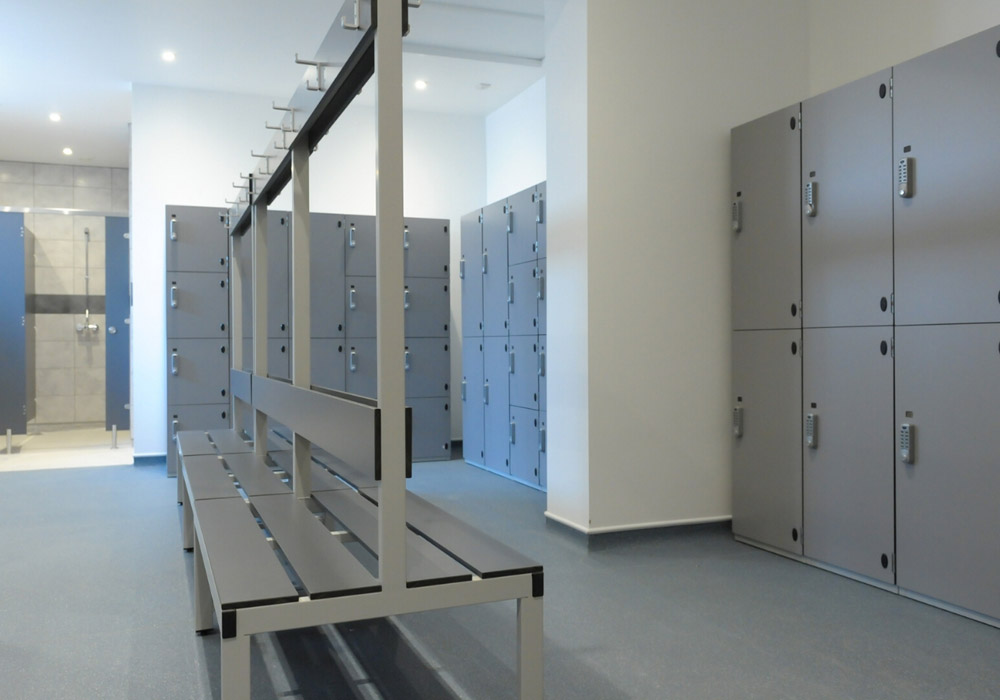
HPL (High Pressure Laminate) is a material often used in demanding environments where durability and resistance to moisture are priorities. It is particularly suitable for swimming pools, sports facilities and wellness areas where lockers are regularly exposed to humidity.
HPL panels are resistant to mechanical damage and moisture, while also offering a wide range of colours and finishes. This makes them suitable not only from a practical perspective but also from a design point of view.
One of the important benefits of HPL lockers is their easy maintenance. Smooth surfaces can be cleaned efficiently, which helps facilities maintain appropriate hygiene standards.
For modern changing rooms, HPL can provide a combination of functionality and aesthetics, allowing designers to create spaces that are both durable and visually attractive.
Combining materials for better performance
In some projects, the best solution is not choosing one material but combining several materials to achieve the desired balance between durability, appearance and cost.
Hybrid locker systems can combine, for example, a strong metal structure with HPL doors. This approach allows facilities to benefit from the strength of metal while adding the visual advantages and moisture resistance of other materials.
Mixed-material solutions are especially useful in modern facilities where design is as important as functionality. Hotels, premium fitness centres and leisure facilities often look for equipment that performs well while also matching the interior concept.
Hygiene and cleaning requirements
Changing rooms require regular cleaning because they are used by many people every day. The material of lockers directly affects how easily staff can maintain hygiene standards.
Surfaces should be resistant to cleaning products and easy to wipe down. Materials that absorb moisture or are difficult to maintain may increase operational costs and require more frequent repairs.
In facilities such as swimming pools or gyms, where hygiene expectations are particularly high, selecting a suitable material can significantly improve daily maintenance processes.
Durability and long-term costs
When purchasing changing room lockers, the lowest initial price should not always be the deciding factor. A cheaper solution may require more frequent repairs or replacement, increasing the total cost over time.
A higher-quality material can provide better value by offering:
- longer service life,
- fewer maintenance issues,
- better resistance to intensive use,
- improved appearance over many years.
For businesses and public facilities, this long-term perspective is especially important because locker systems are usually installed as part of larger investments.
How to choose the right material for your project?
Before selecting lockers, facility managers should analyse the conditions in which the equipment will be used. The most important questions include:
- Will the lockers be exposed to moisture?
- How many users will access them daily?
- How often will cleaning be required?
- Is design an important factor?
- What level of durability is expected?
- What security system will be needed?
A swimming pool, a workplace and a school may all require different solutions. The right choice depends on the specific requirements of the building and its users.
Professional planning helps avoid costly mistakes
Locker selection should be considered as part of the overall changing room design. The number of users, available space, ventilation, security systems and cleaning procedures all influence the final decision.
Working with an experienced manufacturer can help identify the most suitable material and configuration for a specific project. ALSANIT provides locker solutions made from different materials, including metal and HPL, allowing facilities to select equipment adapted to various environments.
Professional advice is especially valuable for larger projects where incorrect decisions could result in additional costs in the future.
Choosing the right material creates better changing rooms
Material selection is one of the most important decisions when choosing changing room lockers. The right solution should provide durability, easy maintenance, resistance to environmental conditions and a design that matches the character of the facility.
Metal lockers can be an excellent choice for robust everyday applications, while HPL solutions are particularly suitable for areas where moisture resistance and hygiene are priorities. Hybrid solutions can offer an effective combination of strength and aesthetics.
By analysing the real requirements of the facility before purchasing, businesses and investors can create changing rooms that remain functional, attractive and reliable for many years.