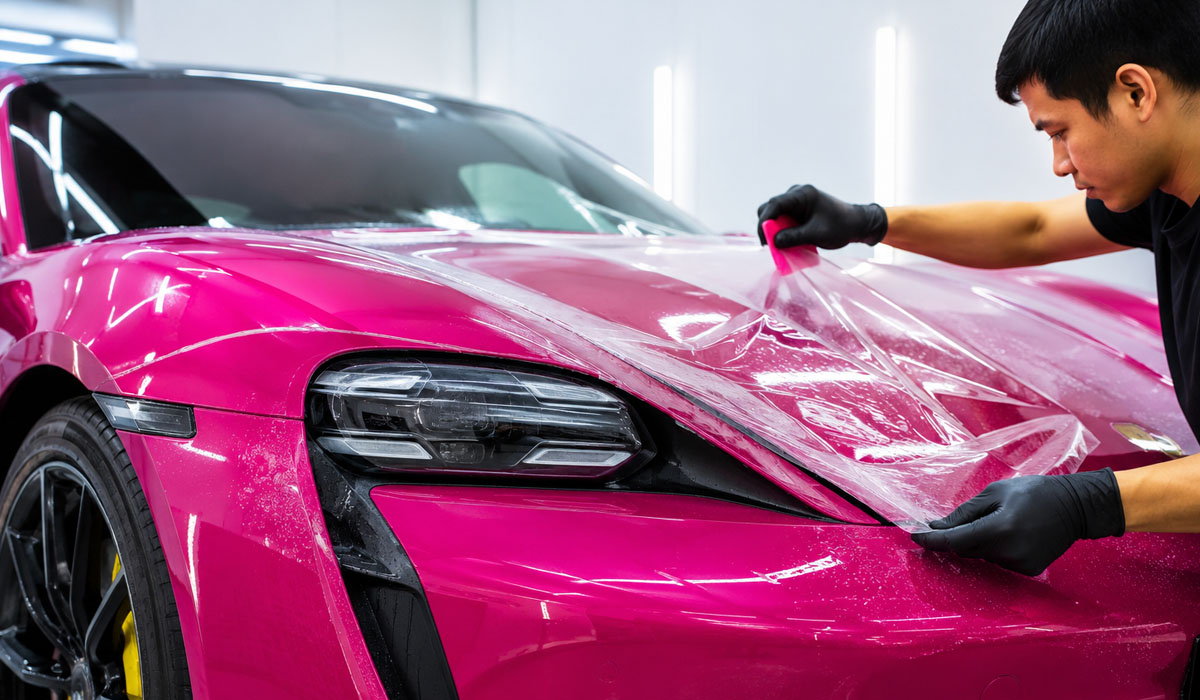
Colored paint protection film, often called colored PPF, gives drivers a way to change a vehicle’s appearance while protecting the original paint underneath. Unlike a standard vinyl wrap, colored PPF is built to resist road debris, light scratches, UV exposure, bug splatter, and everyday contaminants.
It can create a gloss, satin, matte, metallic, or color-shift finish without making the change permanent.
This article explains how colored PPF works, what styles are available, how it compares with paint and vinyl, and what affects the cost of professional installation.
What Is Colored PPF and How Does It Work?
The Technology Behind Colored Paint Protection Film
Colored PPF is made from thermoplastic polyurethane, commonly known as TPU. TPU is valued for flexibility, durability, and tensile strength, which makes it useful in demanding automotive applications.
The main difference between clear PPF and colored PPF is the addition of a pigmented layer. This layer changes the vehicle’s appearance while the film still acts as a protective barrier over the factory paint.
Unlike vinyl wraps, which are mainly used for styling, colored paint protection film combines visual customization with impact protection. Professional installers like ID Protection offer colored PPF options which help drivers change the look of their vehicle while protecting painted surfaces from scratches, chips, and road debris.
A high-quality installation can create a smooth, paint-like finish without the texture often associated with lower-grade wraps.
Key Components of Color PPF Systems
Modern colored PPF usually uses a layered structure. Each layer has a specific role:
Self-healing top coat: Helps light surface scratches level out when exposed to heat.
Pigmented color layer: Provides the selected color or finish while resisting discoloration.
TPU core: Adds flexibility, strength, and impact resistance.
Adhesive layer: Bonds the film to healthy factory paint and allows professional removal later.
This structure gives colored PPF its mix of styling, protection, and reversibility.
Self-Healing Properties Explained
Self-healing PPF works through a flexible top layer that reacts to heat. When light surface scratches appear, warmth from sunlight, warm water, or a heat gun can help the surface return to a smoother state.
This effect only applies to light marks in the top layer. Deep cuts or damage that reaches lower layers cannot repair themselves. Still, the feature helps reduce visible swirl marks and keeps the finish looking cleaner between details.
Protection and Styling Benefits of Colored PPF Services
Impact and UV Protection
Daily driving exposes paint to stone chips, bug splatter, bird droppings, salt, and grime. Colored PPF adds a physical layer between these hazards and the factory finish.
Some PPF products also advertise UV resistance of up to 99%, which can help reduce paint fading and oxidation over time.
The film acts as a sacrificial surface. Instead of damage reaching the paint, the film absorbs much of the wear from normal road use.
Custom Color Change Without Repainting
A full repaint can be expensive, permanent, and time-consuming. It may also affect how future buyers view the vehicle if they prefer original factory paint.
Colored PPF offers a more flexible option. It can change the look of the vehicle while keeping the original finish protected underneath.
Full vehicle colored PPF often costs more than a basic vinyl wrap, but it adds protection that vinyl does not provide.
Preserving Original Paint and Resale Value
Original paint condition can affect resale value. AAA notes that vehicle condition is one of the practical factors owners can manage when trying to preserve resale value.
Recent dealership survey data also found that many automotive dealership professionals believe PPF can help vehicles retain more value, with reported gains of up to 15% in some cases.
These figures should be viewed as survey-based estimates rather than guaranteed results. Still, they support the practical value of keeping factory paint in better condition.
Reversible Transformation
Colored PPF can be removed by professionals without damaging healthy factory paint. This makes it useful for owners who want a color change without committing to permanent paintwork.
It is also a good fit for people who may want to update the finish later, return the vehicle to its original color, or preserve the factory paint for resale.
Colored PPF Options: Finishes and Styles Available
Gloss and High-Gloss Finishes
Gloss colored PPF creates a polished finish similar to fresh paint. It works well for drivers who want a rich color change with a clean, reflective surface.
High-gloss options can make darker colors look deeper and brighter colors appear more vivid. They are often chosen by owners who want a factory-style appearance with added protection.
Matte and Satin Options
Matte PPF creates a flat, non-reflective finish. It gives the vehicle a modern look and can make body lines appear sharper.
Satin PPF sits between gloss and matte. It has a soft sheen without the strong reflection of gloss film. This makes it a popular choice for drivers who want a refined finish that still feels understated.
Metallic and Pearl Effects
Metallic colored PPF adds shimmer and depth. Small reflective particles in the finish help the color shift slightly under different lighting.
Pearl finishes create a softer glow and can add dimension to white, silver, gray, and darker shades. These styles are useful for drivers who want more visual interest than a flat color can provide.
Color-Shift and Textured Films
Color-shift PPF changes appearance depending on the angle and lighting. A vehicle may appear one color in direct sunlight and another in shade or at night.
Textured options, such as carbon-style or brushed finishes, create a more distinctive look. These films are usually chosen for accent areas, though some owners use them for larger sections of the vehicle.
Cost Factors and Choosing Professional Colored PPF Services
What Affects Colored PPF Cost?
Several factors influence the final price of colored PPF installation:
Vehicle size: Larger vehicles require more material and labor.
Panel complexity: Curves, vents, trim, sensors, and tight edges increase installation time.
Film quality: Premium films usually cost more but may offer better finish quality, durability, and warranty coverage.
Paint condition: Swirl marks, oxidation, or old damage may need correction before installation.
Coverage level: Full vehicle coverage costs more than partial front-end protection.
Professional installation is important because poor application can lead to lifting edges, trapped debris, visible seams, or premature failure.
Full Vehicle vs. Partial Coverage
Full vehicle colored PPF gives the most complete transformation and protection. It changes the entire appearance while covering all painted panels.
Partial coverage focuses on high-impact areas such as the front bumper, hood, fenders, mirrors, and rocker panels. This option costs less and still protects the sections most exposed to road debris.
The right choice depends on the driver’s goals. A full color change calls for full coverage, while protection-focused owners may prefer partial coverage.
Comparing Colored PPF to Paint and Vinyl Wraps
Colored PPF sits between vinyl wraps and repainting.
Vinyl wraps are usually more affordable and offer many styling choices, but they do not provide the same impact protection. Paint creates a permanent finish, but it can be costly and may reduce the value of an original-paint vehicle.
Colored PPF offers a middle path. It changes the look of the vehicle, protects the paint, and can be removed later by a qualified installer.
Finding Qualified Installation Services
The quality of the installer matters as much as the film itself. A good shop should be able to explain its preparation process, edge wrapping approach, warranty terms, and experience with similar vehicles.
Before booking, ask to see examples of completed colored PPF work. Look for smooth edges, clean alignment, minimal seams, and a finish that follows the body lines naturally.
Conclusion
Colored PPF is a practical option for drivers who want both custom styling and paint protection. It can create a new finish in gloss, satin, matte, metallic, pearl, or color-shift styles while helping protect the factory paint from chips, scratches, UV exposure, and road grime.
It also gives owners more flexibility than repainting because the film can be removed by professionals.
For the best result, choose an experienced installer, review finish options carefully, and match the coverage level to your goals, budget, and long-term plans for the vehicle.