Key Takeaways
- Routine inspections identify small roof issues before they become expensive interior damage.
- Drainage, flashing, seams, penetrations, and rooftop equipment need regular attention.
- Heat, heavy rain, wind, hail, and debris can shorten roof life when maintenance is delayed.
- Repair, restoration, and replacement are different decisions that require an honest assessment of roof condition.
- Clear records make budgeting, warranty conversations, insurance documentation, and future repairs easier.
A commercial roof is one of the building systems most likely to be ignored until a leak disrupts operations. A planned approach to commercial roofing maintenance gives property owners and facility managers a better way to protect interior spaces, control costs, and avoid turning small defects into urgent repairs.
The goal is not to inspect every inch of the roof every day. It is to establish a dependable schedule, know what warning signs matter, and bring in qualified roofing professionals before damage spreads into insulation, ceilings, electrical areas, tenant spaces, inventory, or structural components.
Why Commercial Roof Maintenance Deserves a Set Schedule
Roof problems often begin in places that are difficult to see from the ground. A lifted flashing edge, split seam, loose pipe boot, or clogged drain may allow water into the roofing assembly long before a ceiling stain appears indoors. By the time a leak becomes visible, moisture may have traveled away from its original entry point.
Planned maintenance is usually less disruptive than emergency work. Scheduled checks allow managers to prioritize repairs, obtain documentation, coordinate access, and budget for larger projects. Emergency repairs, by contrast, often happen during storms, after business hours, or when interior damage has already affected daily operations.
Build a Simple Inspection Calendar
Every building has different needs, but a practical maintenance calendar can provide a strong baseline:
- Monthly:Check interior ceilings for stains, review visible roof drains for debris, and note reports of active leaks or musty odors.
- Quarterly:Review roof access points, equipment service routes, flashing, visible membrane wear, and maintenance records.
- Twice each year:Schedule a detailed professional inspection before the weather season most likely to stress the roof.
- After severe weather:Arrange a prompt assessment for punctures, loose materials, blocked drains, damaged edges, and new ponding water.
Start With Interior Warning Signs
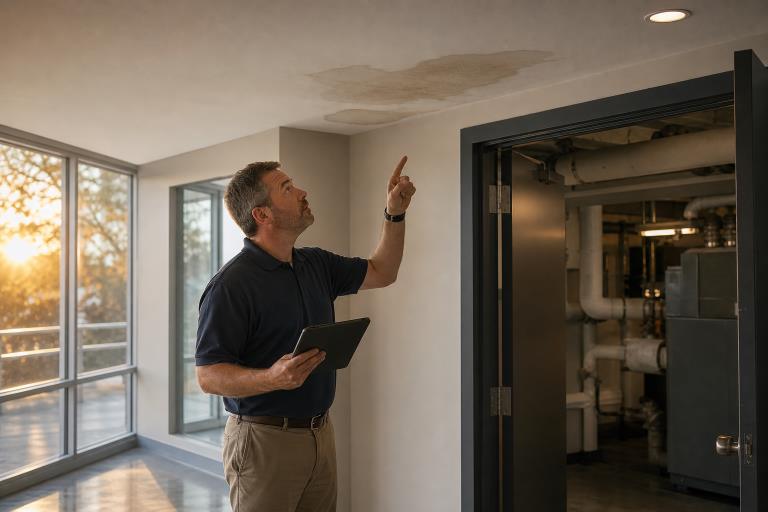
Interior observations can reveal roofing concerns without anyone stepping onto the roof. Watch for water stains, bubbling paint, peeling finishes, soft ceiling tiles, warped materials, damp insulation, or unexplained odors in offices, storage rooms, and mechanical spaces. Document the room, date, weather conditions, and visible symptoms with photographs.
Do not assume the leak is directly above the stain. Water can move along decking, framing, conduits, insulation, and other concealed paths. Comparing indoor symptoms with nearby roof penetrations, drains, seams, and recent HVAC work can help narrow the search area.
Inspect the Roof Surface and Drainage
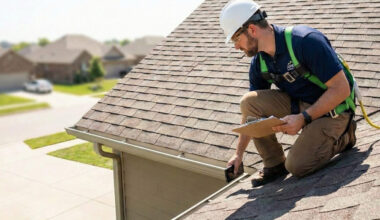
During a safe, authorized roof walk, inspect the membrane for cracks, punctures, blisters, splits, worn areas, open seams, and sections pulling away from transitions. Pay special attention to service paths around HVAC equipment, where repeated foot traffic can wear down protective surfaces. Remove abandoned materials and report debris, branches, or dirt accumulation.
Drainage should receive the highest priority on low-slope roofs. Keep drains, scuppers, gutters, downspouts, and overflow paths clear of leaves, trash, sediment, and nesting material. After rainfall, note the water that remains after the surrounding areas dry. Repeated ponding is not merely cosmetic. It can increase stress on the roof system and point to blocked drainage, settlement, or design concerns.
Check Flashing, Seams, and Penetrations
Roof transitions are common leak locations. Inspect flashing around vents, skylights, wall edges, HVAC curbs, pipes, expansion joints, and parapet walls. Look for cracked sealant, rust, lifted metal, open gaps, deteriorated edges, and signs that equipment work disturbed the roofing system.
Repairs should use materials that are compatible with the existing roof assembly. Applying an unknown sealant as a quick fix can create adhesion problems, complicate warranty discussions, or hide a larger defect. When the source is uncertain, professional moisture testing and a targeted inspection are often more useful than repeated surface patching.
Prepare for Heat, Storms, and Fire Season
Intense sunlight can accelerate surface aging and raise rooftop temperatures. A reflective surface may reduce solar heat gain, but it is only one part of a complete efficiency plan that also includes insulation, air sealing, HVAC performance, occupancy patterns, and building use. The EPA explains that cool roofs absorb and transfer less heat from the sun, although real-world energy results vary by climate and building conditions.
Before heavy rain or high winds, clear drainage components, secure loose rooftop items, trim nearby branches where appropriate, and confirm emergency contact information. After hail, wind, falling debris, or major rainfall, inspect interior spaces first, document visible damage with dated photos, and limit roof access until conditions are safe. Remove dry organic debris near vulnerable roof areas to reduce fire-related exposure.
Know When to Repair, Restore, or Replace
Repair May Fit When
- Damage is limited, and the rest of the roof remains stable.
- The leak source is clear, and repairs are not becoming repetitive.
- Inspection records do not show widespread deterioration or saturated materials.
Restoration May Fit When
- The roof still has useful service life, and its underlying materials are generally sound.
- A compatible coating or restoration system can address surface wear and improve waterproofing.
- The owner wants to reduce disruption compared with a full tear-off project.
Replacement May Fit When
- Leaks continue despite appropriate repairs.
- Large sections show deterioration, wet insulation, or structural concerns.
- Repair costs are rising without resolving the underlying problem.
Separate Staff Tasks From Professional Work
Building staff can document interior leaks, report visible debris, take ground-level photographs, and maintain inspection records. Qualified professionals should handle roof access, membrane repairs, electrical hazards, structural concerns, hot work, and work near unprotected edges. Wet surfaces, rooftop equipment, and fall hazards can turn a simple visual check into a serious safety event.
Keep Better Roof Records
A spreadsheet or maintenance platform should track inspection dates, weather conditions, roof age, system type, photos by roof area, repair history, drain and flashing notes, invoices, warranties, permits, product information, priorities, and the next planned task. Consistent records support better budgeting and give contractors useful context when a problem appears.
Common Questions About Commercial Roof Maintenance
How Often Should a Commercial Roof Be Inspected?
Twice-yearly professional inspections are a useful baseline for many buildings, with additional checks after severe weather and major rooftop work.
What Is the First Thing to Check on a Flat Roof?
Start with drainage, then inspect penetrations, flashing, seams, and visible membrane damage.
Can a Roof Coating Fix Every Leak?
No. Coatings can help suitable systems, but they cannot correct failed drainage, saturated insulation, major structural damage, or widespread deterioration by themselves.
Conclusion
A commercial roof performs best when maintenance is a routine process rather than a last-minute reaction. Scheduled inspections, clear drainage, documented repairs, weather preparation, and realistic repair decisions can reduce surprises and help every roofing dollar go further.