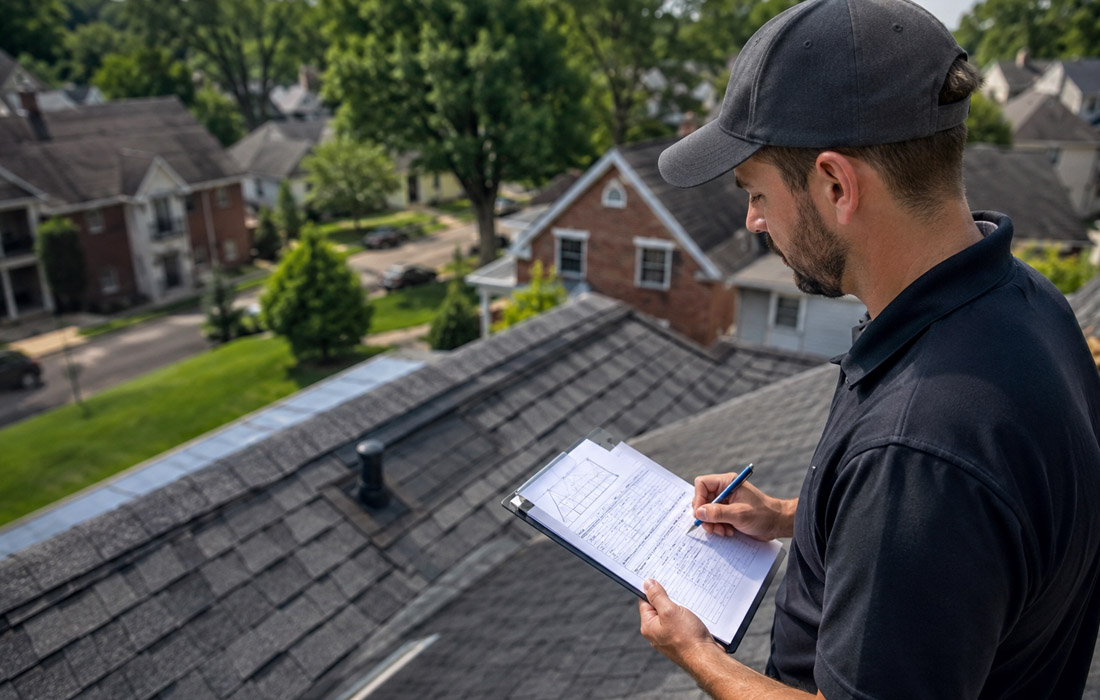
A roof replacement estimate can look competitive but still leave out the items most likely to raise the final bill. A low total means little if tear-off, flashing, decking, permits, or ventilation work appear later as surprise charges.
For homeowners in Hanover, Pennsylvania, the useful question is not simply, “What does the roof cost?” It is, “What exactly am I paying for?” A strong residential roofing estimate should explain the roofing system, the scope of removal and installation, the conditions that can change the price, and what happens if hidden damage is discovered after the old shingles come off.
Start With the Complete Roofing System
A replacement estimate should identify more than the shingle brand or color. The roof functions as a system, and the estimate should clarify what materials are installed beneath, around, and above those shingles.
For a residential asphalt replacement, that normally means identifying the shingle line, underlayment, ice and water protection, ridge cap, drip edge, and other components required for the proposed system. Common system configurations may include Owens Corning Oakridge shingles with ProArmor underlayment or Duration shingles with Deck Defense. The important point is that these components should appear in the written scope rather than being assumed.
Make Sure Tear-Off Is Defined
The next question is what happens to the existing roof. A complete replacement estimate should state whether the current roofing will be removed down to the decking and how additional existing layers will be handled.
An extra layer of shingles can add about $85 per square because more material must be removed and disposed of before installation begins. This is one reason homeowners should look beyond the headline number when comparing pricing for a roof replacement in Hanover. Two estimates may look similar but be based on very different assumptions about the existing roof.
If one proposal assumes a single layer and another accounts for additional tear-off from the start, the final totals aren’t directly comparable. The estimate should make that distinction clear before work starts.
Flashing Work Should Be Clearly Priced
Flashing is easy to overlook when reviewing a roofing proposal, yet it is one of the details that can materially affect both the scope and the final cost. Roof-to-wall connections, dormers, chimneys, and similar transitions require careful flashing work.
Wall, step, and apron flashing can run about $40 per linear foot, while chimney flashing can reach about $135 per linear foot. Those figures help explain why two homes with similar roof areas can still produce substantially different replacement estimates.
A simple roof with few intersections requires less detail work. A home with multiple walls, dormers, valleys, and a chimney requires more labor even if the total shingle area is nearly identical.
Decking Charges Need Clear Rules
Roof decking sits beneath the finished roofing system, which means its full condition may not be visible until the old roof is removed. That uncertainty does not mean the pricing should be left open-ended.
A replacement estimate should state how damaged decking will be priced if deterioration is discovered during tear-off. A figure of $100 per sheet gives the homeowner a defined cost before the roof is opened rather than leaving the charge to be determined after work has started.
This matters because decking replacement can quickly affect the project total when several sheets are involved. A clear written rate makes it easier to evaluate the estimate and reduces the risk of unexpected change-order pricing after the homeowner has already committed to the project.
Account for Valleys and Roof Pitch
Roof size is only one part of replacement pricing. Geometry, slope, and accessibility can change the amount of labor required even when two homes have similar square footage.
Valley work can add about $16 per linear foot because these areas require additional waterproofing and careful installation. Roof pitch can also affect cost. An 8/12 to 12/12 roof may add about $28 per square, while steeper roofs can add as much as about $83 per square.
That distinction matters when comparing estimates. A straightforward, walkable roof should not be priced exactly the same way as a steep roof with several valleys, dormers, and wall intersections. The estimate should reflect the actual roof rather than relying on a single generic rate.
A Good Estimate Removes Uncertainty
A roof replacement estimate should function as a project roadmap, not simply a price sheet. It should identify the roofing system, removal scope, flashing requirements, decking charges, slope-related costs, waterproofing details, permits, and cleanup responsibilities before work begins.
For residential homeowners in Hanover and across South-Central Pennsylvania and Northern Maryland, that level of detail makes contractor comparisons far more useful. The strongest estimate is not necessarily the one with the smallest number at the bottom. It is the one that makes clear what is included, what can change, and how those changes will be priced before the existing roof is removed.