In North Texas, a garage door faces long stretches of triple-digit heat, sudden hailstorms, and short, sharp power outages. That mix can dry out a bottom seal, throw off door balance, trip photo-eye sensors, and overwork the opener. Because the door is the heaviest moving system in most homes, a few seasonal steps can reduce strain, improve safety, and help the door move reliably in the worst weather. The checklist below focuses on what homeowners can safely evaluate and when to stop and call a professional. It also explains how common adjustments affect door balance, track alignment, opener limits, and wind resistance, so you can prevent small issues from snowballing during a storm.
Check Door Balance and the Spring System Safely
Start with a balance test. With the door fully down, pull the red emergency-release cord to disconnect the opener. Lift the door by hand to about waist height and let go. A balanced door should stay near that position; if it slams down or shoots up, the torsion springs (mounted on a shaft above the door) or extension springs (running along the horizontal tracks) need attention. For homeowners in Denton TX, extreme heat and fast-moving spring storms make pre-season balance checks especially helpful, but spring adjustment is not a DIY task because the coils are under high tension.
While the door is disconnected, check the lift cables near the bottom brackets, the drums at each end of the torsion shaft, and the bearing plates for frayed strands, rust, or metal filings. These are early signs of wear that can worsen with humidity and dust. An unbalanced door forces the opener to work as a winch instead of a guide, tempting people to dial up travel force to “push through” binding. That quick fix can defeat the safety system and shorten the life of gears, belts, or chains inside the opener head.
Seal Out Heat, Dust, and Wind-Driven Rain
Inspect the bottom seal (astragal) that slides into an aluminum retainer on the lowest panel. If it is cracked, flattened, or stiff, replace it so it can conform to uneven slabs and keep out wind-blown rain. Check the vinyl weatherstripping along the jambs and header for gaps or shrinkage, and make sure the retainer strip holds firmly to the framing. In dusty stretches of summer, intact seals cut down on grit that grinds into rollers and hinges, and they also reduce hot air infiltration that radiates through the garage into adjacent rooms.
Consider insulation and solar exposure. Steel doors with polyurethane or polystyrene cores resist heat transfer better than hollow-pan doors, but added weight changes the system. Upgrading panels, or even switching to a heavier bottom seal, may require rebalancing the torsion springs and rechecking the opener’s travel limits. That trade-off is worth planning: better insulation and sealing improve comfort and protect stored items, but the counterbalance and settings must match the new load to keep the door tracking smoothly.
Secure Hardware and Confirm Track Alignment
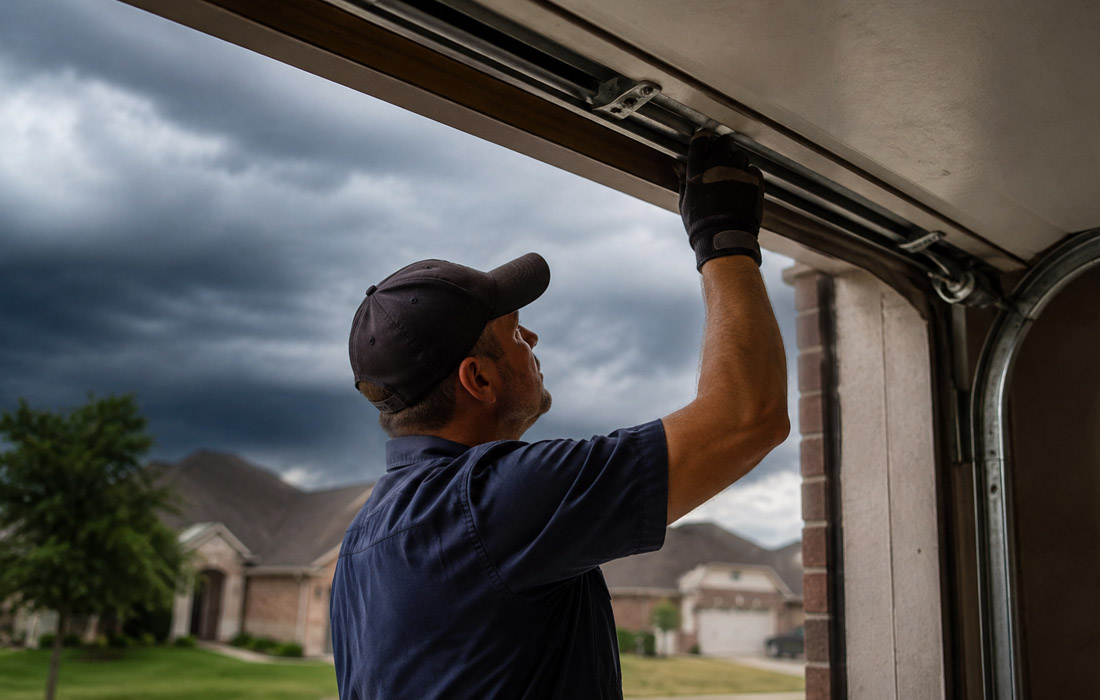
High winds exploit loose fasteners. Tighten lag screws at hinges, center stiles, and struts that stiffen wide double-door panels. Check the flag brackets and jamb brackets where vertical tracks attach to framing; they should be tight, with square shoulders against solid wood. Sight down the tracks or use a level: vertical tracks must be plumb, and horizontal tracks should pitch slightly upward toward the backhang to keep rollers seated. If the tracks toe in or splay out, the door can bind or jump when a gust flexes the panels.
Rollers with sealed bearings, especially nylon wheels, run quieter and resist corrosion better than open-bearing steel rollers. If you hear ticking at each hinge or see a flat-spotted wheel, replacement improves tracking before storm season. On doors with openers attached to the top section, verify that a reinforcing strut spans that panel so wind pressure and opener force do not crease it. Many North Texas homeowners ask local technicians, such as Welborn Garage Door Repair, to handle reinforcement, realignment, and spring work because those steps affect multiple components at once.
Protect the Opener: Sensors, Limits, and Surge Protection
Lightning and grid blips can damage circuit boards. Use a quality surge protector at the opener’s outlet, and consider a model with a battery backup so you can open and close during outages. Reconfirm travel limits and force after any balance or hardware changes. To test auto-reverse, place a 2×4 flat on the floor under the door; it should reverse immediately on contact. Clean photo-eye lenses with a microfiber cloth, aim them so both indicator LEDs show solid alignment, and mount them 4 to 6 inches above the floor to minimize interference from puddles and dust.
Sunlight can trick sensors during low evening angles common in summer. If false trips become frequent at sunset, add simple hoods to shade the photo-eyes or slightly rotate the brackets so the beams face each other squarely. Keep the opener’s chain or belt at the manufacturer’s specified tension; over-tightening introduces vibration and can cause the rail to bow, which becomes more noticeable when temperatures swing from morning to afternoon.
Plan for Power Loss and Safe Manual Operation
Every household member who regularly uses the garage should practice manual operation in daylight. With the door down, pull the red release and lift with two hands, keeping fingers out of the panel joints. If your door has a slide lock, use it during high-wind warnings to prevent the wind from lifting a closed, disconnected door; remember to remove the lock before reconnecting the opener. Never pull the release when the door is up or off-balance, and never attempt to free a jammed cable or unwind a spring on your own.
Build a small kit: white lithium spray for hinges and steel rollers, a silicone-safe spray for weatherstripping, a torpedo level for track checks, a 7/16-inch wrench for hinge bolts, and safety glasses. Lubricate moving metal pivots sparingly twice a year, wipe away excess, and keep oil away from nylon rollers and tracks. A 15-minute seasonal walk-through balance test, seal check, hardware snugging, sensor cleaning pays off the first time an evening squall rolls through and the door still glides shut without arguing.
Storm season favors doors that are balanced, sealed, aligned, and correctly set. When each component does its job torsion springs carrying the weight, tracks keeping rollers true, seals blocking weather, sensors guarding the opening, and the opener guiding instead of lifting the system can shrug off heat waves and gusts with less strain. If anything in your checkup reveals binding, sagging, frayed cables, or electronics that will not hold settings, schedule a professional evaluation before the next front arrives. That timing is often the difference between a quick tune-up and a mid-storm breakdown that traps a vehicle when you need it most.