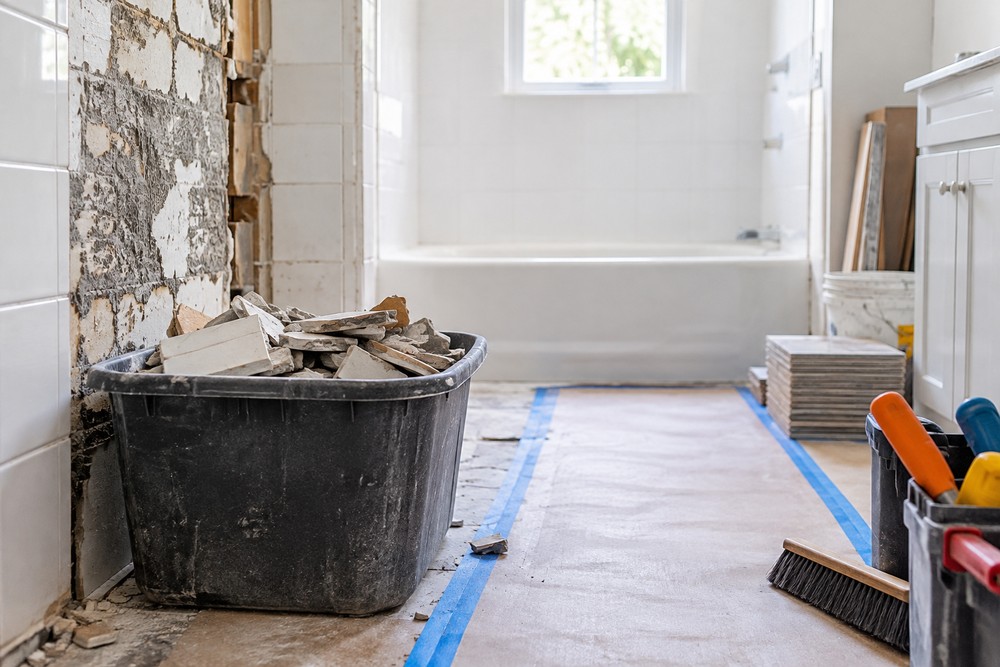
Bathroom remodeling can generate substantial debris inside one of the smallest working areas in a home. Tile, drywall, vanities, fixtures, flooring, trim, packaging, and damaged materials may all need removal before new construction can progress. Without advance planning, discarded material can quickly move beyond the bathroom and interfere with nearby bedrooms, hallways, stairs, or entrances.
Limited space makes bathroom demolition especially dependent on an organized sequence. Workers need room to remove existing materials while protecting surfaces that will remain, and household members may still need to move through adjoining areas. Establishing carrying routes and temporary staging locations before demolition starts can keep the disruption more contained.
Homeowners considering ACR Dumpsters can begin by identifying the bathroom components scheduled for removal and discussing the likely debris with the contractor. A cosmetic update involving a vanity and flooring creates different disposal needs from a project that removes tile, wallboard, and multiple fixtures. Understanding that scope provides a clearer foundation for waste planning.
List Everything Scheduled for Removal Before Demolition
A written removal list helps define the project before tools come out. Note whether the work includes flooring, wall tile, shower surrounds, tubs, toilets, vanities, mirrors, cabinets, drywall, or other installed components. This prevents the waste plan from being based on an incomplete picture.
The list can also distinguish between materials being discarded and items being retained. A mirror, fixture, or cabinet intended for reuse should not enter the same staging area as confirmed debris. Clear decisions reduce confusion once demolition begins.
Unexpected discoveries are still possible after walls or flooring are opened. However, starting with a known inventory makes changes easier to recognize. New debris can then be evaluated instead of being automatically mixed into the original waste stream.
Create a Protected Route Through the House
Bathroom debris often needs to travel through finished living areas before reaching an exterior door. Tile fragments, dusty materials, and bulky fixtures can affect floors, walls, corners, and door frames along the way. Choosing one main route helps concentrate protective measures where they are needed.
Consider stairs, narrow turns, rugs, furniture, and frequently used household pathways. The shortest path may not be the best option if it passes through a busy living area or requires difficult maneuvering. Workers need enough clearance to carry materials without repeatedly moving household belongings.
Protective floor coverings and other appropriate measures should be installed before demolition begins. Keeping the same route throughout the project also simplifies daily cleanup. Dust and small debris are easier to monitor when movement remains predictable.
Remove Fixtures According to the Renovation Sequence
Bathroom fixtures occupy significant working space, so their removal should follow the contractor’s planned demolition order. Vanities, toilets, tubs, shower components, and storage units may need to leave at different stages. Removing everything immediately can create unnecessary congestion outside the room.
Give Large Fixtures a Destination Before Moving Them
Determine whether each fixture will be reused, donated where appropriate, or discarded before carrying it out. A bulky vanity placed temporarily in a hallway can quickly become an obstacle. Confirming its destination avoids repeated handling.
Large components may also require more than one person or specialized handling. Doorway dimensions, stairs, and tight corners should be considered before movement begins. Planning the route first is safer and more efficient than discovering a clearance problem halfway through removal.
Treat Tile as a Dense Material Instead of Ordinary Debris
Tile removal can produce a surprisingly heavy waste stream even when the bathroom itself is small. Floor tile, wall tile, mortar, backer material, and related debris can accumulate significant weight without occupying the same volume as bulky cabinets. Visible pile size alone therefore provides an incomplete picture.
Workers should collect tile debris regularly rather than allowing broken material to cover the work area. Controlled collection preserves floor space and makes subsequent demolition easier. Appropriate containers and handling methods should reflect the weight and sharp edges of the material.
ACR Dumpsters can be considered once the major bathroom materials have been identified. Describing tile, fixtures, wall materials, and other debris gives more useful planning information than simply referring to a bathroom remodel. Material composition can matter as much as the physical size of the room.
Keep Demolition Dust From Spreading Into Living Areas
Bathroom demolition can release dust from drywall, tile, mortar, and other materials. Because bathrooms often connect directly to bedrooms or hallways, uncontrolled dust can migrate beyond the immediate work area. Containment should be considered before demolition begins.
Contractors may establish barriers and use appropriate dust-management practices according to the work being performed. Household members can support this process by keeping unnecessary belongings away from the renovation zone. Reducing traffic through the area also limits opportunities for dust to spread.
Debris should leave through the planned route rather than being staged throughout adjoining rooms. Regular cleanup around the bathroom entrance can keep loose material from being tracked elsewhere. Containment is easier when waste movement remains organized.
Separate New Materials From Removed Components
Bathroom remodeling often brings new tile, fixtures, cabinetry, plumbing components, and packaged products into the home before demolition debris has completely disappeared. Mixing these materials creates confusion and can expose new products to dust or damage. Separate staging areas are preferable whenever space allows.
Keep incoming materials in a clean, dry location that does not block the debris route. Contractors should be able to reach what they need without moving discarded items first. This separation helps the project transition smoothly from demolition to installation.
Packaging will become another source of waste as construction advances. Cardboard, wrapping, protective inserts, and empty containers should be collected regularly. Otherwise, installation waste can replace demolition debris as the main source of clutter.
Preserve Access to Other Rooms and Facilities
A bathroom remodel should not unnecessarily disrupt the entire household. Hallways, bedroom doors, stairs, and entrances near the work area may remain in regular use. Debris piles should never become the default way to separate construction from household activity.
If the home has another bathroom, occupants may rely on it more heavily during construction. The route to that space should remain clear and separate from debris whenever practical. Household routines can be adjusted temporarily to reduce traffic around the renovation zone.
Discuss working hours and access needs before demolition begins. Predictable routines help occupants know when certain areas may be busier. They also help contractors maintain a more organized boundary between construction and daily household use.
Identify Materials That Require Additional Review
Renovation sometimes reveals materials that were not expected when the project was planned. Unidentified products, old containers, unusual building materials, electrical components, or other questionable items should not automatically be placed with general demolition debris. Their appropriate handling may need confirmation.
Set these materials aside in a controlled location until their requirements are understood. Keeping them separate from the main debris stream avoids the difficulty of retrieving them later. Original labels or identifying information should remain intact where available.
Homeowners planning waste removal through ACR Dumpsters should confirm acceptable materials before loading begins and ask about unexpected items when necessary. Bathroom renovations can change once concealed areas are opened. A flexible disposal plan should account for discoveries without encouraging assumptions about unfamiliar materials.
Use Daily Cleanup to Maintain a Functional Work Area
Bathroom renovations often continue for several days or weeks, so cleanup should not wait until construction is finished. Small rooms lose usable working space quickly when debris, tools, packaging, and removed components remain on the floor. Regular organization keeps each new stage easier to begin.
At logical stopping points, move confirmed debris toward its designated destination and return tools to organized locations. Check the carrying route for dust, fragments, or packaging that may have escaped the immediate work area. These habits reduce the amount of cleanup inherited by the next phase.
Progress should make the renovation area more controlled rather than increasingly crowded. Even when unfinished surfaces remain exposed, workers need enough space to perform upcoming tasks. Waste management therefore becomes part of maintaining an efficient workspace.
Finish With a Complete Route and Room Inspection
Final cleanup should extend beyond the remodeled bathroom. Inspect the hallway, stairs, exterior route, temporary staging areas, and any locations used for cutting or unpacking materials. Small fragments can remain in places that appear unrelated to the finished work.
ACR Dumpsters may remain part of the removal process while the final debris is reviewed, but the same sorting principles should continue until the project is complete. Packaging, questionable materials, reusable items, and confirmed waste should maintain separate destinations. Temporary protective coverings can then be removed when construction traffic has ended.
Bathroom demolition becomes easier to control when debris planning starts before removal work. Identifying materials, protecting a carrying route, managing dense tile waste, separating new products, and cleaning throughout the project can prevent a small renovation area from disrupting the entire home. Careful preparation allows waste removal to follow the construction sequence from initial demolition through the final inspection.